
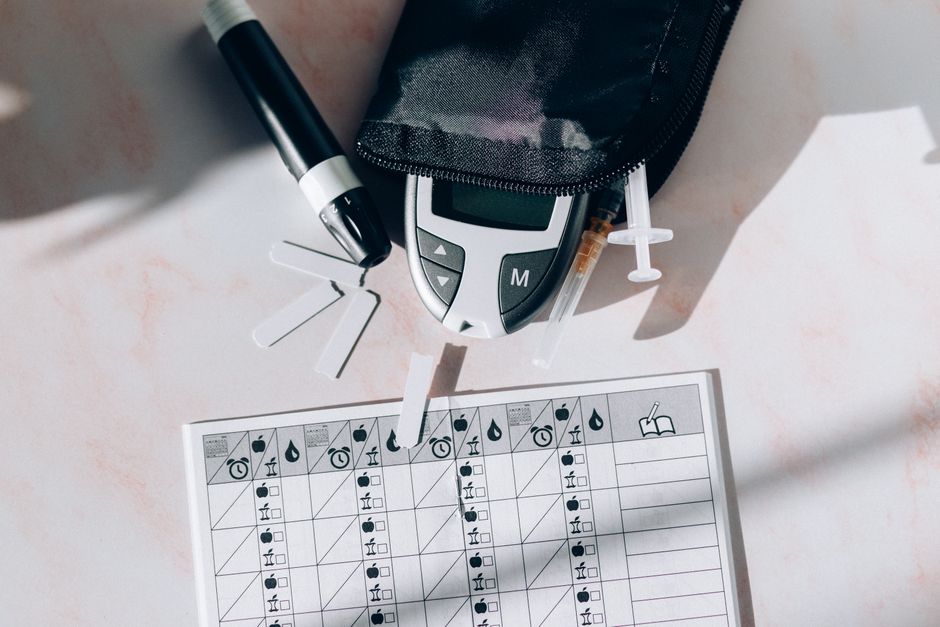
You cannot measure dopamine levels at home. No consumer device, saliva strip, urine kit, or wearable sold to the public can tell you how much dopamine is in your brain. Dopamine is a neurotransmitter — a chemical messenger used by nerve cells — and the only way to get a meaningful reading of it in the human brain is through specialized medical procedures performed in a research or hospital setting. Everything marketed as an at-home dopamine test is either measuring something else or measuring nothing meaningful at all.
What Is Dopamine And What Does It Actually Do?
Dopamine is a chemical messenger in the nervous system. It belongs to a class of molecules called neurotransmitters, which nerve cells release to communicate with each other.
Most people have heard dopamine described as the “pleasure chemical.” That label is misleading. Dopamine is more accurately involved in motivation, movement, learning, and reward prediction — the process by which the brain learns which actions tend to lead to good outcomes. It also plays a role in attention and in fine motor control.
This matters for the testing question. Dopamine is not one pool of chemical floating around your body. It exists in several distinct systems:
- In the brain, where it acts as a neurotransmitter between neurons
- In the peripheral nervous system, where it helps regulate blood flow and other functions
- As a precursor molecule in the pathway that produces norepinephrine and epinephrine
These pools are separate. A measurement taken from one does not tell you about the others. This is the central reason at-home dopamine testing does not work — the sample you can collect at home is not the sample that matters.
Why Can’t You Measure Dopamine At Home?
The brain is protected by the blood-brain barrier, a selective filter that controls what passes between the bloodstream and brain tissue. Dopamine in the brain largely stays in the brain.
What this means practically: dopamine and its breakdown products do appear in blood, urine, and saliva, but those levels reflect peripheral activity, not the dopamine signaling happening in your brain. A urine or saliva reading cannot tell you what your brain’s dopamine circuits are doing.
There is a second problem. Dopamine is released in tiny, rapid bursts at specific synapses — the junctions between nerve cells. It is cleared almost immediately. Even a brain-imaging scan captures a snapshot of a moment, not a stable level you could track over days.
There is no established “normal range” for brain dopamine in a living person the way there is for, say, blood glucose or thyroid hormone. Without a reference range, a number would be meaningless even if you could get one.
How Is Dopamine Actually Measured In Medicine?
When doctors genuinely need to assess dopamine-related function, they use specific clinical tools. None of them are available for home use.
Blood and urine tests for catecholamines
These tests measure dopamine and related compounds in blood or urine. They are used to investigate rare tumors such as pheochromocytoma and neuroblastoma, which can release excess catecholamines. These tests are ordered for specific clinical reasons — not to assess mood, motivation, or “dopamine balance.”
An important distinction: a normal blood dopamine level does not rule out a brain dopamine problem, and an abnormal one does not diagnose one. The test answers a narrow question about a rare condition.
Brain imaging in research settings
PET scans using radiotracers can estimate dopamine synthesis, receptor availability, and release in the living human brain. This is a research and specialized clinical tool. It requires injection of radioactive compounds, expensive equipment, and expert interpretation. It is not a routine test and is not offered as a consumer service.
CSF testing
In rare cases, doctors analyze cerebrospinal fluid — the fluid surrounding the brain and spinal cord — obtained through a lumbar puncture. This is an invasive procedure used for specific neurological conditions, not for general wellness assessment.




What About At-Home Dopamine Tests And Wearables?
Products marketed as at-home dopamine tests fall into a few categories. Understanding what each actually does helps explain why none of them measure brain dopamine.
- Urine neurotransmitter kits: These typically measure dopamine metabolites in urine. Urine metabolite levels reflect whole-body breakdown, not brain activity. Some clinicians use urinary neurotransmitter testing in functional medicine contexts, but it is not part of standard medical practice and does not have established diagnostic value for brain dopamine status.
- Saliva tests: Saliva can contain traces of various compounds, but there is no validated method for using saliva to assess brain dopamine. No major medical body recognizes salivary dopamine testing as clinically meaningful.
- Wearables and apps: Some devices claim to infer dopamine activity from heart rate variability, movement patterns, or other signals. These are indirect estimates at best. No wearable has been validated to measure brain dopamine concentration.
- Genetic tests: Some companies offer DNA tests for genes involved in dopamine metabolism. A gene variant may influence how your body handles dopamine, but it does not tell you your current dopamine levels or function.
The evidence for these consumer products is limited or absent. No large human trials have confirmed that any at-home test accurately reflects brain dopamine activity.
Why Is The “Dopamine Detox” And Testing Trend So Popular?
Dopamine has become a popular internet topic, often framed around “dopamine detoxes,” “dopamine fasting,” and worries about being “dopamine addicted” to phones or social media.
Some of this draws on real neuroscience. Dopamine is involved in reward learning and motivation. But the popular versions often stretch the science well past what it supports.
The idea of a “dopamine detox” is not a recognized medical treatment. You cannot flush dopamine from your brain or reset it through avoidance. What people often describe as a detox is really a break from a habit — which can be genuinely useful for behavior change, but not because it changes dopamine levels in a measurable way.
Similarly, the anxiety that drives people to want to test their dopamine usually comes from a real place: trouble focusing, low motivation, or feeling hooked on something. Those are legitimate concerns. They just are not answered by a home test.
What Should You Do If You Are Worried About Your Dopamine?
If you are concerned about motivation, focus, mood, or movement symptoms, the useful path is a conversation with a physician — not a home test.
Symptoms that can involve dopamine systems include:
- Persistent low motivation or anhedonia (loss of pleasure in things you used to enjoy)
- Difficulty concentrating
- Tremor, stiffness, or slowed movement
- Restless legs or unusual involuntary movements
These symptoms have many possible causes. Dopamine is only one part of the picture, and often not the main one. A doctor can assess the whole clinical context rather than chase a single number.
For most people, the more reliable levers on brain function are well established: regular physical activity, consistent sleep, treatment for depression or anxiety when present, and addressing any substance use that is causing problems. These are not dopamine “fixes” in a literal measurable sense — but they are the interventions with actual evidence behind them.
Is There Any Legitimate Way To Track Dopamine-Related Health?
Not directly, and not at home. There is no validated consumer method to measure brain dopamine.
What you can track are outcomes that dopamine systems influence indirectly — your sleep quality, your mood, your activity level, your ability to focus. These are behaviors and experiences, not chemical readings, and they are what a clinician would actually ask about.
Be cautious of any product that promises a dopamine number. If a company claims its kit or device tells you your dopamine level, ask what sample it uses and whether any peer-reviewed study has validated it against a known brain measure. In most cases, the answer is no.
Frequently Asked Questions
Can you measure dopamine levels at home?
No. There is no validated at-home test that measures brain dopamine, and consumer kits that claim to do so measure peripheral compounds that do not reflect brain activity.
Do urine or saliva dopamine tests work?
They do not measure brain dopamine. Urine and saliva tests reflect whole-body dopamine breakdown, which is not the same as the dopamine signaling happening in your brain.
How do doctors measure dopamine in the brain?
Doctors use PET imaging with radiotracers or, in rare cases, cerebrospinal fluid analysis. These are specialized procedures done in clinical or research settings, not at home.
Are dopamine detoxes real?
No. A “dopamine detox” is not a recognized medical treatment, and you cannot reset brain dopamine through avoidance; taking a break from a habit can help behavior change for other reasons.
