
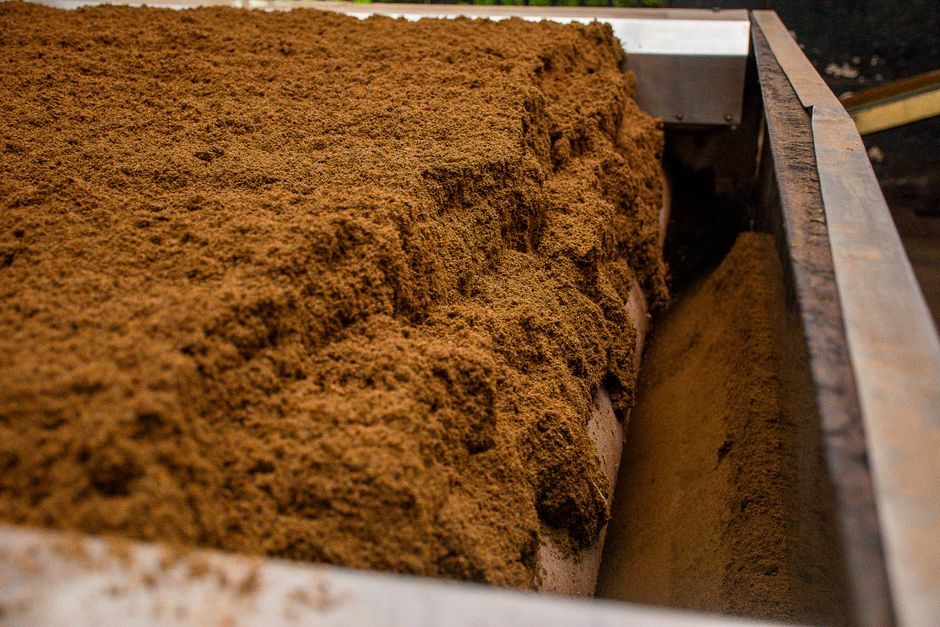
Manufacturing NPK fertilizer from raw materials involves combining nitrogen (N), phosphorus (P), and potassium (K) sources through chemical reactions and physical blending to create a balanced granular or liquid product. The process typically starts with ammonia, phosphoric acid, and potash, which are reacted in a granulator or mixed in specific ratios to meet crop needs. This guide breaks down the key steps, raw materials, and methods used in commercial production.
What Raw Materials Are Needed to Make NPK Fertilizer?
The three primary nutrients in NPK fertilizer come from distinct raw sources. Nitrogen is most often derived from ammonia (NH₃), which is produced by combining natural gas and air through the Haber-Bosch process. Urea, ammonium nitrate, and ammonium sulfate are common nitrogen-rich compounds made from ammonia.
Phosphorus comes from phosphate rock, which is mined and then treated with sulfuric or phosphoric acid to create phosphoric acid or superphosphates. Potassium comes from potash ore, typically potassium chloride (KCl) or potassium sulfate (K₂SO₄), which is mined and refined. Some manufacturers also use secondary materials like ammonium phosphate, MAP (monoammonium phosphate), or DAP (diammonium phosphate) as combined N-P sources.
Fillers like sand, clay, or calcium carbonate are sometimes added to adjust nutrient concentrations. Trace elements such as zinc, boron, or iron can be included for specialty blends. The exact recipe depends on the desired NPK ratio, such as 10-10-10 or 20-10-5.
How Is NPK Fertilizer Manufactured Step by Step?
Commercial NPK production follows a series of controlled chemical and mechanical steps. The most common method is the granulation process, which turns powdered ingredients into uniform granules that are easy to handle and apply.
Step 1: Raw material preparation. Solid raw materials like potash, ammonium phosphate, and fillers are crushed and ground into a fine powder. Liquids like ammonia, phosphoric acid, and water are stored in tanks and preheated if needed.
Step 2: Mixing and reaction. The powdered materials are fed into a rotary drum granulator or a pug mill. Ammonia and phosphoric acid are injected into the drum, where they react exothermically (releasing heat). This chemical reaction forms ammonium phosphate and helps bind the particles together.
Step 3: Granulation. The mixture forms small balls or granules as the drum rotates. Water or steam is sprayed in to control moisture and promote growth of the granules. The size of the granules is controlled by the rotation speed and the amount of liquid added.
Step 4: Drying. Wet granules move to a rotary dryer heated to about 80–100°C (176–212°F). This removes excess moisture and hardens the granules so they do not crumble.
Step 5: Cooling and screening. Granules pass through a rotary cooler to bring them back to ambient temperature. They then go over vibrating screens. Oversized granules are crushed and returned to the granulator. Undersized fines are recycled back into the process.
Step 6: Coating and bagging. A thin coating of oil or clay is applied to reduce dust and caking. The finished granules are weighed and packed into bags or stored in bulk for shipping.
What Are the Different Manufacturing Methods?
There are three main ways to produce NPK fertilizer, and each has its own advantages. The choice depends on the scale of production, available raw materials, and the desired product quality.
Granulation (rotary drum or pug mill). This is the most common method for large-scale production. It handles high volumes and produces dense, uniform granules. The chemical reaction inside the drum creates strong bonds, which means the granules hold together well during transport and application.
Prilling. In this method, a molten mixture of fertilizer is sprayed from the top of a tall tower. As the droplets fall, they cool and solidify into small spherical prills. Prilling works best for materials like urea and ammonium nitrate but is less common for blended NPK because it requires uniform melting points.
Bulk blending (physical mixing). This is a simpler process where individual granular fertilizers (like urea, DAP, and potash) are mechanically mixed together in a blender. No chemical reaction occurs. Bulk blending is cheaper and more flexible for custom NPK ratios, but the granules can separate during handling if they are not matched in size and density.
The table below compares these three methods:
| Method | Key Feature | Best For | Drawback |
|---|---|---|---|
| Rotary drum granulation | Chemical reaction + granulation | High volume, uniform granules | Higher energy and equipment cost |
| Prilling | Solidification from melt | Straight nitrogen fertilizers | Limited for blended NPK |
| Bulk blending | Physical mixing only | Custom ratios, small batches | Granule separation risk |




How Is the NPK Ratio Controlled During Manufacturing?
The NPK ratio is set by carefully measuring the weight of each raw material entering the process. For a 15-15-15 fertilizer, the manufacturer calculates how much nitrogen (from urea or ammonium phosphate), phosphorus (from phosphoric acid or DAP), and potassium (from potash) is needed to achieve that exact percentage.
In granulation plants, automated feeders and belt scales continuously weigh the ingredients. A control system adjusts the feed rates in real time to maintain the target ratio. Liquid reactants like ammonia and phosphoric acid are metered through flow controllers. The final product is tested in a lab to confirm the N, P, and K content within a small tolerance, usually ±0.5%.
Some manufacturers use a “pre-neutralizer” vessel where ammonia and phosphoric acid react before entering the granulator. This creates a slurry with a known N-P ratio, which makes the final blending more precise. For bulk blending, the operator simply weighs out the correct amount of each granular ingredient and mixes them in a rotating drum or paddle mixer.
What Safety and Environmental Concerns Are Involved?
NPK fertilizer manufacturing involves hazardous chemicals and high temperatures, so safety protocols are strict. Ammonia is toxic and corrosive. Phosphoric acid can cause severe burns. Dust from raw materials can be explosive if it reaches a certain concentration in the air.
Plants use ventilation systems, dust collectors, and scrubbers to minimize airborne particles and gas releases. Workers wear protective gear including respirators, gloves, and goggles. Emergency showers and eyewash stations are placed throughout the facility. The Occupational Safety and Health Administration (OSHA) sets exposure limits for ammonia and other chemicals in the workplace.
Environmental regulations also apply. Wastewater from scrubbers and cooling systems must be treated before discharge. Nitrogen and phosphorus runoff from fertilizer plants can cause algae blooms in nearby water bodies if not managed properly. The Environmental Protection Agency (EPA) requires permits for air emissions and water discharges. Many plants have closed-loop systems that recycle water and capture dust to reduce their environmental footprint.
Research published in the Journal of Cleaner Production has shown that modern granulation plants can reduce ammonia emissions by over 90% using advanced scrubber technology. This is an area where the industry has made real progress, though older plants may still lag behind.
Can NPK Fertilizer Be Manufactured on a Small Scale?
Small-scale production is possible but comes with serious limitations. A hobby farm or small co-op could physically mix granular urea, DAP, and potash in a cement mixer or paddle blender. This is bulk blending, and it works if you can source high-quality granular ingredients with similar particle sizes.
However, making NPK from raw chemical inputs like ammonia and phosphoric acid is not practical on a small scale. The chemical reactions require precise temperature control, pressure vessels, and safety equipment. Ammonia is a compressed gas that is dangerous to handle without proper training and storage. The equipment for granulation — rotary drums, dryers, screens — is expensive and takes up a lot of space.
The USDA’s Natural Resources Conservation Service notes that most small-scale operations are better off buying pre-formulated NPK fertilizers from commercial suppliers. The cost per pound of nutrient is usually lower, and the quality is more consistent. For those who still want to try small-scale blending, the key is to use ingredients with similar granule sizes and to mix them thoroughly to avoid separation.
Frequently Asked Questions
What is the cheapest raw material for NPK fertilizer?
Ammonia is typically the cheapest source of nitrogen, while phosphate rock is the lowest-cost source of phosphorus. However, both require chemical processing before they can be used in fertilizer.
Can I make NPK fertilizer at home?
You can blend pre-made granular fertilizers at home, but manufacturing NPK from raw chemicals like ammonia and phosphoric acid is dangerous and not recommended. Stick to mixing store-bought ingredients.
How long does it take to manufacture NPK fertilizer?
The entire granulation process from raw material to finished bag takes about 30 to 60 minutes. Bulk blending is faster, often completed in 10 to 20 minutes per batch.
What is the difference between NPK and compound fertilizer?
NPK fertilizer is a type of compound fertilizer that contains all three primary nutrients. The terms are often used interchangeably, though “compound fertilizer” can also refer to blends with only two nutrients.
