
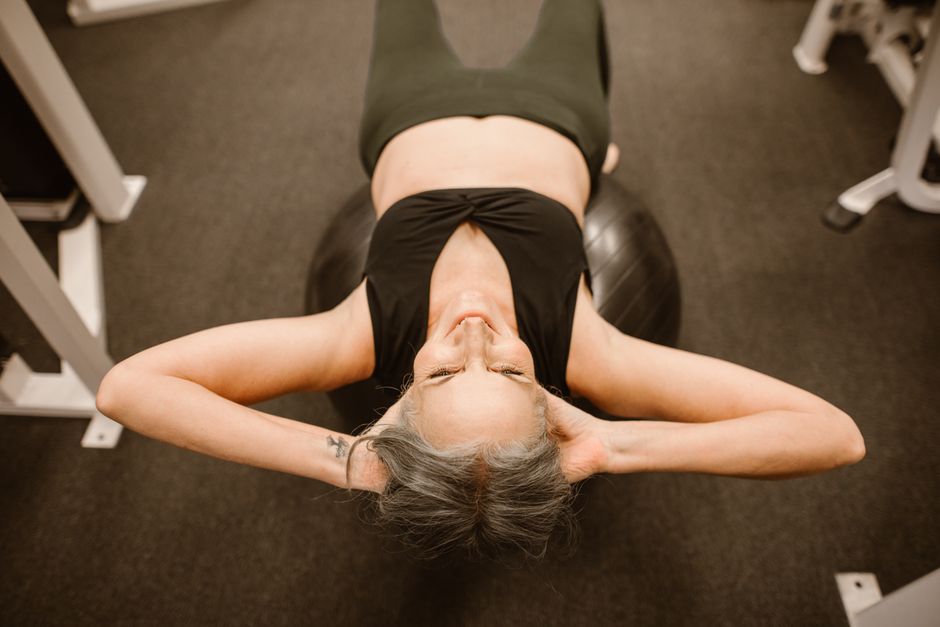
Menopause weight gain is common, and it is not a failure of willpower. Falling estrogen levels change where your body stores fat, how it uses energy, and how much muscle you keep, so the same habits that worked at 40 often stop working at 52. The steps that help are unglamorous but real: protect and build muscle, get enough protein, watch how many calories you actually eat, sleep, manage stress, and move more across the whole day. None of it is fast. Most of it works slowly and only if you keep doing it.
Why Does Menopause Cause Weight Gain?
Estrogen does more than run the reproductive system. It influences fat distribution, insulin sensitivity, and how the body builds and breaks down muscle. When estrogen falls during perimenopause and menopause, fat tends to shift from the hips and thighs toward the abdomen. That shift is one of the clearest and best-documented changes of the transition.
At the same time, lean muscle mass tends to decline with age, and muscle burns more calories at rest than fat does. Less muscle means a lower resting metabolic rate, which means the same plate of food can now push you into a calorie surplus. This is not a dramatic drop. It is gradual, and it is easy to miss because it happens over years, not weeks.
Sleep disruption and hot flashes make it worse. Poor sleep affects appetite hormones and tends to increase cravings for calorie-dense food. So the hormonal changes and the lifestyle fallout arrive together.
One clarification worth making: menopause itself does not automatically cause large weight gain. Research suggests the average weight gain across the transition is modest, and much of the weight people gain in midlife is also driven by aging and changing activity levels. The bigger issue is where the weight lands. Abdominal fat carries more metabolic risk than fat on the hips and thighs, and that is the change most tied to the hormonal shift.
What Is the Best Way to Manage Menopause Weight Gain?
There is no single fix, and anyone selling one is selling something. The approach with the most support combines a modest calorie reduction, resistance training, adequate protein, and better sleep. Each piece matters, and they work together.
The reason resistance training keeps coming up is not because it burns huge numbers of calories during the workout. It does not. It matters because it preserves and can build muscle, and muscle helps offset the drop in resting metabolism. For women in midlife, maintaining muscle is arguably the most important lever available.
Calorie reduction still matters. Hormones change where fat goes and how easily it is stored, but the basic rule that body weight responds to energy balance has not been overturned. What changes is the margin. You may need to eat somewhat less, or move somewhat more, than you did a decade ago to get the same result.
Protein deserves specific attention. Higher protein intake helps preserve muscle during weight loss, and it tends to be more filling per calorie. Many women in this age group eat less protein than would help them. Spreading protein across meals rather than loading it all at dinner is a reasonable strategy.
Finally, be honest about timeline. Fat loss in midlife tends to be slower than it was earlier. A rate of roughly half a pound to one pound per week is a realistic and sustainable target for most people. Faster loss usually means losing muscle along with fat, which works against you.
How Much Protein Do You Need After Menopause?
Protein needs go up with age, not down. That is the opposite of what many people assume.
The general adult recommendation is about 0.8 grams of protein per kilogram of body weight per day. That number was set to prevent deficiency, not to optimize muscle. For older adults, and especially for those trying to lose weight while preserving muscle, many researchers and clinicians suggest a higher intake, in the range of 1.0 to 1.2 grams per kilogram per day, with some going higher. This is a widely discussed range rather than a single universally agreed number.
To put that in perspective, a 150-pound woman weighs about 68 kilograms. At 1.0 grams per kilogram, that is roughly 68 grams of protein a day. At 1.2 grams per kilogram, it is about 82 grams.
Where it comes from matters less than getting it. Eggs, Greek yogurt, fish, poultry, lean meat, beans, lentils, tofu, and dairy all contribute. A few practical anchors:
- A large egg has about 6 grams of protein.
- A cup of Greek yogurt can have 15 to 20 grams, depending on the brand.
- A 3-ounce portion of cooked chicken or fish has roughly 20 to 25 grams.
- A half cup of cooked beans has about 7 to 8 grams.
If you have kidney disease or another condition that affects protein handling, talk to your doctor before raising your intake. For most healthy women, a higher-protein diet is not a concern, but individual medical situations change the picture.





Does Exercise Help With Menopause Weight Gain?
Exercise helps, but not in the way most people expect. It is not a reliable way to burn off a poor diet, and it rarely produces large weight loss on its own. Its real value is in preserving muscle, improving how the body handles blood sugar, supporting bone density, and helping with sleep and mood.
Two types of exercise matter most here.
Resistance training — weights, resistance bands, or bodyweight work — is the priority. Two to three sessions a week is a common starting point. It signals the body to keep muscle, which protects your metabolic rate. It also helps protect bone, which becomes more important after menopause when bone loss accelerates.
Aerobic activity — brisk walking, cycling, swimming — supports heart health and helps with energy balance. General guidance for adults is at least 150 minutes of moderate activity per week, and that is a reasonable target for most people.
There is a third piece that gets overlooked: daily movement outside of formal exercise. Standing, walking, taking stairs, and doing errands all add up. For many people, this background activity drops quietly over the years, and it can account for a meaningful share of the change in daily energy use. Bringing it back is often easier than adding another gym session.
If you have not been exercising, start smaller than you think you should. A single resistance session a week that you actually keep doing beats three that you quit after two weeks.
Do Hormone Changes Make Weight Loss Impossible?
No. Hormonal changes make weight loss harder and change where fat sits, but they do not make it impossible. This is one of the most common and most damaging myths about menopause.
What is true is that the margin narrows. A calorie deficit that felt easy at 40 may feel like a constant struggle at 55. Sleep problems, hot flashes, stress, and lower muscle mass all push in the same direction. That does not mean the body stops responding to reduced intake and increased activity. It means the response is slower and requires more consistency.
Menopausal hormone therapy is sometimes discussed in this context. It can help with hot flashes, night sweats, and sleep, and by improving sleep it may indirectly help with weight and appetite. Whether it directly changes body weight or fat distribution is less clear, and the evidence is mixed. It is not a weight-loss treatment. Decisions about hormone therapy should be made with a clinician based on your symptoms, health history, and risks, not as a weight strategy.
What does not help is chasing extremes. Very low calorie diets, long fasting windows, and cutting entire food groups often lead to losing muscle, which makes the underlying problem worse. The goal is to keep muscle while losing fat, and that requires eating enough protein and training, not eating as little as possible.
What Lifestyle Changes Actually Move the Needle?
Sleep is the one most people underrate. Short and disrupted sleep affects the hormones that control hunger and fullness, and it tends to push people toward more calories and less activity. If night sweats are wrecking your sleep, that is worth addressing directly with a doctor rather than just pushing through.
Stress matters too. Chronic stress raises cortisol, which is associated with increased abdominal fat storage. This does not mean stress alone causes weight gain, but it stacks on top of everything else. Whatever reliably lowers your stress — walking, time outdoors, breathing exercises, talking to someone — is not a luxury here.
Alcohol is worth a hard look. It adds calories, it tends to disrupt sleep, and it often loosens food choices. Cutting back is one of the simplest changes that can help, and it is often the one people least want to hear.
Finally, be skeptical of supplements marketed for menopause weight loss. No supplement has been shown in reliable human trials to produce meaningful weight loss in menopausal women. Some may cause harm. If a product promises fast results with no effort, that promise is not supported by evidence.
There is also a real caution about very restrictive approaches in this age group. Rapid weight loss without resistance training and adequate protein tends to reduce muscle and bone, both of which are already under pressure after menopause. Slower loss that protects muscle is the better trade.
Frequently Asked Questions
Can you lose menopause weight gain?
Yes. Weight loss still responds to a calorie deficit and increased activity after menopause, though it tends to be slower than earlier in life. Preserving muscle with resistance training and enough protein makes the loss more likely to come from fat.
What is the fastest way to lose menopause belly fat?
There is no fast or targeted way to lose belly fat specifically. A modest calorie deficit, resistance training, adequate protein, and better sleep reduce overall fat, and abdominal fat tends to come down along with it.
Does hormone replacement therapy help with menopause weight gain?
Hormone therapy is not a weight-loss treatment, and the evidence on whether it directly changes body weight is mixed. It can improve sleep and hot flashes, which may indirectly help with appetite and activity.
How much protein should a menopausal woman eat to lose weight?
Many clinicians suggest roughly 1.0 to 1.2 grams of protein per kilogram of body weight per day for older women trying to preserve muscle while losing weight. For a 150-pound woman, that is about 68 to 82 grams a day.
