
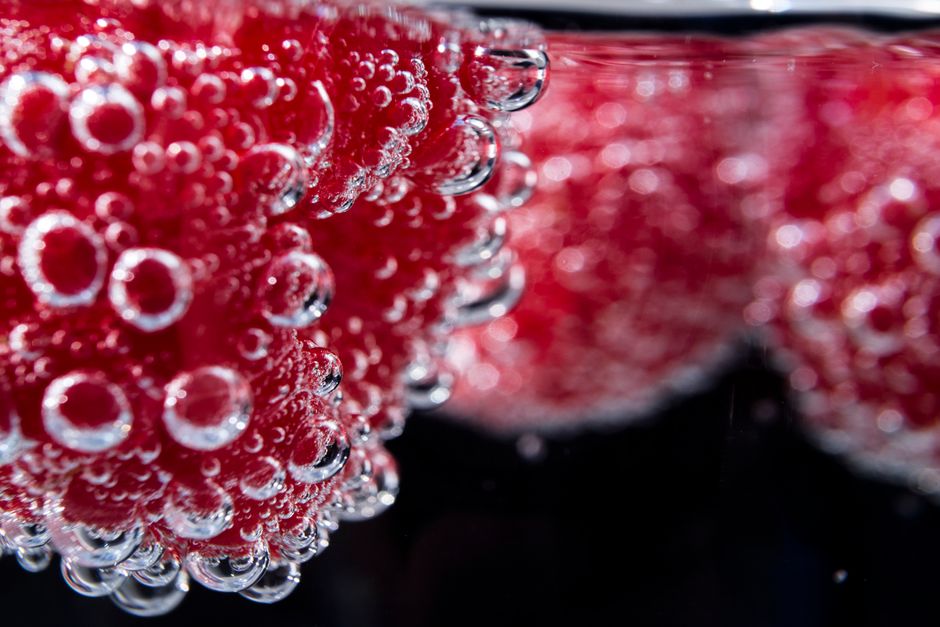
Flat soda can be re-fizzed, but only if it still has some carbonation left. The most reliable method is to reseal it under pressure with a carbonation device or a fresh, tight cap and chill it hard. Once a soda has gone completely flat, no home trick can put the bubbles back. What you can do is slow the loss, recover partial fizz, and understand why the bubbles leave in the first place.
Why Does Soda Go Flat?
Carbonated drinks hold dissolved carbon dioxide gas under pressure. That balance is fragile. Once the pressure escapes, the gas follows.
When you open a bottle or can, the pressurized CO2 rushes out. What remains is gas dissolved in the liquid. Over time, that dissolved gas also leaves the solution and escapes into the air above it. Warmth speeds this up. A large surface area speeds it up. An open container speeds it up.
This is why a half-empty bottle goes flat faster than a full one. More air space above the liquid means more room for the CO2 to escape into. Shaking accelerates the process dramatically, which is why a shaken bottle foams and then tastes flat shortly after.
The key fact: fizz is a physical state, not an ingredient. You cannot add fizz back by stirring, adding sugar, or squeezing lemon into it. The gas has to be physically reintroduced under pressure.
How To Make Soda Fizzy Again What Actually Works?
Only two approaches genuinely restore carbonation: reintroducing CO2 under pressure, or preventing the gas from escaping in the first place. Everything else is damage control.
Here is what works, ranked by reliability:
- Carbonation device: A home soda maker or CO2 carbonation system forces gas back into the liquid under pressure. This is the only method that reliably restores full fizz. It works best on soda that has lost only some carbonation. Very flat soda may not recover fully because the sugar and flavor profile has already shifted.
- Reseal tightly and chill: If the soda is only mildly flat, transferring it to a smaller bottle to reduce air space, capping it tightly, and refrigerating it can help retain and partially recover dissolved gas. This works because cold liquid holds dissolved CO2 better than warm liquid. It will not restore full carbonation, but it slows further loss and can make a difference.
- Fresh cap on a partially full bottle: A tight seal prevents new gas from escaping. Combined with cold temperature, this preserves what is left.
What does not work: adding baking soda, stirring, shaking, or adding anything to the liquid. None of these introduce CO2. Some of them make it worse by releasing more gas.
Does Chilling Soda Bring Back the Fizz?
Cold does not create new carbonation, but it does help keep existing carbonation in the liquid. This is a real physical effect, not a myth.
Carbon dioxide is more soluble in cold liquid than in warm liquid. A cold soda holds onto its dissolved gas better than a warm one. So chilling a partially flat soda in a sealed container can slow the loss and help the remaining gas stay dissolved. It will not restore gas that has already escaped.
Practical takeaway: keep soda cold and sealed between servings. Letting a bottle sit open at room temperature is the fastest way to lose fizz. If you are trying to preserve a bottle, refrigerate it immediately after opening and recap it tightly.





Can You Re-Carbonate Flat Soda at Home?
Yes, with the right equipment. Home carbonation systems are designed to force CO2 into liquid under pressure. Using one on flat soda can restore some or most of the fizz, depending on how flat the soda is and how the device works.
A few honest caveats. These devices are designed for water, and manufacturers often advise against carbonating sugary drinks because sugar can gum up the machine and cause foaming. Some systems handle soda better than others. Check your device’s instructions before trying it on a sugary drink.
Also, re-carbonating flat soda does not restore the original flavor perfectly. As soda goes flat, some of the volatile flavor compounds change and the sweetness perception shifts. The result may taste different even after re-carbonation. It is a reasonable salvage method, not a perfect reset.
For anyone who regularly deals with flat soda, a home carbonation system is the only real solution. There is no kitchen hack that substitutes for pressurized CO2.
How Do You Keep Soda From Going Flat in the First Place?
Prevention is far more effective than recovery. The goal is to minimize gas escape and keep the liquid cold.
- Recap immediately after pouring. Every second the bottle is open is gas leaving.
- Reduce the air space. Transfer leftover soda into a smaller bottle so there is less room for gas to escape into. Fill it close to the top.
- Keep it cold. Refrigerate between servings. Cold liquid holds CO2 better.
- Do not shake. Shaking releases dissolved gas rapidly. Handle bottles gently.
- Store upright. This keeps the seal tight and reduces leakage around the cap.
- Use a tight-sealing cap. A worn or loose cap lets gas escape slowly even when the bottle looks closed.
These steps will not keep soda fizzy forever. Carbonated drinks do lose carbonation over time even when sealed, though much more slowly. But they can extend usable fizz significantly compared to leaving a bottle open and warm.
What About Cans and Bottles That Arrive Flat?
If a sealed can or bottle is flat when you open it, that is a different problem. It usually means the seal failed, the product was stored poorly, or it was past its prime. No home method fixes a drink that was never properly carbonated to begin with.
A sealed container that has lost its fizz points to a packaging or storage issue. In that case, the practical answer is to return or replace it rather than try to revive it. Re-carbonating a drink that arrived flat is possible with a device, but it is working against a product that already failed.
The Bottom Line on Flat Soda
Fizz cannot be added back by any kitchen trick. It is dissolved gas under pressure, and once it is gone, only pressure brings it back. A carbonation device is the one reliable tool. For mildly flat soda, sealing tightly, reducing air space, and chilling can preserve and partially recover what remains.
The best strategy is prevention: keep it cold, keep it sealed, and keep the air space small. Flat soda is a physics problem, not a flavor problem, and it responds to physics-based solutions.
Frequently Asked Questions
Can you make flat soda fizzy again without a machine?
Not fully. Sealing it tightly and chilling it can help retain and partially recover carbonation, but no kitchen method restores gas that has already escaped. Only a pressurized carbonation device reliably re-fizzes flat soda.
Does putting soda in the fridge make it fizzier?
Cold helps keep existing carbonation dissolved, so it slows further fizz loss. It does not create new carbonation in soda that has already gone flat.
Why does my soda go flat so fast?
Warmth, open containers, large air space above the liquid, and shaking all speed up gas loss. A half-empty bottle left open at room temperature will go flat within hours.
Can you re-carbonate soda with baking soda?
No. Baking soda is sodium bicarbonate and does not introduce carbon dioxide gas into a drink. Adding it changes the flavor and does nothing to restore fizz.
