
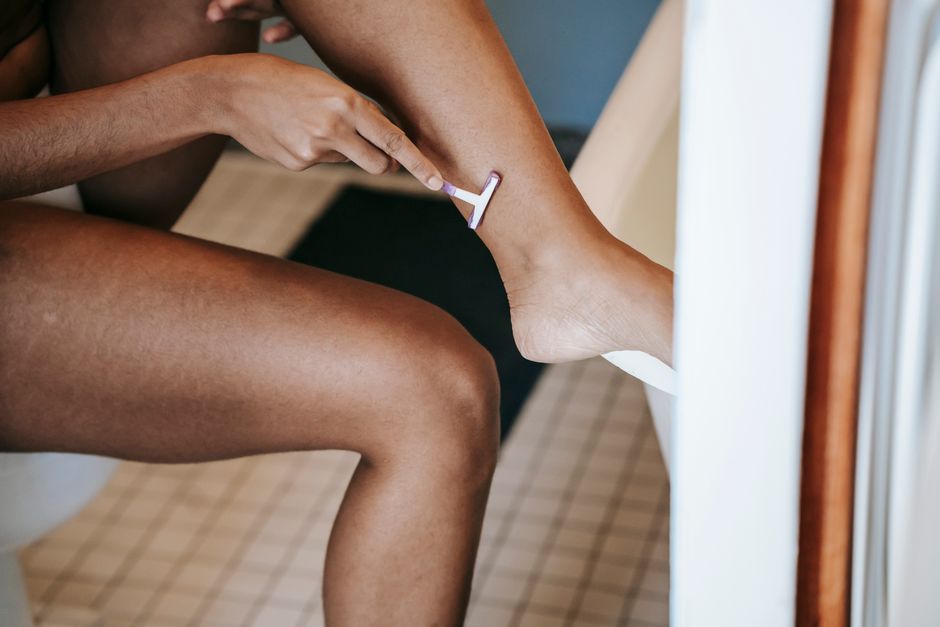
Razor bumps are a form of irritation that happens when hair is cut too short and curls back into the skin. The medical name is pseudofolliculitis barbae. Most cases calm down in a few days to a few weeks if you stop shaving the area and let the hair grow out. There is no overnight fix, but a few steps can speed healing and lower the odds of new bumps forming.
What Are Razor Bumps, Exactly?
Razor bumps are not a rash or an infection in most cases. They are an inflammatory reaction to hair growing back into the skin.
When you shave, the blade cuts hair at or slightly below the surface. As the hair grows back, its sharp tip can curve and re-enter the skin nearby. This is called an ingrown hair. The body treats the embedded hair as a foreign object and responds with redness, swelling, and a small bump. Sometimes the bump fills with pus and looks like a pimple.
This is different from razor burn, which is irritation from the blade itself — friction, dry shaving, or a dull blade. Razor burn tends to appear right after shaving and looks like a red, stinging patch. Razor bumps show up a day or two later and follow the path of individual hairs.
People with tightly curled or coarse hair are more prone to razor bumps. The curve of the hair makes it more likely to loop back into the skin. This is why pseudofolliculitis barbae is especially common in Black men who shave, though anyone can get it.
How To Make Razor Bumps Go Away Fast
The fastest path to healing is to stop cutting the hair for a while. Every time you shave over the bumps, you re-injure the skin and restart the cycle.
If you can grow the hair out for a few weeks, most bumps resolve on their own. If you cannot stop shaving — for work or other reasons — switch to a method that cuts hair less aggressively.
- Stop shaving the area for at least several days. This is the single most effective step.
- Use a warm compress a few times a day. A clean washcloth soaked in warm water can ease swelling and help a trapped hair work its way out.
- Do not pick or squeeze the bumps. This can push bacteria deeper and turn irritation into an infection.
- Apply a gentle moisturizer to keep the skin from drying and cracking.
- Try an over-the-counter hydrocortisone cream for short-term redness and itching. It calms inflammation but does not remove the ingrown hair.
If a bump is clearly infected — spreading redness, increasing pain, or a lot of pus — see a doctor. Infected hair follicles may need prescription treatment.
Should You Use a Razor or an Electric Trimmer?
An electric trimmer that leaves a bit of stubble is gentler than a razor that cuts flush with the skin. The less the hair is cut below the surface, the less likely it is to grow back into the skin.
A single-blade razor causes fewer problems than a multi-blade razor. Multi-blade cartridges pull the hair up and cut it below the skin surface, which sets up the exact condition that causes ingrown hairs. A single sharp blade cuts at the surface instead.
If you use a razor, shave in the direction the hair grows, not against it. Shaving against the grain gives a closer shave but cuts the hair shorter and raises the risk of bumps. Rinse the blade often and replace it when it starts to drag.
Some people find that chemical depilatories — the creams that dissolve hair at the surface — cause less trouble than shaving. Others find them irritating. It varies by person. Laser hair reduction, done by a professional, can reduce the problem over time by thinning the hair, but it is a series of treatments and not a quick fix.





What About Ingrown Hair Treatments and Products?
Products that contain salicylic acid or glycolic acid can help by gently exfoliating the skin around the follicle. This may free a hair that is trapped near the surface. These are not instant fixes, and they work best as part of a routine, not as a rescue treatment for bumps you already have.
Products marketed as “razor bump cures” often promise more than they deliver. No cream removes an ingrown hair that has curled deep into the skin. No product stops the hair from growing back. The evidence for most over-the-counter bump treatments is limited, and results vary a lot from person to person.
Retinoid creams, available by prescription, can help over time by speeding up skin cell turnover so trapped hairs are shed more easily. They also make skin more sensitive to sun and can cause dryness and peeling at first. These are usually prescribed by a dermatologist, not chosen off a shelf.
If you have a single deep, painful bump that will not go away, a doctor can sometimes remove the trapped hair with a sterile needle or a small procedure. Do not try to dig it out yourself. That is a common way to cause an infection or a scar.
How Long Do Razor Bumps Last?
Most razor bumps fade within a few days to a couple of weeks once you stop irritating the area. A bump that has become infected or deeply ingrown can take longer.
Dark spots left behind after the bump heals are called post-inflammatory hyperpigmentation. These marks can last for weeks to months. They fade on their own over time, but they fade faster if you protect the skin from sun and avoid further irritation. People with darker skin tones are more likely to develop these marks.
If bumps keep coming back in the same spot, the issue is usually the shaving method, not the skin itself. Changing how you remove hair matters more than any single product.
When Should You See a Doctor?
See a doctor if the bumps are spreading, getting more painful, or leaking pus. These can be signs of a bacterial infection that needs treatment.
Also see a doctor if you have tried changing your shaving routine for several weeks and the bumps are not improving. A dermatologist can confirm the diagnosis, rule out other skin conditions that look similar, and discuss prescription options.
Some skin conditions can look like razor bumps but are not. Folliculitis, acne, and certain infections can all cause bumps in the beard or bikini area. If the bumps do not follow a pattern tied to shaving, or if they appear without any shaving at all, that points to something else and is worth a professional look.
Can You Prevent Razor Bumps in the First Place?
Prevention comes down to cutting hair less aggressively and keeping the skin and blade in good shape.
- Shave after a warm shower, when the hair is softer.
- Use a sharp single-blade razor and replace it often.
- Always shave in the direction of hair growth.
- Use a shaving gel or cream, not dry shaving.
- Rinse the blade after every stroke.
- Do not stretch the skin tight while shaving, which pulls hair up for a closer cut.
- Moisturize after shaving.
If you are prone to bumps, shaving less often helps. Some people do better with an electric trimmer set to leave a little length. Others do best by not shaving at all. There is no single answer that works for everyone, and finding what works for your skin often takes some trial and error.
Frequently Asked Questions
How do you get rid of razor bumps overnight?
You cannot clear razor bumps overnight. The fastest real improvement comes from stopping shaving the area and applying a warm compress to reduce swelling.
Does toothpaste help razor bumps?
No, and it can make things worse. Toothpaste irritates skin and is not a treatment for ingrown hairs or inflammation.
Should you pop razor bumps?
No. Popping or squeezing can push bacteria deeper and turn a minor bump into an infection or a scar.
Are razor bumps the same as razor burn?
No. Razor burn is irritation from the blade and appears right after shaving, while razor bumps are ingrown hairs that show up a day or two later.
