
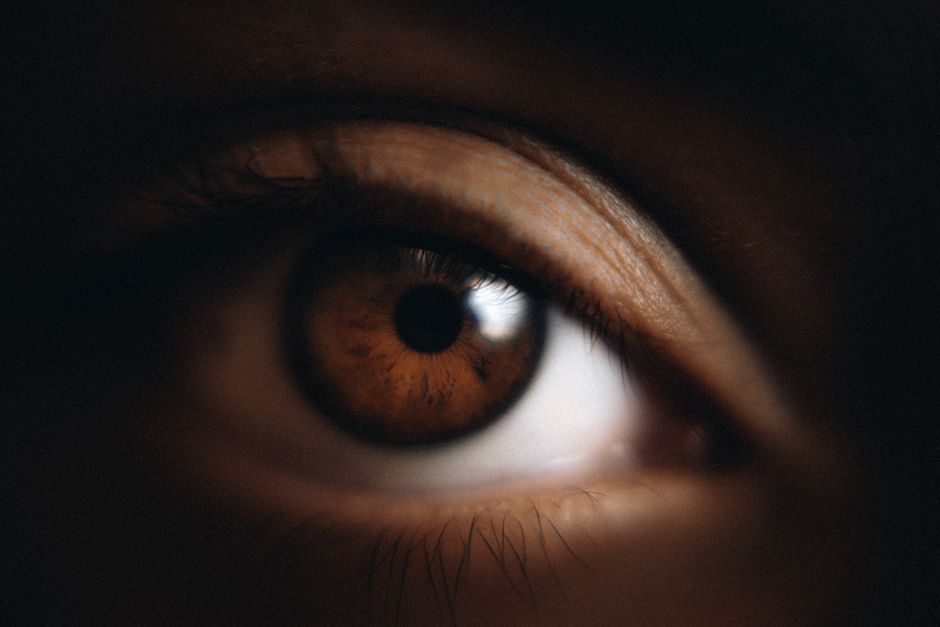
You cannot give yourself true night vision, but you can protect the low-light vision you already have and make the most of it. Your eyes adapt to darkness through a slow chemical process in the retina, and that process is easily disrupted by bright light, smoking, and certain nutritional gaps. Simple habits — like protecting your dark adaptation and using dim red light — help more than any gadget. Homemade gear can support dark adaptation, but no DIY device has been shown to create night vision in healthy eyes.
How Does Your Eye Actually See in the Dark?
Two different systems inside your retina handle vision, and they do not work the same way.
The cones handle color and fine detail. They need relatively bright light to work well. The rods handle dim light and motion, but they cannot detect color. Rods are packed mostly around the outer part of your visual field, which is why a faint star often seems to disappear when you look straight at it and reappear when you look slightly to the side.
When you step from a bright room into darkness, your pupils widen within seconds. That helps a little. The bigger change takes longer. Rods rebuild a light-sensitive pigment called rhodopsin, and this takes time. Full dark adaptation can take roughly 20 to 30 minutes. During the first several minutes, your sensitivity improves quickly, then it slows.
Here is the part most people never hear. Your eyes adapt to darkness separately. If you keep one eye closed while you check your phone, that eye stays dark-adapted while the other one resets. Sailors and astronomers have used this trick for a long time. It is not a myth. It works because each eye adapts on its own.
What Habits Protect Your Low-Light Vision?
Most of what you can do is protective, not enhancing. You are guarding a process that is easy to break.
Protect your dark adaptation. A single bright light can undo several minutes of adaptation. Use dim red light when you need to see something at night. Red light disrupts rhodopsin less than white or blue light because rods are less sensitive to longer wavelengths.
Do not smoke. Smoking is linked to damage in the retina and to a higher risk of eye diseases that affect vision over time. This is one of the more consistent findings in eye research.
Eat foods that support the retina. Vitamin A deficiency causes real night blindness, and it remains a major cause of preventable blindness in parts of the world where diets lack it. In the United States, frank vitamin A deficiency is uncommon. Eating carrots will not sharpen normal night vision. The carrot-and-night-vision story traces back to World War II propaganda, not to a proven effect on healthy eyes.
Wear sunglasses in bright daylight. This reduces the strain on your retina and may support faster adaptation when you move into dim conditions.
Get regular eye exams. Trouble seeing at night can be an early sign of a real problem, including cataracts, glaucoma, and retinal conditions. These need a clinician, not a home remedy.
Does Diet or Any Supplement Improve Night Vision?
For people who are not deficient, the evidence that supplements sharpen night vision is weak.
Vitamin A matters because the body uses it to build rhodopsin. If you are deficient, correcting that deficiency restores vision. If you already have enough, adding more does not make your rods work better. This is a common pattern in nutrition: fixing a shortage helps, and exceeding sufficiency does not.
Two nutrients deserve an honest mention. Lutein and zeaxanthin are found in the retina, and some research suggests higher intake may support eye health over the long term. Whether they improve night vision specifically in healthy adults is not established. Some studies have looked at lutein and glare recovery with mixed results. The evidence is not strong enough to promise a benefit.
Bilberry has a long folk reputation for night vision. It gained attention from pilots in the Second World War, but later controlled studies did not confirm a clear benefit. The evidence here is limited. Do not spend money expecting sharper night sight.
Talk to a clinician before starting high-dose vitamin A. It is fat-soluble, meaning it builds up in the body, and too much is toxic. High doses are especially risky during pregnancy. No clinical guidelines exist for using vitamin A supplements to improve night vision in healthy adults, because the evidence does not support that use.


Can You Train Your Eyes to See Better in the Dark?
You can get better at using the vision you have. You cannot train rods to become more sensitive than they are.
What improves with practice is how you use your eyes in low light. Learning to look slightly off-center at faint objects lets the rod-rich part of your retina do the work. This is a skill, and it sharpens with use.
Claims that eye exercises build night vision do not hold up. There is no strong evidence that exercises change the light sensitivity of the retina. Eye exercises can help some people with focusing or eye alignment problems, but that is a different matter.
Be cautious with products that promise to boost night vision through training apps or devices. If a claim sounds like it beats biology, it usually does not.
What DIY Gear Can Help With Dark Adaptation?
Homemade gear can support the habits above. It cannot give you night vision. Keep expectations honest.
Red light flashlight. A small flashlight covered with red cellophane or a red filter gives you light to move around without wrecking your adaptation. This is the single most useful DIY item, and it is the same principle used in observatories and on ships.
Eye patch. Covering one eye keeps it dark-adapted while the other handles light. Astronomers use this to switch between a bright screen and the night sky. A simple patch from a pharmacy works.
Amber or red safety glasses. Worn in the evening, these reduce blue light exposure and may help preserve adaptation if you need to step outside. They do not improve vision. They limit disruption.
Red screen filter. Setting a phone or tablet to a red-only display at low brightness limits the light that resets your eyes.
Blackout curtains. These help you reach full adaptation faster indoors and support better sleep, which matters for eye comfort.
What does not work: homemade lenses, DIY night-vision goggles built from scrap, or anything claiming to amplify light without electronics. True night-vision devices use image intensifier tubes or infrared sensors. You cannot build one from household items, and no home build has been shown to work as a vision aid.
When Should You Worry About Poor Night Vision?
Struggling to see in dim light can be normal as you age. It can also be the first sign of something treatable or serious.
Rod function and pupil response both decline with age, so some difficulty at night is expected. But a change that comes on quickly, affects one eye more than the other, or comes with other symptoms deserves attention.
See an eye doctor if you notice:
- New or worsening trouble seeing at night
- Poor vision in low light that affects driving
- Loss of peripheral vision
- Blurred vision, halos, or glare around lights
- Any sudden change in vision
These can point to cataracts, glaucoma, retinitis pigmentosa, or other conditions. Some are treatable, and early care matters. Do not try to manage them with diet or DIY gear.
Putting It Together
The realistic goal is not superhuman night sight. It is protecting the low-light vision you have and using it well.
Guard your dark adaptation with red light and an eye patch. Do not smoke. Eat a balanced diet with enough vitamin A from food. Wear sunglasses in bright sun. Get your eyes checked. Skip supplements and gadgets that promise more than biology allows.
If your night vision is getting worse, that is a medical question. Habits help healthy eyes. They do not replace a diagnosis.
Frequently Asked Questions
Can you actually improve your night vision naturally?
You can protect and make the most of your existing low-light vision through habits like guarding dark adaptation and eating enough vitamin A. You cannot train healthy eyes to see in the dark better than their biology allows.
Does eating carrots really help you see in the dark?
Only if you have a vitamin A deficiency, which is rare in the United States. For people who already get enough vitamin A, extra carrots do not sharpen night vision.
How long does it take for your eyes to adjust to darkness?
Full dark adaptation can take roughly 20 to 30 minutes, with the fastest improvement in the first several minutes. Any bright light can reset much of that progress.
Can you make DIY night vision goggles that work?
No. Real night-vision devices use image intensifier tubes or infrared sensors that cannot be replicated with household materials. DIY gear can only support dark adaptation, not create night vision.
