
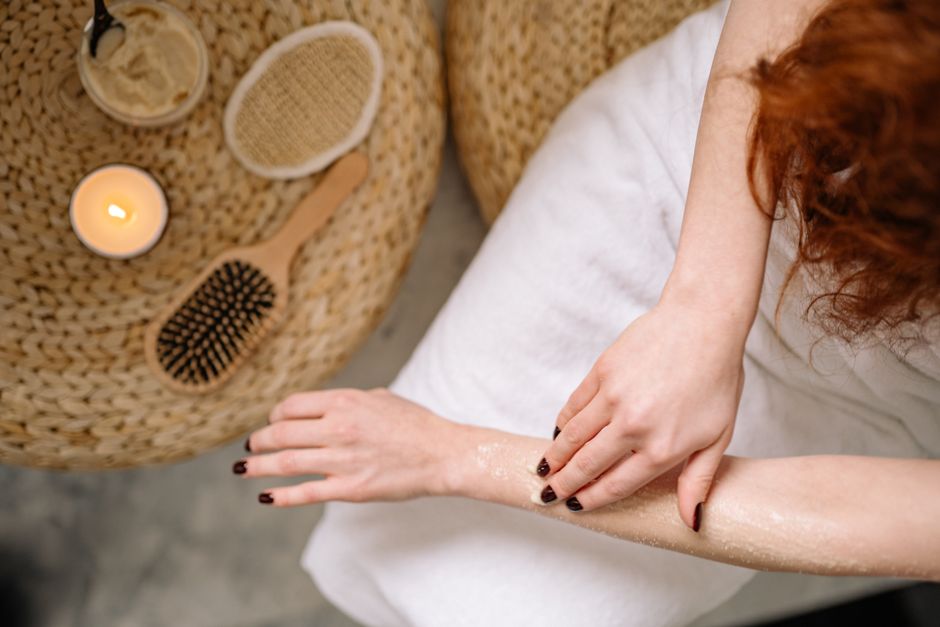
Making a natural body scrub at home is simple: mix a granular exfoliant like sugar or salt with a carrier oil such as coconut or olive oil, and add optional natural ingredients for scent or extra skin benefits. The basic ratio is about one part oil to two parts dry ingredient. You can adjust the texture to your preference, but keeping the mixture thick enough to stay on your hand while scrubbing is the goal. This article covers the ingredients, the method, and what the evidence actually says about natural exfoliation.
What Is a Natural Body Scrub and How Does It Work?
A body scrub is a physical exfoliant. It removes dead skin cells from the surface of your skin through gentle friction. The granular material — sugar, salt, coffee grounds, or oatmeal — provides the abrasive action. The oil base moisturizes the skin while the granules polish it.
Your skin naturally sheds dead cells. This process slows with age. Physical exfoliation speeds it up, leaving skin feeling smoother and looking brighter. The effect is temporary, but it is real. Dermatologists generally agree that gentle physical exfoliation is safe for most people when done properly.
Chemical exfoliants like alpha-hydroxy acids (AHAs) or beta-hydroxy acids (BHAs) work differently. They dissolve the bonds between dead skin cells. Some people prefer them because they do not require scrubbing. Both methods are valid. Physical scrubs are simply the easier option to make at home.
Which Ingredients Should You Use for a Natural Body Scrub?
The two core components are an abrasive and a base. The abrasive does the exfoliating. The base carries it and provides moisture. You can add a third ingredient for fragrance or specific skin benefits, but it is optional.
Sugar is the most popular abrasive. Granulated white sugar is fine. Brown sugar is softer because the crystals are smaller, making it a better choice for sensitive skin. Sugar dissolves in water, so it rinses off easily and leaves less residue than salt.
Salt provides a coarser scrub. Sea salt and Epsom salt are common choices. Salt does not dissolve as quickly as sugar, so it offers more friction. It can be too harsh for people with sensitive skin or open cuts. Salt scrubs also tend to dry the skin more than sugar scrubs, though the oil base helps counter this.
Carrier oils are the second essential component. Coconut oil is thick and solid at room temperature, which works well in a scrub but can feel heavy on some skin. Olive oil is lighter and rich in antioxidants. Sweet almond oil, jojoba oil, and grapeseed oil are also good options. Choose one that matches your skin type. If you are prone to breakouts on your body, a lighter oil like grapeseed may be better than coconut oil.
Optional additions include essential oils for fragrance, honey for its antibacterial properties, ground oats for soothing sensitive skin, or citrus zest for scent. These are not necessary for the scrub to work. They mainly change the experience.
How To Make a Basic Natural Body Scrub: Step-by-Step
The process takes about five minutes. You do not need special equipment. A bowl, a spoon, and a jar with a lid are enough.
- Measure one cup of your chosen abrasive — sugar or salt.
- Measure half a cup of your carrier oil.
- Mix the two in a bowl until fully combined.
- Add optional ingredients — a few drops of essential oil, a tablespoon of honey, or a teaspoon of vanilla extract.
- Stir again and transfer to a clean glass jar.
That is the entire method. The mixture will separate over time. This is normal. Stir it before each use.
You can adjust the ratio. If the scrub feels too oily, add more sugar. If it feels too dry and crumbly, add more oil. The right consistency is one that clumps together slightly but still spreads easily on your skin.
For a coffee scrub, replace the sugar with finely ground coffee. Coffee grounds are coarser than sugar, so this version is more abrasive. Some research suggests caffeine applied topically may temporarily reduce the appearance of cellulite, but the evidence is limited. The main benefit of a coffee scrub is exfoliation, not cellulite reduction.




How Often Should You Use a Body Scrub?
Most people can exfoliate their body once or twice a week. This is enough to remove dead skin without irritating the skin barrier. Over-exfoliating can cause redness, dryness, and micro-tears in the skin.
Your skin type matters. If you have sensitive skin or a condition like eczema or psoriasis, exfoliating once a week or less is safer. If your skin is oily or thick, twice a week may be fine. Pay attention to how your skin reacts. If it feels tight, stings, or looks red after scrubbing, you are doing it too often or pressing too hard.
Do not scrub your face with a body scrub. Facial skin is thinner and more delicate. If you want to exfoliate your face, use a finer sugar or a product specifically designed for the face.
Are Natural Body Scrubs Safe for Everyone?
No. Some people should avoid physical exfoliation or approach it with caution. If you have active acne, open wounds, sunburn, or a skin infection, do not use a body scrub. The friction can spread bacteria or worsen inflammation.
People with eczema or psoriasis should be careful. Exfoliation can trigger a flare-up. If you have one of these conditions, talk to a dermatologist before using any scrub, even a gentle one.
Salt scrubs can sting on broken skin. If you have just shaved your legs, wait a day before using a salt scrub. The micro-abrasions from shaving can make the salt burn.
There is also a question about microplastics. Many commercial body scrubs use plastic microbeads as the abrasive. These are bad for the environment and provide no skin benefit. Making your own scrub with sugar or salt avoids this issue entirely. This is one of the strongest reasons to make a scrub at home.
What Are the Real Benefits of a Homemade Body Scrub?
The main benefit is exfoliation. Your skin will feel smoother immediately after use. This effect lasts for a few days. Regular exfoliation can also help prevent ingrown hairs by freeing hairs that are trapped under dead skin.
There is some evidence that physical exfoliation can improve the appearance of rough skin and may help moisturizers absorb better. When dead cells are removed, the products you apply afterward can penetrate more effectively. This is a reasonable expectation, though the clinical evidence is not extensive.
Homemade scrubs are also cheaper than store-bought options. A jar of sugar and a bottle of oil will make several batches. You control the ingredients, so you can avoid preservatives, artificial fragrances, and dyes that are common in commercial products.
One thing to be honest about: homemade scrubs do not have preservatives. They will not last as long as commercial products. A sugar scrub stored in a cool, dry place can last a few weeks. If it develops an off smell or visible mold, throw it out. Adding water to the jar can introduce bacteria, so keep water out of the container.
Common Mistakes When Making and Using Body Scrubs
One common mistake is using too much oil. A scrub that is mostly oil will be slippery and hard to grip. It will also leave a heavy film on your skin. Stick close to the two-to-one ratio.
Another mistake is scrubbing too hard. You are not trying to polish wood. Use light to moderate pressure. Let the granules do the work. If your skin turns red during scrubbing, you are pressing too hard.
Scrubbing wet skin is also important. Applying a scrub to completely dry skin causes too much friction. Your skin should be damp, not dripping wet. In the shower is the easiest place to use a body scrub.
Finally, do not rinse off the oil completely with harsh soap afterward. The oil is part of the benefit. Rinse with warm water and pat your skin dry. The thin layer of oil left behind acts as a moisturizer.
How To Store Your Homemade Body Scrub
Use a clean, dry glass jar with a tight-fitting lid. Plastic containers can work, but glass is better because it does not absorb oils or odors. Keep the jar out of direct sunlight and away from heat.
If you use coconut oil, the scrub will be solid at room temperature. This is normal. It will melt when it touches your warm skin. You can also run the jar under warm water before use if you prefer a softer texture.
Do not add water to the jar. Water introduces bacteria and shortens the shelf life. Use a clean, dry spoon to scoop out the scrub each time. Avoid dipping wet fingers into the jar.
Label the jar with the date you made it. A simple sugar or salt scrub with oil will generally stay good for two to four weeks. If you notice any change in smell, color, or texture, discard it.
Frequently Asked Questions
What is the best ratio of oil to sugar for a body scrub?
Use one part oil to two parts sugar by volume. This creates a scrub that is thick enough to stay on your hand but moist enough to spread easily.
Can I use a body scrub on my face?
It is safer to avoid it. Facial skin is thinner and more sensitive than body skin, and the granules in a body scrub are often too coarse.
How long does a homemade body scrub last?
Most homemade scrubs last two to four weeks when stored in a sealed glass jar away from moisture and heat. Discard it if the smell or texture changes.
Is sugar or salt better for a body scrub?
Sugar is gentler and dissolves faster, making it better for sensitive skin. Salt is coarser and more abrasive, which some people prefer for rough areas like elbows and feet.
