
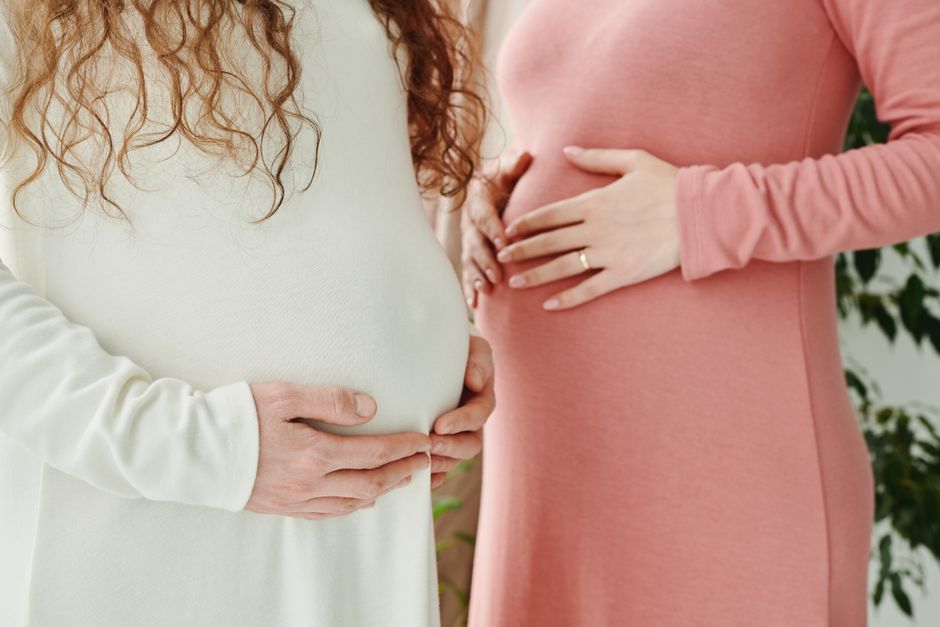
Making maternity clothes that actually fit comes down to three things: designing for a body that changes shape week by week, placing stretch and adjustability where the body actually grows, and accepting that a garment that fits at 12 weeks will not fit at 36. Good maternity design is less about sizing up regular patterns and more about building in room to move, gather, and adjust. The most useful maternity pieces share a few structural features — a stretch panel that sits under the belly rather than across it, a waistband that can be worn high or low, and seams placed where they won’t press on growing tissue.
Why Regular Clothes Stop Fitting During Pregnancy
Pregnancy changes the body in ways a standard size chart cannot capture. The uterus grows from roughly the size of a pear to fill much of the abdomen, and the rib cage can widen as the diaphragm is pushed upward. Blood volume rises, which can make hands and feet swell. Ligaments soften under the influence of the hormone relaxin, which loosens joints throughout the body, not just in the pelvis.
The practical result is that fit problems are not uniform. A woman may need a larger waistband long before she needs a larger bust, or the reverse. Maternity clothing that only adds width at the belly misses the point. Good design accommodates several changing dimensions at once.
There is also a timing issue. Early pregnancy often brings bloating before any visible bump appears. Clothing that only works once a bump is present leaves a gap of several weeks where nothing fits properly. Adjustable design handles that stretch of time far better than fixed sizing.
What Features Make Maternity Clothes Actually Fit?
The single most important feature is an adjustable waistband that can be worn below the belly, across it, or pulled up over it. This one design choice covers early pregnancy, late pregnancy, and the postpartum weeks when the body is still changing.
Beyond the waistband, several structural details separate clothing that works from clothing that fights the body:
- Stretch panels that expand in more than one direction, so the garment grows with the bump rather than pulling tight across it.
- Ruching or gathering at the sides, which lets fabric expand without straining seams.
- Seams placed away from the belly center, so pressure does not sit on the most sensitive area.
- Soft, wide waistbands that distribute pressure instead of digging in at one line.
- Wrap, tie, or drawstring closures that let the wearer adjust fit through the day.
- Fabric with real stretch recovery — the ability to spring back — so the garment does not sag and bag after repeated wear.
Fabric choice matters as much as cut. Knit fabrics with a high proportion of elastane or spandex hold their shape. Firm cotton jersey works well. Stiff woven fabrics without stretch are hard to adapt unless the pattern includes generous gathering or an adjustable closure.
How Do You Adapt a Regular Sewing Pattern for Pregnancy?
You can adapt many regular patterns, but the changes are structural, not cosmetic. Simply cutting a larger size produces a garment that is baggy everywhere except where you need room. The goal is to add space at specific points while keeping the shoulders, bust, and length in proportion.
A common approach is the belly panel. You separate the front of the garment at the waist, then insert a stretch panel that spans the bump. The panel is usually made from a firm knit that stretches in both directions. This lets the original garment keep its shape at the shoulders and bust while the front expands.
Side ruching is another practical technique. Gathering fabric along the side seams lets the front expand as the belly grows, and the gathers can be adjusted. Many sewists add extra length in the front bodice, since a growing belly pulls fabric upward and shortens the front hem.
For trousers and skirts, an adjustable waistband is the key change. Options include a wide stretch panel, a drawstring, or a button-and-loop system that lets the waistband expand in steps. Some patterns use a fold-over knit band that sits under the belly and can be worn low or high.
One point worth being clear about: there is no single “correct” adaptation. Pattern adjustments depend on the garment type, the fabric, and how the wearer prefers the waistband to sit. Testing with a muslin — a cheap practice version — before cutting into good fabric is standard sewing practice for a reason.





What Fabrics Work Best for Maternity Clothing?
Fabric determines whether a garment adapts or fails. The best maternity fabrics combine stretch, recovery, and breathability. Stretch lets the garment expand. Recovery means it returns to shape rather than stretching out permanently. Breathability matters because body temperature regulation can shift during pregnancy.
Knit fabrics are the workhorses here. Cotton jersey, bamboo jersey, and cotton-elastane blends all stretch and recover reasonably well. A higher elastane content generally means better recovery, though very high elastane can feel tight and less breathable.
For structure, ponte knit offers more body than jersey while still stretching. It holds shape well and works for trousers and skirts. Rib knit stretches generously and is often used for waistbands and panels.
Woven fabrics without stretch are harder to use for fitted maternity garments, though they work for loose styles, wrap dresses, and tops that do not need to expand at the waist. Linen and cotton poplin can work in flowing cuts. The trade-off is that they offer no give, so the cut must do all the work.
A practical caution: not all stretch fabrics recover equally. Cheap jersey can stretch out at the knees and belly after a few wears. Feeling the fabric’s spring-back before buying or sewing is a reasonable test.
Can You Make Maternity Clothes That Work After Pregnancy Too?
Yes, and this is one of the more useful design goals. Clothing with adjustable waists and wrap or tie closures often works through pregnancy and into the postpartum period, when the body is still changing. A garment that only fits at peak bump size has a short useful life.
Nursing access is a separate design question. Some maternity patterns include pull-aside or wrap fronts that also allow for breastfeeding. These are genuinely dual-purpose. Others do not, and a garment designed only for pregnancy may not work for nursing.
The honest position: dual-purpose design is achievable but requires planning from the start. Adding nursing access to a finished garment is difficult. Deciding on it before cutting fabric is straightforward.
What Fit Mistakes Are Most Common?
The most common mistake is sizing up instead of redesigning. A larger version of a regular garment is loose in the shoulders and tight at the belly — the opposite of what is needed. Maternity fit is about redistributing room, not adding it everywhere.
A second mistake is ignoring the early weeks. Clothing designed only for a visible bump leaves a gap in early pregnancy. Adjustable waists and wrap styles cover that period.
A third is choosing fabric for looks over recovery. A beautiful stretch fabric that sags after two wears will not hold fit. Testing stretch and recovery before committing to a project prevents this.
Finally, many people underestimate how much the body changes week to week. A garment that fits well at one stage may need adjustment later. Building in adjustability from the start is more reliable than trying to fix fit after the fact.
Frequently Asked Questions
Can I just buy regular clothes in a bigger size instead of maternity clothes?
Sizing up helps in some loose styles but usually fails for fitted garments, because it adds room everywhere rather than where the body grows. Maternity design redistributes space to the belly and bust while keeping shoulders and length in proportion.
What is the best fabric for making maternity clothes?
Knit fabrics with good stretch and recovery, such as cotton jersey or ponte knit, work best because they expand with the body and return to shape. Stiff woven fabrics without stretch are harder to adapt for fitted maternity garments.
How do I adapt a regular sewing pattern for pregnancy?
The most common approach is inserting a stretch belly panel at the front waist and adding side gathering so the garment expands as the bump grows. Testing the adjustment with a cheap practice version before cutting good fabric is standard practice.
Do maternity clothes need to be adjustable?
Adjustability is the single most useful feature, because the body changes shape across pregnancy and into the postpartum weeks. Waistbands that can be worn low or high and closures that expand in steps cover far more of that range than fixed sizing.
