
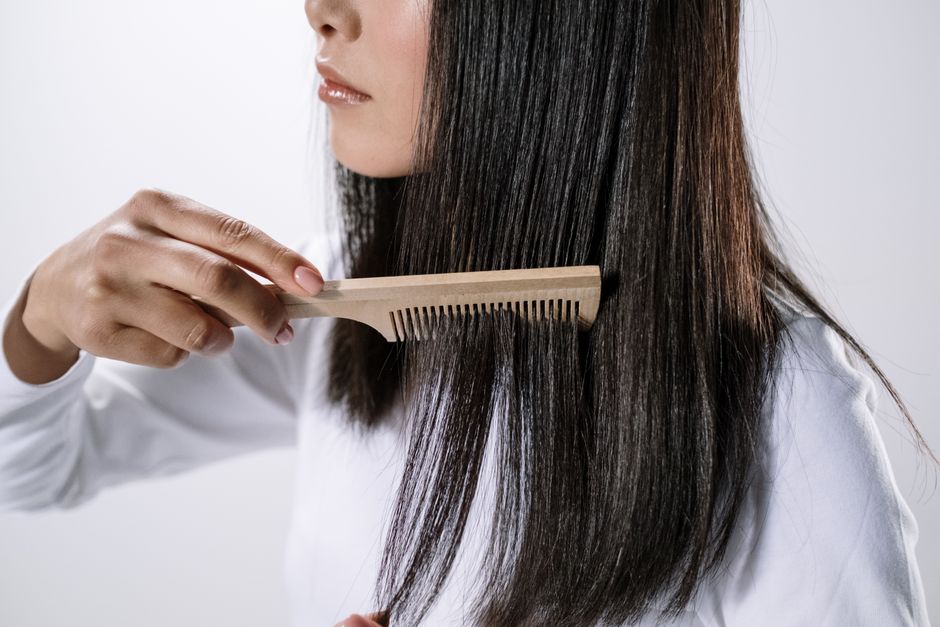
Soft hair comes down to two things: how much moisture your hair holds and how smooth its outer layer stays. For most men, hair feels rough because of damage to the cuticle — the protective outer shell — or because of buildup from products and hard water. Simple changes to washing, drying, and styling can make a real difference, and none of them require expensive products.
What Actually Makes Hair Feel Soft?
Hair is mostly protein. Each strand has three layers: the medulla in the center, the cortex in the middle, and the cuticle on the outside. The cuticle is made of overlapping scales, like roof shingles. When those scales lie flat, light reflects evenly and hair feels smooth. When they lift, snag, or break off, hair feels rough and looks dull.
Softness is mostly about the cuticle. Two things keep it flat: moisture inside the strand and a thin layer of natural oil (sebum) on the surface. Sebum comes from glands in the scalp. It coats hair as it grows out. This is why the hair near your scalp often feels softer than the ends — the ends are older and have less oil on them.
Anything that strips oil or roughens the cuticle makes hair feel coarser. That includes hot water, harsh shampoo, friction from towels, heat styling, and chemical treatments like bleach or relaxers. Sun exposure and chlorine also play a role.
One thing worth knowing: hair is not living tissue once it leaves the follicle. You cannot repair a strand the way you repair skin. You can smooth the cuticle, add moisture, and prevent further damage — but a split end stays split until you cut it.
How Often Should Men Wash Their Hair?
Daily washing is not necessary for most men, and it can work against you. Shampoo removes oil along with dirt. Wash too often and the scalp may respond by producing more oil, while the hair shaft loses the coating that keeps it smooth.
How often you should wash depends on your hair and scalp:
- Oily scalp, fine hair: every day or every other day is often fine.
- Normal scalp: every two to three days works for many men.
- Dry or curly hair: once or twice a week may be enough.
- Very curly or coily hair: less frequent washing is common, since natural oils travel down curly hair more slowly.
These are general patterns, not rules. There is no single correct frequency that applies to everyone. Pay attention to how your hair feels a day after washing — that tells you more than any guideline.
When you do wash, use lukewarm water rather than hot. Hot water lifts the cuticle and strips oil faster. Focus shampoo on the scalp, where oil and buildup collect, and let the lather rinse through the ends rather than scrubbing them directly.
Which Shampoo and Conditioner Actually Help?
Conditioner is the single most effective step most men skip. It coats the cuticle, reduces friction, and helps hair hold moisture. If you only change one thing, add conditioner.
For rough or dry hair, look for products with these ingredients:
- Moisturizers: glycerin, panthenol (a form of vitamin B5), and aloe.
- Oils and silicones: argan oil, jojoba oil, dimethicone, and amodimethicone. Silicones are not inherently bad — they smooth the cuticle and reduce breakage. Some people find they build up over time and need a clarifying wash occasionally.
- Proteins: hydrolyzed wheat or silk protein. These can temporarily fill gaps in damaged hair. Too much protein can make hair feel stiff, so they work best in moderation.
What to avoid depends on your situation. Sulfates (like sodium lauryl sulfate) clean well but can be drying, especially for men who wash daily or have dry hair. If your scalp is oily, sulfates are usually not a problem. If your hair is dry or color-treated, a gentler formula may help.
Be skeptical of claims that a shampoo can “repair” hair. No topical product rebuilds the internal structure of a strand. What conditioners and treatments can do is smooth the surface, reduce friction, and limit further damage. That is genuinely useful — it just is not repair.




Does Hard Water Make Hair Feel Rough?
Yes, for many people. Hard water contains dissolved minerals, mainly calcium and magnesium. These minerals can bind to the hair surface and leave a film that makes hair feel stiff and look dull. They can also make soap and shampoo less effective, so you may need more product to get a lather.
Signs that hard water may be part of your problem:
- Hair feels coated or waxy right after washing.
- Soap leaves spots on glassware or a film in the shower.
- Hair looks dull even when clean.
If you suspect hard water, a few approaches are commonly used. A clarifying shampoo once every week or two can remove mineral and product buildup. Some men install a shower filter, though the evidence on how much standard filters remove is limited — most basic filters target chlorine, not the minerals that cause hardness. A water softener treats the whole home and is the more reliable fix, but it is a bigger investment.
A final rinse with filtered or distilled water is a low-cost option some people find helpful. Evidence here is mostly anecdotal, so treat it as something to try rather than a proven solution.
How Do Drying and Styling Affect Softness?
Friction and heat are the two biggest sources of everyday damage. Both roughen the cuticle.
Rubbing hair hard with a towel is a common habit that causes friction while hair is at its most fragile — wet hair stretches and breaks more easily than dry hair. Instead, squeeze water out gently and pat rather than scrub. A soft cotton t-shirt or microfiber towel causes less friction than a standard terry towel.
On heat: high heat and repeated blow-drying can dry out the strand and lift the cuticle. If you use a blow dryer, keep it on a lower heat setting and hold it several inches from your hair. If you use a flat iron or curling iron, lower heat settings cause less damage than high ones, and using a heat protectant spray is a reasonable precaution. There is no heat setting that is proven to cause zero damage — heat styling damages hair over time regardless of product.
Letting hair air-dry when you can is the simplest way to reduce heat exposure. It is not always practical, but it helps.
Do Hair Oils and Treatments Really Work?
Oils can make hair feel softer, but they work on the surface, not inside the strand. Coconut oil is one of the better-studied options. Research indicates coconut oil can reduce protein loss from hair during washing, likely because its molecular structure lets it penetrate partway into the shaft. That is a real finding, though it does not mean coconut oil repairs damage.
Other oils — argan, jojoba, olive — mainly sit on the surface and smooth the cuticle. That can genuinely improve how hair feels and reduce friction. Applied sparingly to damp or dry hair, they add shine and softness. Used heavily, they can weigh hair down or attract dirt.
Deep conditioning treatments and hair masks can help temporarily. Most work by coating the hair and holding moisture in. The effect usually lasts until the next wash or two. They are not permanent fixes.
What does not work: products claiming to permanently repair split ends, reverse chemical damage, or regrow hair. Split ends must be trimmed. Chemical damage to the cortex is permanent. And hair softness products do not affect hair growth — that is a separate process driven by the follicle under the scalp.
What Lifestyle Factors Play a Role?
Hair quality reflects overall health to some degree, though the relationship is often overstated in marketing.
Nutrition matters for hair growth and structure. Protein is the main building block — hair is largely made of a protein called keratin. Severe protein deficiency can cause hair to become brittle and fall out, but this is uncommon in people eating a normal diet. Iron, zinc, and vitamin D are involved in normal hair growth, and deficiencies in any of these can affect hair. Correcting a deficiency can help; taking supplements when you are not deficient generally does not.
Smoking is linked to hair damage and thinning in some studies. Sun exposure degrades hair protein over time, similar to how it affects skin. Wearing a hat or using a leave-in product with UV protection is reasonable if you spend a lot of time outdoors.
Stress can affect hair through a condition called telogen effluvium, where more hairs than usual enter the shedding phase. This usually shows up as increased shedding a few months after a stressful event, and it typically reverses on its own. It affects shedding more than softness.
If your hair has changed suddenly — becoming much drier, breaking easily, or shedding heavily — that is worth mentioning to a doctor. Sudden changes can reflect thyroid issues, nutritional deficiencies, or other medical conditions, and those are worth ruling out rather than treating with products.
Frequently Asked Questions
How can I make my hair softer fast?
Add a conditioner after every wash and switch to lukewarm water. These two changes often improve how hair feels within a few washes.
Is it bad to wash my hair every day?
Not necessarily, but daily washing can dry out hair and scalp for many men. If your hair feels rough or your scalp feels tight, try washing every other day.
Does coconut oil really make hair softer?
It can improve how hair feels and some research indicates it reduces protein loss during washing. The effect is on the surface and does not repair existing damage.
Why does my hair feel rough even after conditioning?
Possible causes include hard water, product buildup, or heat and chemical damage. A clarifying wash and reducing heat styling may help, and a doctor can check for underlying causes if the change is sudden.
