
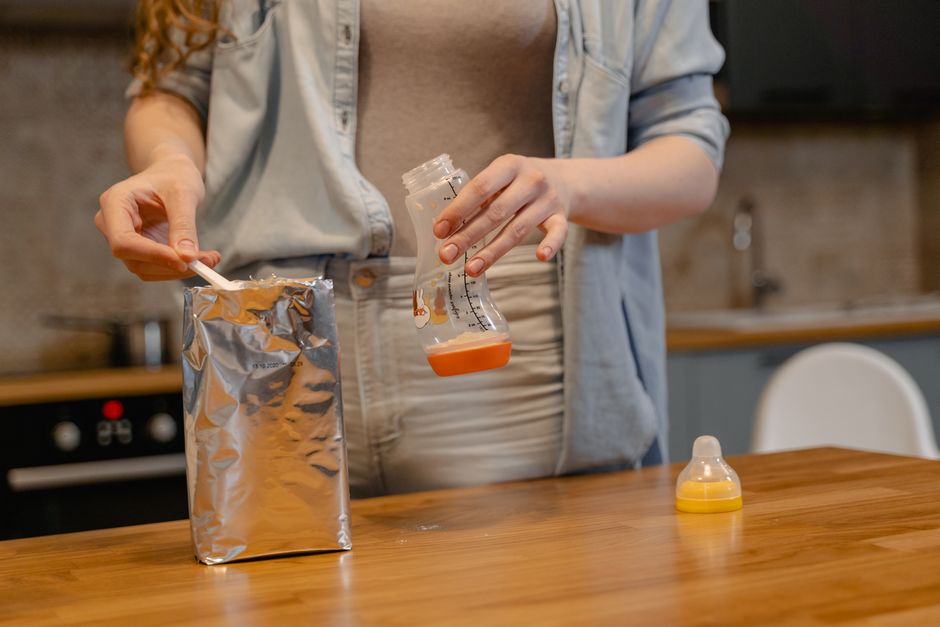
Making formula safely comes down to three things: clean water, clean equipment, and getting the powder-to-water ratio exactly right. Wash your hands and sterilize bottles and nipples before each feed, boil tap water and let it cool to at least 158°F (70°C), then add the powder to the water and mix. Use the formula within two hours of making it, or within one hour once feeding has started.
Powdered infant formula is not a sterile product. That single fact is why the steps below matter. The World Health Organization and UNICEF recommend mixing powder with water hot enough to kill any bacteria present in the powder itself. This guide walks through each step in order, explains why it exists, and covers the mistakes that cause most feeding problems.
Why Does Water Temperature Matter When Making Formula?
Powdered infant formula can contain Cronobacter sakazakii, a bacterium that occasionally causes severe infection in newborns. The risk is low, but the illness can be life-threatening in premature babies, infants under two months, and babies with weakened immune systems.
Water at 158°F (70°C) or hotter kills this bacterium in the powder. That is the temperature WHO and UNICEF specify in their guidance on preparing powdered infant formula. Cooler water may not be enough. Water that has been boiled and then left to sit for more than about 30 minutes can drop below that threshold, so timing matters.
Boiling the water first also kills bacteria and other organisms in the water supply itself. Let boiled water cool for no more than 30 minutes before adding powder. If you are unsure of the temperature, it is safer to mix slightly too warm than too cool. You can cool the prepared bottle under running tap water or in a bowl of cold water before feeding.
One clarification worth making: ready-to-feed liquid formula is sterile as sold. If your baby is premature, under two months old, or immunocompromised, some clinicians recommend ready-to-feed formula over powder specifically to remove the Cronobacter risk from the powder itself. Ask your pediatrician whether that applies to your baby.
How To Make Formula Milk Safely Step By Step?
Follow these steps in order every time. The sequence is not arbitrary — each step protects against a different contamination route.
- Step 1. Wash your hands. Use soap and warm water for at least 20 seconds. Dry with a clean towel.
- Step 2. Clean and sterilize the bottle, nipple, and ring. Wash them in hot soapy water with a bottle brush, then sterilize by boiling for five minutes, using a steam sterilizer, or following the sterilizer’s instructions. Do this before every feed for babies under 12 months.
- Step 3. Boil fresh tap water. Fill a kettle with cold tap water and bring it to a rolling boil. Do not use bottled water unless your local health authority says the tap water is unsafe — bottled water is not sterile and may contain too much sodium or other minerals for an infant.
- Step 4. Let the water cool for no more than 30 minutes. It should still be hot, around 158°F (70°C) or above.
- Step 5. Pour the correct amount of water into the sterilized bottle first. Measuring water first and powder second keeps the ratio accurate.
- Step 6. Add the exact number of scoops the label specifies. Use the scoop that came with that specific formula. Scoops are not interchangeable between brands. Level each scoop with the flat side of a knife — do not pack it down.
- Step 7. Attach the nipple and ring, then shake well. Hold the bottle with a clean cloth if it is hot. Shake until the powder is fully dissolved.
- Step 8. Cool the bottle to feeding temperature. Run it under cold tap water or stand it in a bowl of cold water. Test a few drops on the inside of your wrist — it should feel warm, not hot.
- Step 9. Feed right away. Use the formula within two hours of preparation.
- Step 10. Discard any leftover formula. If your baby does not finish the bottle within one hour of starting to feed, throw the remainder away. Do not refrigerate and reuse it.
Never add extra powder to make the formula “stronger.” Concentrating formula can overload an infant’s kidneys and cause dehydration or other serious problems. Never water it down either — diluted formula does not provide enough calories or nutrients. The ratio on the label is the ratio.
Can You Make Formula With Cold Water Instead?
Cold water does not kill bacteria in the powder, so it does not meet the WHO and UNICEF safety standard. Many parents do use cold or room-temperature water, and the actual risk of Cronobacter infection is low in healthy full-term babies. But the guidance exists because the consequences, when they occur, are severe.
If you are traveling or cannot boil water, ready-to-feed liquid formula is the safer option. It requires no mixing and no hot water. The same applies during power outages or water advisories.



Can You Prepare Formula In Advance?
Yes, with limits. Prepare each bottle fresh when possible. If you need to make bottles ahead, cool them quickly under cold running water, then store them in the refrigerator at 39°F (4°C) or below. Use them within 24 hours. Discard anything left after that window.
Bacteria multiply fastest in the “danger zone” between 40°F and 140°F (4°C to 60°C). A bottle left at room temperature for hours falls squarely in that range. Warm bottles by standing them in hot water or using a bottle warmer — never microwave formula, because it heats unevenly and can scald a baby’s mouth even when the bottle feels cool.
What Are The Common Formula-Making Mistakes?
Most feeding problems trace back to a handful of errors. These are the ones worth knowing.
- Packing the scoop. A heaped or compressed scoop delivers more powder than the label intends, which concentrates the formula.
- Using the wrong scoop. Scoops differ between brands and even between product lines from the same brand.
- Reusing a bottle the baby didn’t finish. Saliva introduces bacteria. Once feeding starts, the one-hour clock runs.
- Storing formula at room temperature. Prepared bottles belong in the fridge, not on the counter.
- Microwaving. Uneven heating creates hot spots that can burn an infant’s mouth.
- Not sterilizing equipment. Bottles, nipples, and rings need sterilization before every feed for babies under 12 months.
- Switching formula brands without reason. Frequent switching can cause digestive upset. Talk to your pediatrician before changing formulas.
One point that surprises many parents: sterilizing bottles is a separate step from boiling the water. Both matter. Sterilizing the bottle does not make the powder inside it sterile, and boiling the water does not clean the bottle.
When Should You Call A Doctor About Formula Feeding?
Call your pediatrician if your baby shows signs of illness after feeding or has trouble feeding. Warning signs include poor feeding, unusual sleepiness, fever in a baby under three months, blood in the stool, or persistent vomiting. These are general signs of infant illness and not specific to formula — but they warrant a call.
Feeding amounts change as babies grow. Your pediatrician can advise on how much and how often for your baby’s age and weight. There are no universal amounts that fit every infant, and growth patterns vary widely.
Is It Safe To Use Tap Water For Formula?
In most of the United States, yes. Tap water that meets public safety standards is suitable for formula once boiled. If you are on a private well, have your water tested for nitrates and bacteria. If your area is under a boil-water advisory, use bottled water or ready-to-feed formula until the advisory lifts.
Water softeners add sodium, which is not ideal for infants. If your home has a water softener, use unsoftened cold water from a different tap, or use bottled water. Fluoride at levels found in US tap water is not considered a concern for formula preparation.
Frequently Asked Questions
Can I make formula with room temperature water?
Room temperature water does not kill bacteria in the powder, so it falls short of WHO and UNICEF guidance. If you use cooler water, be aware that the small risk of Cronobacter infection is not eliminated.
How long can prepared formula sit at room temperature?
No more than two hours from the time it was made. Once your baby starts feeding from the bottle, discard what is left after one hour.
Do I need to sterilize bottles for every feed?
Yes, for babies under 12 months. Wash bottles, nipples, and rings in hot soapy water, then sterilize by boiling, steaming, or using a sterilizer before each feed.
Can I add extra formula powder for more nutrition?
No. Adding extra powder concentrates the formula and can stress an infant’s kidneys. Always follow the ratio on the label exactly.
