
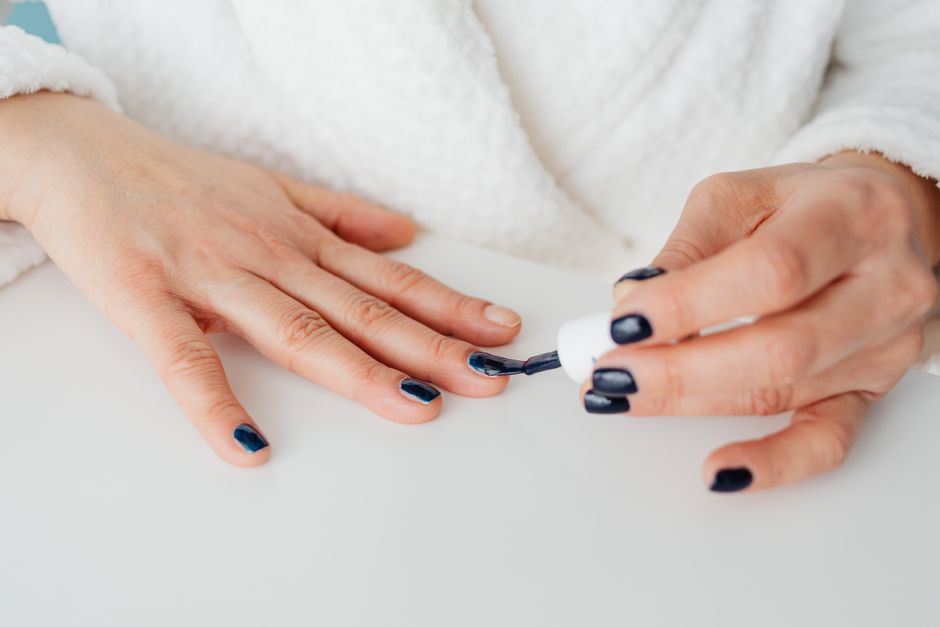
You do not need to buy a special product to make nail polish dry faster. You can make a fast-dry nail polish at home by mixing a few drops of nail polish thinner into your regular polish, or you can use a quick-dry top coat over your color. The fastest and most reliable method is to apply a thin layer of polish and then use a fast-drying top coat. This article explains the step-by-step process for both approaches, along with what actually works and what is just a myth.
What Actually Makes Nail Polish Dry Faster?
Nail polish dries through evaporation. The solvents in the polish evaporate into the air, leaving behind the colored film on your nail. Anything that speeds up evaporation will speed up drying time. Anything that slows it down will leave you waiting longer.
Heat speeds up evaporation, which is why some people use warm water or a hair dryer. But heat can also make polish bubble or peel if applied too aggressively. Thin layers dry faster than thick layers because there is less solvent to evaporate in the first place.
The chemistry of the polish matters too. Fast-dry top coats contain special solvents and resins that evaporate quickly and form a hard film. These products are formulated to be the last step in your manicure, sealing the color underneath.
How To Make Fast Dry Nail Polish: Step By Step
This method uses a nail polish thinner to change the consistency of your regular polish. It is the closest thing to actually making a fast-dry polish at home.
Step 1: Gather your supplies. You need your regular nail polish, a bottle of nail polish thinner, and a clean surface to work on.
Step 2: Open your nail polish bottle. Add one drop of thinner for every three drops of polish still in the bottle. Do not add more than that at first.
Step 3: Close the bottle tightly and roll it between your palms. Do not shake it. Shaking introduces air bubbles that can show up on your nails.
Step 4: Test the consistency on a piece of paper or a spare nail. The polish should flow smoothly but not be watery. If it is still thick, add one more drop of thinner.
Step 5: Apply a very thin layer to your nail. Wait two minutes. Apply a second thin layer if needed. Thin layers are the single most important factor in drying speed.
The thinner does not change the chemical formula of the polish. It restores the original solvent balance that was lost over time. Old, thick polish dries slowly because the solvents have evaporated from the bottle. Adding thinner brings those solvents back.
Do not use acetone or nail polish remover as a thinner. Acetone breaks down the polish formula and can ruin the color and finish. Only use a product labeled as nail polish thinner.
The Quick-Dry Top Coat Method
This is the method professional manicurists use most often. It does not change the polish itself, but it changes how fast the whole manicure becomes touch-dry.
Step 1: Apply your color polish in thin layers as usual. Wait two to three minutes between coats so each layer sets slightly.
Step 2: Wait until the final color coat is tacky but not fully dry. This usually takes about three to five minutes. The polish should not smear when you lightly touch it with a clean finger.
Step 3: Apply a generous layer of quick-dry top coat over the color. Cover the entire nail surface including the free edge at the tip.
Step 4: Let the top coat sit for about two minutes. The polish underneath will still be soft, but the top coat forms a hard shell that protects it.
Quick-dry top coats work because they form a protective film faster than regular polish can harden on its own. The color underneath may still take an hour or more to fully cure, but the surface is safe from smudges and sheet marks.



What Does Not Work: Common Myths
Several popular tricks for drying nail polish faster do not hold up to testing.
Cold water soaks. Cold water does not speed up solvent evaporation. In fact, it slows it down. Some people use cold water to set polish, but the effect is temporary and can leave the polish soft underneath.
Cooking spray or oil sprays. These products claim to create a barrier that helps polish dry. They can leave a greasy film on your nails and do not meaningfully speed up drying time.
Blowing on your nails. Your breath is warm and moist. The moisture in your breath can slow evaporation. A hair dryer on a cool setting works better, but only if you hold it far enough away to avoid blowing the polish around.
Putting your hands in the freezer. Cold air slows the chemical reactions in the polish. The polish may feel harder on the surface, but it stays soft underneath and is more likely to dent later.
The only reliable ways to speed up drying are thin coats, faster-evaporating solvents, and products specifically formulated to harden quickly.
How Long Does Nail Polish Really Take To Dry?
Most regular nail polishes are touch-dry within 10 to 20 minutes. Touch-dry means the surface no longer leaves a mark when you gently press it with your finger.
But touch-dry is not the same as fully dry. The polish continues to harden underneath for several hours. Most polishes reach full hardness within 12 to 24 hours. During that time, the polish can still dent or smudge if you press hard on it.
Fast-dry top coats reduce the touch-dry time to about two to five minutes. They do not reduce the full cure time. The polish underneath still needs hours to reach maximum hardness.
Gel polish is different. It only dries under a UV or LED lamp. The lamp cures the gel through a photochemical reaction rather than evaporation. Gel polish is not a faster option unless you already own the lamp and use the full gel system.
How To Apply Polish So It Dries As Fast As Possible
The way you apply polish affects drying time more than any product trick.
Use thin coats. One thick coat takes far longer to dry than two thin coats. Thick coats trap solvent underneath the surface, which has to slowly escape through the hardened film.
Wait between coats. Applying a second coat before the first one has set can trap solvent and extend drying time significantly.
Keep the bottle closed. Every second the bottle is open, solvents are evaporating into the air. Close the bottle between nails if you are slow at painting.
Paint in a warm, dry room. Humidity is the enemy of drying polish. Moisture in the air slows evaporation. A dehumidifier or air conditioner can help in humid weather.
Use less polish on the brush. Wipe one side of the brush against the rim of the bottle before applying. This removes excess polish that would otherwise create a thick, slow-drying layer.
Frequently Asked Questions
Does nail polish thinner actually make polish dry faster?
Yes, but indirectly. Thinner restores the solvents that have evaporated from old polish, which allows the polish to dry at its original speed again.
Can I use nail polish remover to thin my polish?
No. Nail polish remover breaks down the polish formula and can ruin the color and finish. Use only a product labeled as nail polish thinner.
How long should I wait between coats of nail polish?
Wait two to three minutes between thin coats. The polish should be tacky but not wet when you apply the next layer.
Is a quick-dry top coat worth it?
Yes, for most people. A quick-dry top coat makes the surface touch-dry in about two to five minutes, though the polish underneath still needs hours to fully harden.
