
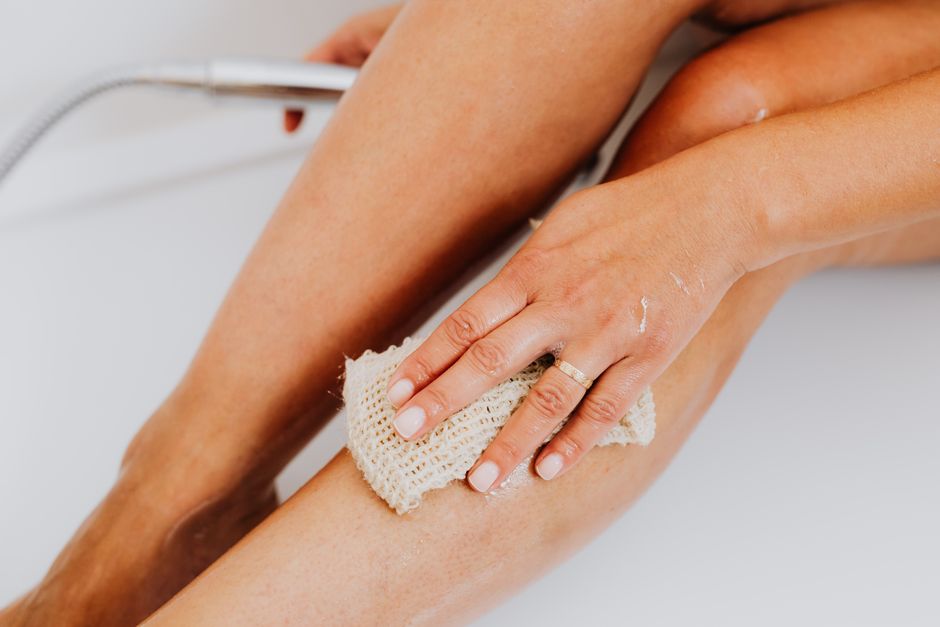
You can make an exfoliating body scrub at home with three things: a physical exfoliant like sugar or salt, a carrier oil or lotion to hold it together, and optional skin-safe additives for scent. Mix roughly two parts exfoliant to one part oil, massage it onto damp skin in the shower, and rinse. That is the core recipe. The details below cover which ingredients actually work, which ones can hurt your skin, and how often to use a scrub without causing irritation.
What Does an Exfoliating Body Scrub Actually Do?
Exfoliating removes dead cells from the surface of your skin. Your skin constantly sheds old cells on its own, but that process slows with age and can leave skin feeling rough or looking dull.
The outermost layer of skin, called the stratum corneum, is made of flattened dead cells packed with a protein called keratin. A physical scrub loosens and lifts some of those cells mechanically. A chemical exfoliant, like an acid, dissolves the bonds holding them together. Both approaches reveal fresher skin underneath.
What a scrub does not do is “detox” your body, shrink fat, or fix cellulite. No evidence supports those claims, even though they show up in a lot of product marketing. A scrub is a surface treatment. It changes how skin feels and looks in the short term, and that is a real but limited benefit.
There is one non-obvious point worth knowing. Your skin has a barrier made of oils, fats, and cells that keeps water in and irritants out. Over-scrubbing damages that barrier. When the barrier is compromised, skin loses moisture faster and becomes more reactive. That is why how often you exfoliate matters as much as what you use.
How To Make Exfoliating Body Scrub: Basic Recipe
The simplest scrub has two ingredients: an exfoliant and a lubricant. Everything else is optional.
- Exfoliant: Granulated sugar, brown sugar, or fine sea salt. Sugar is softer and dissolves in water, which makes it gentler. Salt is more abrasive and better suited to rough areas like feet and elbows.
- Carrier oil: Olive, coconut, jojoba, sweet almond, or sunflower oil. These dilute the exfoliant and help it glide instead of dragging.
- Optional additives: A few drops of essential oil for scent, honey, or ground oats for a softer texture.
Use about two parts exfoliant to one part oil by volume. Add oil slowly and stir until the mixture looks like wet sand. If it feels greasy, add more sugar or salt. If it feels dry and crumbly, add more oil.
Store it in a clean jar with a tight lid. Because the mixture contains no water, it resists spoiling better than most homemade skincare. Still, keep it out of the shower spray, and make small batches you will use within a few weeks.
Which Ingredients Should You Avoid in a Body Scrub?
Some common scrub ingredients cause more harm than good. Others are fine for most people but risky for certain skin types.
Walnut shell powder and apricot kernel powder are harsh physical exfoliants. Their particles have jagged edges that can create tiny tears in the skin. The FDA has raised concerns about these ingredients in facial scrubs specifically, and many dermatologists extend that caution to the body.
Lemon juice and baking soda are popular in homemade recipes but are problematic. Lemon juice is acidic and can make skin more sensitive to sunlight, a reaction called phytophotodermatitis. Baking soda is alkaline and can disrupt the skin’s natural acid balance, which the barrier depends on.
Essential oils are a mixed case. Some people react to them, especially citrus oils and cinnamon. If you want scent, use a small amount and test it on a patch of skin first.
Skip any scrub on broken skin, sunburn, active eczema flares, or after shaving. Those areas are already compromised, and scrubbing adds injury on top of injury.





How Often Should You Exfoliate Your Body?
Two to three times a week is a reasonable range for most people. Some tolerate daily use; others do better with once a week or less.
There is no universal number, because skin type, climate, and the abrasiveness of your scrub all change the answer. The signal to watch is how your skin responds. If it feels tight, stings, looks red, or flakes more than before, you are exfoliating too much. Cut back.
People with dry or sensitive skin generally do better with less frequent exfoliation and gentler ingredients. People with oily skin or who live in humid climates may tolerate more. If you have a skin condition like eczema, psoriasis, or rosacea, ask a dermatologist before adding a scrub to your routine. Scrubbing irritated skin tends to make those conditions worse, not better.
Does Exfoliating Help With Acne, Cellulite, or Dry Skin?
Exfoliation can help with some skin concerns and does nothing for others. The distinction matters, because a lot of products promise more than they deliver.
For body acne, gentle exfoliation may help by clearing pores and removing dead cells that trap oil. Chemical exfoliants like salicylic acid are generally more effective than physical scrubs for this purpose. Aggressive scrubbing can irritate acne and make it look worse.
For cellulite, no evidence supports scrubbing as a treatment. Cellulite is caused by the structure of fat and connective tissue under the skin, not by dead surface cells. No topical scrub reaches that layer.
For dry, flaky skin, exfoliation removes the flakes, but it does not add moisture. If you scrub dry skin without moisturizing afterward, it often feels drier than before. Pair exfoliation with a moisturizer to seal in water.
For keratosis pilaris, the small rough bumps on the backs of arms and thighs, exfoliation is a common approach. Some clinicians recommend gentle physical exfoliation combined with moisturizing, though evidence for chemical exfoliants in this condition is stronger.
How Do You Use a Body Scrub Correctly?
Technique matters as much as the recipe. The wrong method turns a mild treatment into an irritant.
- Start with damp skin. Water softens the exfoliant and helps it spread.
- Use light pressure and circular motions. Pressing hard does not clean better; it just damages skin.
- Spend more time on rough areas like elbows, knees, and heels, and less on thinner skin.
- Rinse with warm, not hot, water. Hot water strips oils from the skin.
- Pat dry and apply moisturizer within a few minutes, while skin is still damp.
If you shave, exfoliate before shaving, not after. Scrubbing freshly shaved skin increases irritation and the risk of ingrown hairs.
One safety note for the shower itself. Oil-based scrubs make tub and shower floors slippery. Rinse the floor well after use, and consider a mat. This is a small thing that prevents real injuries.
Can You Use the Same Scrub on Your Face?
No. Body scrubs are too abrasive for facial skin, which is thinner and more delicate.
Facial skin also tends to be more reactive, and the oils and fragrances that are fine on your legs can clog pores or trigger irritation on your face. If you want to exfoliate your face, use a product made for that purpose, and follow its directions.
This is one of the most common mistakes people make with homemade scrubs. The skin on your body and the skin on your face have different thickness, oil production, and sensitivity. Treating them the same way usually ends with a breakout or a red, stinging face.
Are Store-Bought Scrubs Better Than Homemade Ones?
Neither is automatically better. Both can work well, and both can cause problems if they are too harsh or used too often.
Homemade scrubs give you control over ingredients. You know exactly what is in them, which helps if you have allergies or sensitivities. They are also inexpensive.
Store-bought scrubs are formulated with preservatives, which matters if a product contains water. Water-based products can grow bacteria without preservatives, and homemade versions that include water or fresh ingredients spoil quickly. Commercial products also tend to have more consistent particle size, which can make them gentler.
The deciding factor is not homemade versus store-bought. It is how abrasive the product is, what else is in it, and how your skin responds. A gentle homemade sugar scrub can be better than a harsh commercial one, and the reverse is also true.
Frequently Asked Questions
What is the best base oil for a homemade body scrub?
Jojoba, sweet almond, sunflower, and olive oil all work well because they spread easily and are unlikely to clog pores on the body. Coconut oil is popular but can clog pores for some people, so patch test if you are acne-prone.
Can I use sugar instead of salt in a body scrub?
Yes, and sugar is the gentler choice because its grains are softer and dissolve in water. Salt is more abrasive and better suited to rough areas like feet and elbows.
How long can I store a homemade body scrub?
A scrub made only with oil, sugar or salt, and no water or fresh ingredients can last several weeks in a sealed jar away from moisture. Any recipe that includes water, fresh fruit, or dairy should be refrigerated and used within a few days.
Is it safe to exfoliate every day?
Daily exfoliation is too much for most people and can damage the skin barrier, leading to redness, stinging, and dryness. Two to three times a week is a more typical range, and less is better for sensitive skin.
