
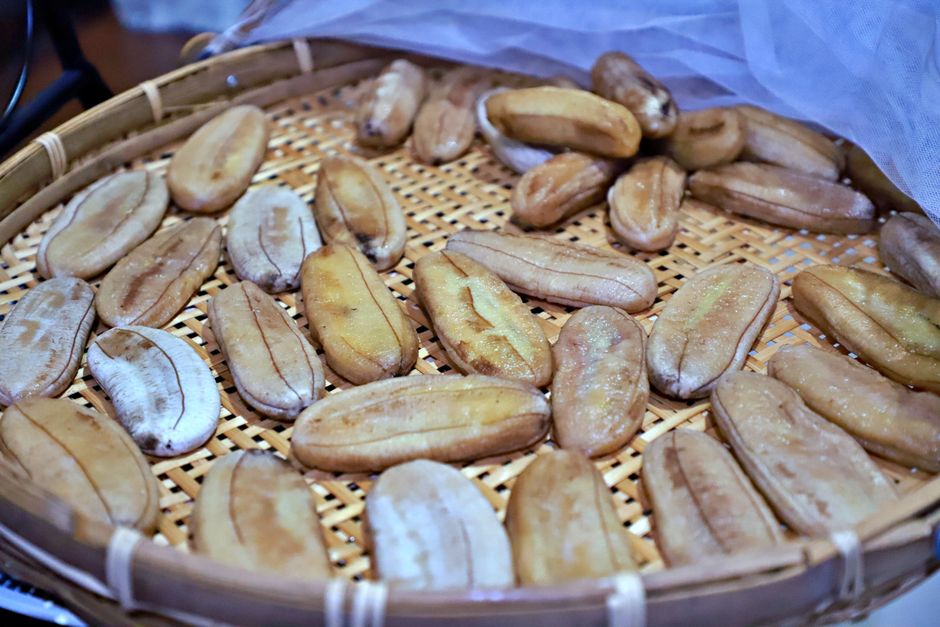
Making banana chips quickly comes down to three methods: frying in hot oil, baking in a hot oven, or using an air fryer. Each one can produce crisp chips in under 30 minutes of active work. The method you pick depends on how much oil you want to use and what equipment you already own.
Banana chips are simple food. Sliced bananas, some oil, a little salt, and heat. The tricky part is getting them crisp instead of chewy or soggy. That comes down to slice thickness, moisture, and temperature. Get those three things right and any of the methods below will work.
What Kind Of Bananas Should You Use For Chips?
Green or barely ripe bananas make the crispiest chips. This is the single most important choice you will make.
Ripe bananas are sweet and soft. They contain more sugar and less starch, and they hold more water. When you slice a ripe banana and heat it, the slices tend to stick together, brown fast, and stay limp. Green bananas are firm and starchy. They slice cleanly and hold their shape through cooking.
This is why commercial banana chips you buy in a bag are almost always made from unripe plantains or green bananas. The firmness matters more than the flavor at this stage.
If you want sweeter chips, you have two options. You can let the bananas ripen slightly, just until the peel turns from green to a pale yellow. Or you can fry or bake green banana chips and toss them with a light dusting of cinnamon sugar after cooking. Adding sugar before cooking tends to burn.
Plantains work the same way. Green plantains make savory, starchy chips. Yellow or black plantains make sweeter ones that crisp less reliably.
How To Make Banana Chips Quickly: 3 Methods
All three methods below use the same prep. Peel the bananas, slice them thinly and evenly, and keep the slices from browning while you work.
Aim for slices about 1/8 inch thick, roughly the thickness of a coin. A mandoline slicer makes this fast and consistent. Uneven slices are the most common reason chips come out partly burnt and partly chewy. If you are slicing by hand, a sharp knife and a steady, slow cut will get you closer to even than rushing.
As you slice, drop the slices into a bowl of cold water with a squeeze of lemon juice or a spoonful of vinegar. This slows browning. It also rinses off surface starch, which helps the chips separate instead of clumping. Pat the slices completely dry with a clean towel before cooking. Any water left on the surface will cause oil to spatter and will steam the chips instead of crisping them.
Method 1: Frying
Frying is the fastest and most reliable way to get crisp chips. Heat about an inch of neutral oil in a deep pan to roughly 350°F (175°C). A kitchen thermometer is worth using here, because oil temperature is the difference between crisp chips and greasy ones.
Fry the slices in small batches. Do not crowd the pan. Each batch takes about 1 to 2 minutes, until the chips are light golden. Remove them with a slotted spoon and drain on paper towels. Salt them while they are still hot so the salt sticks.
If the oil is too cool, the chips absorb oil and turn soggy. If it is too hot, the outside burns before the inside dries out. Watch the first batch closely and adjust.
Method 2: Baking
Baking uses far less oil and is easier to manage, but it takes longer and needs more attention. Preheat the oven to 350°F (175°C).
Toss the dry slices lightly in a tablespoon or two of oil, just enough to coat them. Spread them in a single layer on a baking sheet lined with parchment. Overlap means steam, and steam means chewy.
Bake for about 15 to 20 minutes, flipping the slices halfway through. Watch them closely near the end, because the line between golden and burnt is narrow. Oven temperatures vary, so your first batch is really a test run. Chips will crisp up a little more as they cool.
Method 3: Air Fryer
An air fryer sits between the two. It uses hot moving air, so it needs only a light coating of oil, and it cooks faster than a standard oven.
Toss the dry slices with a small amount of oil. Arrange them in a single layer in the basket. Cook at 350°F (175°C) for about 10 to 15 minutes, shaking the basket every few minutes so they cook evenly. Check them often. Air fryers vary widely in power, so timing will differ from one unit to the next.
One honest note: air fryer chips can come out uneven, with some slices crisp and others still soft. Shaking the basket and keeping the layer thin helps. If you want the most consistent results with the least fuss, frying is still the most dependable method.
Why Do Banana Chips Sometimes Turn Out Soggy?
Soggy chips almost always come down to water. Bananas are roughly 75 percent water, and that water has to leave the slice before it can crisp.
There are four common causes:
- Slices that are too thick. Thick slices dry out slowly and often stay soft in the middle.
- Wet slices going into the oil or oven. Pat them dry.
- Overcrowding. Slices that touch each other release steam that keeps them soft.
- Oil that is not hot enough. Cool oil soaks into the chip instead of sealing it.
There is one more factor worth knowing. Even a perfectly cooked banana chip will soften over time if left in the open air, because it pulls moisture back out of the air. That is why chips should be stored in an airtight container once fully cooled. They are best eaten the same day.




Are Homemade Banana Chips Healthy?
It depends almost entirely on the method and the oil, not on the banana itself.
Bananas provide potassium, vitamin B6, and fiber. Frying adds a significant amount of fat and calories, and chips made this way are a higher-calorie food than a plain banana. Baked and air-fried versions use far less oil, so they carry fewer calories from fat.
One point worth clarifying, because it circulates widely online: the idea that green bananas or banana chips are a strong source of “resistant starch” that behaves like fiber. Green bananas do contain resistant starch, and resistant starch is a real thing that some research links to digestive health. But frying or baking at high heat changes the starch structure, and the amounts in a small serving of chips are modest. Banana chips are a snack, not a health food. Treat them that way.
If you are watching sodium, note that many store-bought banana chips are heavily salted and sometimes sweetened. Homemade versions let you control both.
How Should You Store Banana Chips?
Let the chips cool completely first. If you seal them while warm, the trapped steam will make them soft again.
Once cool, store them in an airtight container at room temperature. They will hold their crispness best for a day or two. Beyond that, they gradually absorb moisture and lose their snap. A brief re-crisp in a hot oven or air fryer can bring some of it back.
This is a good reason to make chips in small batches you will actually eat fresh, rather than large amounts you have to store.
A Few Practical Tips That Make A Real Difference
Slice evenly. This matters more than any other single step.
Dry the slices thoroughly before they hit heat.
Use a thermometer for frying if you can. Guessing oil temperature is the most common mistake.
Salt after cooking, not before. Salt draws out moisture and can make chips soggy if added too early.
Cook in small batches. It takes a little longer but the results are far better.
None of these methods require special skill. They require attention to water and heat. Control those two things and you will get crisp chips on the first try.
Frequently Asked Questions
Can I make banana chips without oil?
Yes, you can bake or air fry slices with no oil at all, though they tend to be drier and less crisp. A very light coating of oil helps them brown and crisp more evenly.
How thin should I slice bananas for chips?
Aim for about 1/8 inch, roughly the thickness of a coin. Even thickness matters more than any exact number, since uneven slices cook at different rates.
Why are my banana chips chewy instead of crunchy?
Usually because the slices were too thick, too wet, or crowded together during cooking. Slicing thinner, patting them dry, and cooking in a single layer fixes most of these problems.
How long do homemade banana chips stay fresh?
Stored in an airtight container at room temperature, they stay crisp for about one to two days. After that they slowly absorb moisture and soften.
