
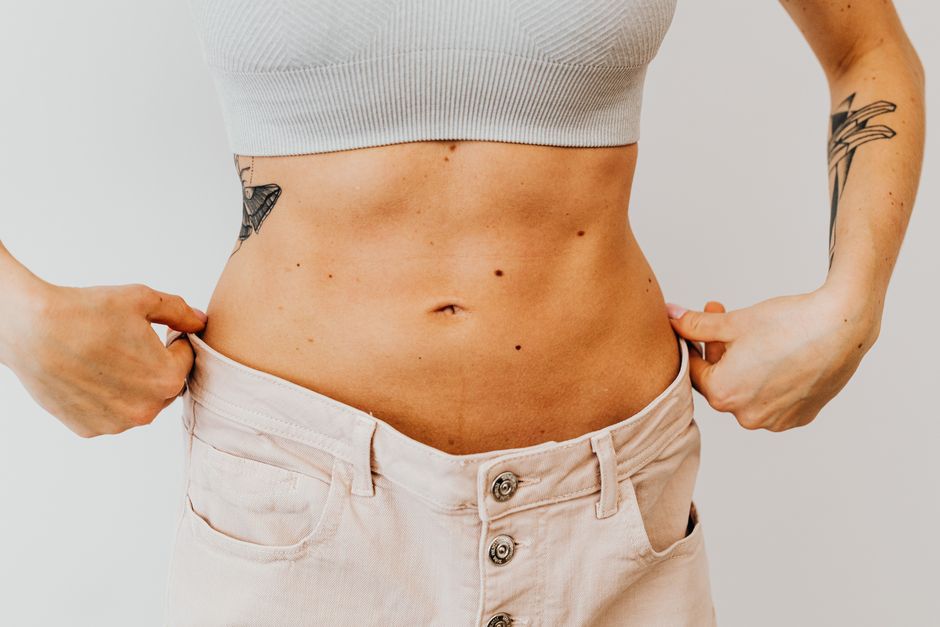
Apron belly, also called a pannus stomach, is the excess skin and fat that hangs down over the waistline. It is not just belly fat. It is a mix of stretched skin and stored fat that often remains after pregnancy or major weight loss. Losing it requires a two-part approach: reducing the fat inside the body and tightening the skin and muscle underneath. No single food, drink, or pill will remove it. The real solution involves consistent calorie management, strength training that targets the deep core, and time. For most people, visible change takes three to six months of steady effort. Here is what the evidence actually says.
What Causes an Apron Belly?
An apron belly forms when the abdominal skin loses its elasticity and the connective tissue underneath weakens. This happens most often after pregnancy. The skin stretches for months and then does not snap back fully. The same thing occurs after losing 50 pounds or more. The skin was expanded to hold a larger body and now hangs loose.
But skin alone is not the whole story. Underneath that loose skin, there is often visceral fat — the deep belly fat that wraps around your organs. The CDC reports that over 42% of US adults have obesity, and a large portion of that fat settles in the abdomen. This combination of loose skin and deep fat creates the hanging fold that defines apron belly.
Hormones play a role too. After menopause, estrogen drops and fat storage shifts toward the belly. This is not something you can control with willpower. It is biology. But it is also something you can work with once you understand it.
Can You Lose Apron Belly Without Surgery?
Yes, but only up to a point. If the apron belly is mostly fat, you can reduce it with diet and exercise. If it is mostly stretched skin, exercise will not tighten it. Skin is not muscle. You cannot tone skin.
Research published in the Journal of the American Medical Association found that people who lost 5% to 10% of their body weight through diet and exercise reduced visceral fat significantly. That is the fat inside the apron. But the hanging skin itself did not shrink proportionally. For many people, the skin remained even after the fat underneath was gone.
This is the honest answer: if your apron belly is soft and jiggly, it has a lot of fat in it. You can shrink that. If it is thin and hangs like a flap, it is mostly skin. That will not respond to exercise. You need to know which type you have before you decide what to do.
How To Lose Apron Belly: What the Research Actually Shows
The most effective approach combines a moderate calorie deficit with full-body strength training. Spot reduction — doing hundreds of crunches to lose belly fat — does not work. The American Council on Exercise states clearly that you cannot target fat loss from one area. You lose fat from everywhere at once. Where you lose it first is determined by genetics, not by which exercises you do.
A study in Medicine & Science in Sports & Exercise followed women who did abdominal exercises five days a week for six weeks. They showed no significant reduction in belly fat compared to women who did no abdominal work at all. The exercises strengthened the muscle underneath. They did not remove the fat on top of it.
What did work was a combination of resistance training and a calorie deficit of about 300 to 500 calories per day. That means eating slightly less than your body burns. Not starvation. Not a crash diet. A moderate, sustainable reduction. Over 12 to 16 weeks, participants lost an average of 4 to 6 pounds of body fat, and a measurable portion came from the abdominal area.
Key point: You cannot out-exercise a bad diet for belly fat. A 2018 review in Nutrients confirmed that diet accounts for roughly 70% of body fat loss. Exercise provides the muscle retention and metabolic boost. Both are needed. Neither works alone.



Which Exercises Help the Most?
Compound exercises that use multiple muscle groups are more effective than isolation moves. Squats, deadlifts, and overhead presses burn more calories and build more muscle than leg raises or crunches. More muscle means a higher resting metabolism. That helps you burn fat even when you are sitting still.
Here are the exercises with the strongest evidence for reducing belly fat:
- Squats — engage the entire core, legs, and back. They build muscle mass and burn significant calories.
- Deadlifts — strengthen the lower back, glutes, and deep abdominal muscles that support the belly.
- Planks — build the transverse abdominis, the deep muscle layer that pulls the belly inward. This improves posture and can make the apron less prominent.
- Walking — low intensity but sustainable. A 2021 study in Obesity found that walking 8,000 to 10,000 steps daily reduced visceral fat by 8% over 12 weeks in postmenopausal women.
- Swimming or cycling — non-impact cardio that burns fat without stressing loose skin or joints.
Do not expect to see changes in the first four weeks. Muscle grows slowly. Fat loss is gradual. Most people notice a difference in how their clothes fit around week six or seven. That is normal.
What About Diet Changes?
There is no special food that targets apron belly. But there are dietary patterns that reduce belly fat more effectively than others. The Mediterranean diet has the strongest evidence. A 2019 study in The American Journal of Clinical Nutrition followed 1,100 adults for five years. Those who followed a Mediterranean-style diet — rich in vegetables, olive oil, fish, and whole grains — had significantly less visceral fat gain compared to those on a standard Western diet.
Processed foods and added sugars are the main drivers of belly fat storage. A 2020 review in Current Obesity Reports linked high sugar intake directly to increased visceral fat. This is not about cutting carbs entirely. It is about cutting the sugar-sweetened beverages, pastries, and refined grains that spike insulin and tell your body to store fat around the middle.
Protein matters too. A moderate increase — aiming for 25 to 30 grams per meal — helps preserve muscle during weight loss. Muscle loss is a real risk when you cut calories. If you lose muscle, your metabolism slows and fat loss stalls. Protein prevents that.
Do Creams, Wraps, or Devices Work?
No. As of 2026, there is no clinical evidence that topical creams, body wraps, or vibrating belts reduce apron belly. The Federal Trade Commission has issued warnings to multiple companies making these claims. The skin cannot absorb fat-burning compounds. The fat cells are under the skin, not on its surface.
Some devices, like radiofrequency or ultrasound machines used in medical clinics, show modest results for skin tightening. A 2022 study in Lasers in Surgery and Medicine found that radiofrequency treatments reduced abdominal skin laxity by about 20% after six sessions. But these are expensive, not covered by insurance, and the results are temporary. They do not remove fat. They tighten skin slightly.
For people with significant loose skin after weight loss, the only permanent solution is surgery. A panniculectomy removes the hanging skin. This is a real medical procedure with real risks — scarring, infection, recovery time. It is not cosmetic for everyone. Some people develop rashes or infections under the apron fold. For them, surgery is medically necessary.
How Long Does It Take to See Results?
This depends entirely on how much fat is in the apron versus how much is skin. If your apron belly is mostly fat, you can expect to see a difference in 8 to 12 weeks with consistent diet and exercise. The fat loss will be gradual. You might lose an inch or two around the waist in that time.
If your apron belly is mostly skin, you will not see much change from exercise alone. The skin may tighten slightly over 6 to 12 months as collagen slowly rebuilds, but this is subtle. Most people with significant loose skin do not get the result they want without surgery.
A realistic timeline looks like this:
Weeks 1-4: No visible change. Your body is adapting. Muscle is being built. Fat cells are shrinking but not gone.
Weeks 5-8: Clothes fit slightly looser. The apron may feel less full. Some people see a small reduction in the fold.
Weeks 9-16: More noticeable change. The apron is smaller. The waistline is clearer. Strength has increased.
Months 6-12: Continued slow improvement. Skin may tighten slightly. The remaining apron is mostly skin, not fat.
What Not to Do
Do not do hours of cardio every day. It burns muscle along with fat. That slows your metabolism and makes fat loss harder in the long run.
Do not follow a very low calorie diet under 1,200 calories per day for women or 1,500 for men. That triggers cortisol release, which actually increases belly fat storage. The body thinks it is starving and holds onto fat.
Do not buy supplements that claim to “melt” belly fat. The FDA does not regulate them for safety or effectiveness. A 2023 investigation by the Journal of the American Board of Family Medicine found that over 70% of weight loss supplements contained ingredients with no proven benefit. Some contained hidden stimulants or banned substances.
Do not compare your progress to social media transformations. Those are often staged, filtered, or the result of surgery. Real change is slower and less dramatic.
Frequently Asked Questions
Can you lose apron belly by walking?
Yes, walking helps reduce the fat inside the apron by burning calories and lowering visceral fat. But walking alone will not tighten loose skin.
How many calories should I eat to lose apron belly?
Most women need between 1,500 and 1,800 calories per day for steady fat loss. Most men need between 1,800 and 2,200. Exact numbers depend on height, weight, and activity level.
Does intermittent fasting help with apron belly?
Some studies suggest intermittent fasting can reduce visceral fat, but the effect is mainly from eating fewer total calories. The timing itself does not matter as much as the calorie deficit.
When should I consider surgery for apron belly?
Consider surgery if the apron causes skin rashes, infections, or back pain, or if you have maintained a stable weight for at least six months and the loose skin does not improve.
