

Tight quads and hamstrings are among the most common complaints for active adults and desk workers alike. The fix isn’t just stretching harder or longer. It involves understanding why these muscles tighten, releasing the tension through specific techniques, and strengthening the muscles to keep them loose. A consistent routine combining targeted stretching, foam rolling, and strength work addresses the root cause rather than just the symptom.
Why Do Quads And Hamstrings Get So Tight?
The quadriceps and hamstrings are opposing muscle groups. They work together to control your knee and hip. When one group is overworked or weak, the other often tightens to compensate.
Sitting for long hours is a major contributor. Your hip flexors shorten in a seated position. This pulls your pelvis forward, which places the hamstrings under constant stretch and tension. The quads also stay in a shortened position, which can make them feel stiff and restricted.
Exercise without proper recovery is another common cause. Running, cycling, and weightlifting repeatedly contract these muscles. Without adequate rest and recovery, the muscle fibers stay in a slightly contracted state. This is different from a muscle spasm, but it feels tight and limits your range of motion.
Dehydration and poor sleep also play a role. Muscle tissue is mostly water. When you are dehydrated, the fascia — the connective tissue around the muscle — becomes less pliable. This makes the muscles feel tighter and more restricted during movement.
Does Static Stretching Actually Work?
Static stretching — holding a position for 30 seconds or more — has a place, but it is not the complete answer. Research consistently shows that static stretching temporarily increases flexibility. The effect, however, typically lasts less than 30 minutes.
There is also a downside. Static stretching before exercise can temporarily reduce muscle power. Studies have found that holding a stretch for longer than 60 seconds before a workout can decrease strength and performance. This is why dynamic stretching — moving through a range of motion — is generally recommended before activity.
Static stretching is best used after a workout or as a standalone session. The goal is to signal the nervous system to allow the muscle to relax. When you hold a stretch, the muscle spindle senses tension and eventually sends a signal to relax. This is a neurological response, not just a physical lengthening of the tissue.
For lasting change, static stretching alone is rarely enough. You need to combine it with other methods that address the tissue quality and the strength of the muscle itself.
How To Loosen Tight Quads And Hamstrings For Good?
Loosening these muscles for good requires a three-part approach. You need to release tension, lengthen the tissue, and strengthen the muscles in their lengthened position. This combination is what creates permanent change rather than temporary relief.
Foam rolling is the first step. Rolling targets the fascia and breaks up adhesions — areas where the tissue layers stick together. Spend 60 to 90 seconds on each muscle group. Move slowly and pause on tender spots for 20 to 30 seconds. Do not roll directly on the knee joint or the front of the hip bone. Stick to the muscle belly.
For the quads, lie face down and roll from just above the knee to just below the hip. For the hamstrings, sit and roll from the back of the knee up to the glute. Some research suggests foam rolling can improve range of motion without decreasing muscle performance, making it a better pre-workout option than static stretching.
Dynamic stretching comes second. These are controlled movements that take the muscle through its full range of motion. Leg swings, walking lunges, and world’s greatest stretch are effective examples. Do 10 to 12 repetitions per side. This warms up the tissue and prepares it for strength work.
Eccentric strengthening is the final and most important piece. An eccentric contraction is when the muscle lengthens under load. This type of training has been shown to increase muscle length and reduce injury risk. The evidence here is strong, particularly for the hamstrings.
The Nordic hamstring curl is the most studied exercise for this purpose. You kneel with your ankles secured and slowly lower your body toward the floor, resisting with your hamstrings. If you cannot do a full Nordic curl, start with a simpler version. Stand and slowly lower a weight or your body weight through a Romanian deadlift motion. The key is the slow, controlled lowering phase.
For the quads, a reverse lunge or a Bulgarian split squat with a slow lowering phase works well. The lowering phase should take three to four seconds. This trains the muscle to be strong while lengthened, which is exactly what it needs to stay loose.



What Is The Best Daily Stretching Routine?
A daily routine does not need to be long. Ten to fifteen minutes is enough to make a difference. Consistency matters more than duration.
Here is a straightforward routine you can do at home. Start with light foam rolling on both muscle groups. Then move to dynamic stretches like leg swings and walking lunges. Finish with static stretches held for 30 seconds each.
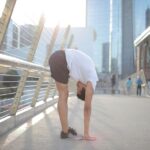
For the hamstrings, a standing forward fold with a flat back works well. Keep your knees slightly bent and hinge at the hips. You should feel a stretch down the back of your thighs, not a sharp pain behind your knee.
For the quads, a standing quad stretch is simple. Stand on one leg, pull your heel toward your glute, and keep your knees together. If you have knee problems, a side-lying quad stretch is a safer alternative.
Do this routine daily for two weeks and you will notice a difference. The muscles will feel less tight during everyday activities like walking and climbing stairs. The change is gradual, but it is real.
Should You Stretch A Muscle That Hurts?
This depends on the type of pain. Muscle soreness from a workout — the kind you feel 24 to 48 hours after exercise — can be stretched gently. Light movement often helps reduce the soreness by increasing blood flow to the area.
Sharp pain during a stretch is different. If you feel a sudden, sharp sensation, stop immediately. This could indicate a muscle strain or tear. Stretching a strained muscle makes the injury worse and delays healing.
A pulled hamstring is a common injury that requires rest, not stretching. The muscle needs time to repair the damaged fibers. Gentle movement is okay once the acute pain subsides, but aggressive stretching is not recommended in the first few days.
If you have persistent tightness that does not improve with stretching and strengthening, see a physical therapist. They can assess your movement patterns and identify underlying issues like muscle imbalances or joint restrictions that you cannot address on your own.
Can Strength Training Replace Stretching?
Strength training and stretching serve different purposes. You need both for optimal muscle health. Strength training builds the muscle’s ability to produce force. Stretching improves the muscle’s resting length and flexibility.
That said, strength training with a full range of motion can improve flexibility. Exercises like deep squats and Romanian deadlifts take the muscles through a long range of motion under load. Over time, this can increase flexibility as effectively as static stretching for some people.
The key is to use a full range of motion in your strength exercises. Avoid partial reps that only work the middle of the movement. If you can squat deep without pain, do so. If your hamstrings feel tight during a deadlift, that is a sign they are working through their full capacity, which is exactly what you want.
This approach is more time-efficient. You build strength and flexibility simultaneously. For busy adults, this is often the most practical solution.
What Happens If You Ignore Tight Quads And Hamstrings?
Ignoring chronic tightness does not just limit your flexibility. It changes how your body moves. Tight hamstrings pull your pelvis backward, flattening your lower back. Tight quads pull your pelvis forward, increasing the arch in your lower back. Both patterns can contribute to lower back pain.
Tight quads also affect your knee joint. The quadriceps attach to the kneecap. When they are tight, they pull the kneecap against the joint with more force. This can contribute to patellofemoral pain syndrome — a common cause of pain around the kneecap, especially in runners and cyclists.
Tight hamstrings increase the risk of strains and tears during high-speed activities. Sprinting, jumping, and sudden changes of direction place high demands on the hamstrings. If the muscle is short and tight, it is more likely to tear.
Addressing the tightness early prevents these downstream problems. A consistent routine of rolling, stretching, and strengthening is a small time investment that protects your back, knees, and muscles for years to come.
Frequently Asked Questions
How long does it take to loosen tight hamstrings?
Most people notice a difference within two to three weeks of daily stretching and strengthening. Permanent change requires consistent effort for several months.
Is it better to stretch or foam roll first?
Foam roll first to release tension in the tissue, then stretch to lengthen the muscle. This order produces better results than stretching alone.
Can tight quads cause knee pain?
Yes, tight quads pull on the kneecap and increase pressure on the knee joint. This can contribute to pain around the kneecap, especially during activity.
Should I stretch every day or take rest days?
Light stretching every day is safe and beneficial. If you are doing intense stretching or foam rolling, taking one or two rest days per week allows the tissue to recover.
