
Neck pain and stiffness are common problems. Most of the time, the cause is simple: prolonged sitting, poor posture, or sleeping in an awkward position. Tight neck muscles can limit your range of motion and cause headaches. The good news is that you can often find relief with a few targeted steps. Here is a practical, step-by-step approach to loosening neck muscles safely at home.
What Causes Neck Muscles to Feel Tight?
Your neck muscles work hard to support your head, which weighs about 10 to 12 pounds. When you hold your head forward for long periods—like when looking at a phone or computer—those muscles have to work even harder. Over time, this leads to fatigue, tension, and pain.
Stress also plays a role. When you are stressed, your body tenses up, and the shoulders and neck often carry that tension. Poor sleep positions and sudden awkward movements can also strain the muscles. In most cases, tightness is muscular and will improve with gentle movement and stretching.
Step 1: Apply Heat Before You Stretch
Heat helps increase blood flow to the area. More blood flow means more oxygen and nutrients reach the tight muscle fibers, which makes them more pliable. Use a warm towel, a heating pad, or a warm shower for 10 to 15 minutes before stretching.
Do not use heat if the area is swollen or if you have a fresh injury. In those cases, cold packs are better for reducing inflammation. For everyday stiffness, heat is the right first step.
Step 2: Perform Gentle Neck Stretches
Once your muscles are warm, move slowly through a few simple stretches. Stop immediately if you feel sharp pain or dizziness. A mild pulling sensation is normal. Sharp pain is not.
- Chin tucks: Sit or stand tall. Gently pull your chin straight back, as if making a double chin. Hold for 3 to 5 seconds. Repeat 10 times.
- Side-to-side rotation: Turn your head slowly to the right until you feel a mild stretch. Hold for 15 to 30 seconds. Return to center. Repeat on the left side.
- Ear-to-shoulder stretch: Tilt your head to bring your right ear toward your right shoulder. Do not lift the shoulder. Hold for 15 to 30 seconds. Repeat on the left.
- Levator scapulae stretch: Turn your head 45 degrees to the right, then tuck your chin slightly downward. Place your right hand on the back of your head and apply light pressure. Hold for 20 to 30 seconds. Switch sides.
Do each stretch slowly. Never bounce or force the movement. Consistency matters more than intensity—a few minutes of gentle stretching twice a day is better than one aggressive session.
Step 3: Release Trigger Points With Self-Massage
Tight neck muscles often contain trigger points—small, tender knots that refer pain to other areas. You can often feel these as firm spots in the muscle. Gentle pressure on these points can help release them.
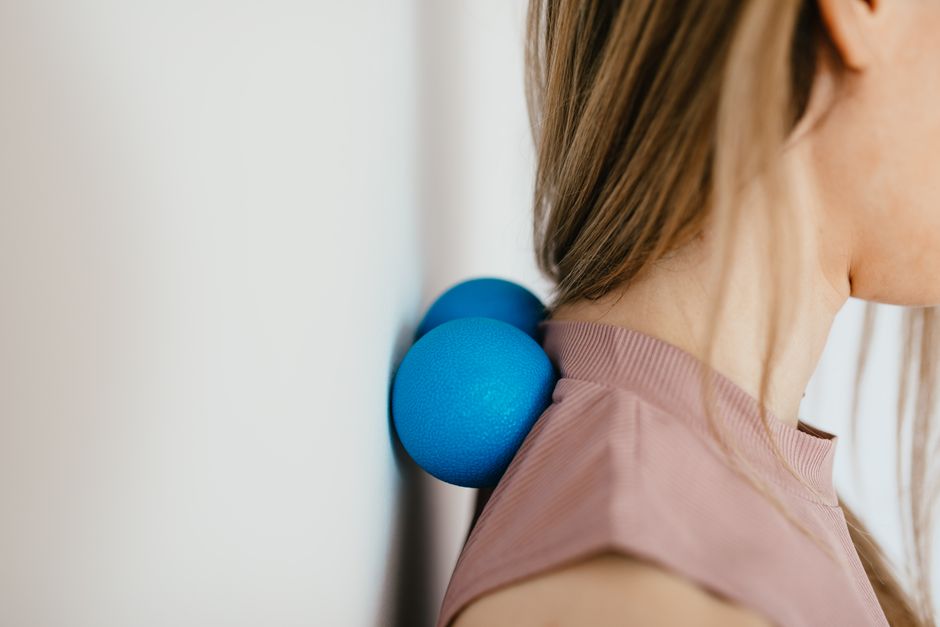
Use your fingers or a small massage ball to apply steady pressure to the tender spot. Start with light pressure and hold for 30 to 60 seconds. The discomfort should gradually ease. If it does not, release the pressure. You can repeat this a few times throughout the day.
Be careful around the front and sides of the neck. The carotid artery and other important structures run through this area. Focus your massage on the back and top of the shoulders, not the front of the neck.
Step 4: Strengthen Supporting Muscles
Stretching alone is often not enough. Weak muscles in the neck and upper back can allow your head to drift forward again, recreating the problem. Strengthening exercises help correct the underlying posture issue.
The chin tuck described above is both a stretch and a strengthening exercise. You can also try gentle isometric exercises. Place your hand against your forehead and push your head forward against your hand without moving. Hold for 5 seconds. Repeat with your hand on each side of your head. These exercises strengthen the neck without requiring equipment.
Upper back exercises like rows and shoulder blade squeezes also help. Strong upper back muscles support good posture, which takes the load off your neck.
Step 5: Adjust Your Daily Posture
Stretching and strengthening will not help much if you return to the same poor posture for eight hours a day. Your daily habits matter.
When working at a desk, your monitor should be at eye level. Your elbows should rest at about a 90-degree angle. Your feet should be flat on the floor. Take a break every 30 to 45 minutes to stand, walk, and move your neck gently.
When using a phone, hold it up to eye level instead of looking down. Every inch you tilt your head forward adds significant weight to your neck muscles. Even small adjustments make a difference over a full day.
Check your sleeping position too. Most people do best sleeping on their back or side with a supportive pillow. Stomach sleeping forces your neck to rotate for hours, which can cause morning stiffness.
When Should You See a Doctor for Neck Pain?
Most neck stiffness resolves within a few days to a couple of weeks with home care. Some situations require medical attention.
See a doctor if your neck pain follows a fall, blow, or injury. Seek care if the pain is severe, lasts more than a few weeks, or spreads into your arms or hands. Numbness, tingling, or weakness in your arms or hands also warrants evaluation. The same applies if neck pain comes with headache, fever, or unexplained weight loss.
These symptoms can indicate a more serious condition that needs proper diagnosis. Do not try to stretch through pain that feels different from simple muscle tightness.
How To Loosen Neck Muscles: Prevention Tips
Prevention is easier than treatment. Build these habits into your routine to reduce the chance of recurring neck tightness.
- Move frequently: Set a timer to stand and move every 30 to 45 minutes.
- Check your workspace: Your screen should be at eye level and your chair should support your lower back.
- Manage stress: Deep breathing, walks, and regular physical activity reduce the tension your body holds.
- Stay active: Regular exercise keeps the muscles of your neck and upper back conditioned.
- Stay hydrated: The discs in your spine need water to stay healthy. Dehydration can make the tissues in your neck less resilient.
Consistency is the key. A few minutes of daily movement and stretching will do more for your neck than an occasional intense session.
What Does Not Work for Neck Tightness?
Some popular treatments have limited evidence behind them. Be cautious about expensive products or services that promise quick fixes.
Neck traction devices sold for home use are one example. While traction is a legitimate medical treatment in some cases, home devices are often used incorrectly. No strong evidence supports their routine use for general neck tightness. The same applies to many vibrating massagers and posture correctors sold online. Some people find them comfortable, but they do not address the underlying muscle weakness or posture habits.
Aggressive stretching is also counterproductive. If you force a stretch to the point of pain, your muscles may tighten further as a protective response. Gentle, consistent stretching is the evidence-based approach.
Frequently Asked Questions
How long does it take to loosen tight neck muscles?
Most people notice improvement within a few days of daily stretching and posture changes. Chronic tightness from years of poor posture may take several weeks of consistent effort.
Can stress cause neck muscles to tighten?
Yes. Stress triggers a physical response where the muscles in your shoulders and neck contract. Managing stress through breathing exercises, physical activity, or other techniques can help reduce this tension.
Is it safe to crack or pop your own neck?
Self-manipulation of the neck carries some risk and is not recommended. If you feel the need to crack your neck frequently, that is a sign the surrounding muscles are tight and need proper stretching instead.
Should I use heat or ice for a stiff neck?
Use heat for general muscle stiffness to increase blood flow and relax the tissue. Use ice within the first 48 hours of a specific injury or if you notice swelling, since cold reduces inflammation.
Neck tightness is usually manageable with a consistent home routine. Apply heat, stretch gently, release tender points, strengthen the supporting muscles, and correct your daily posture. If the pain does not improve or you develop concerning symptoms, seek medical evaluation. Your neck supports you all day—give it regular, gentle attention to keep it working well.
