
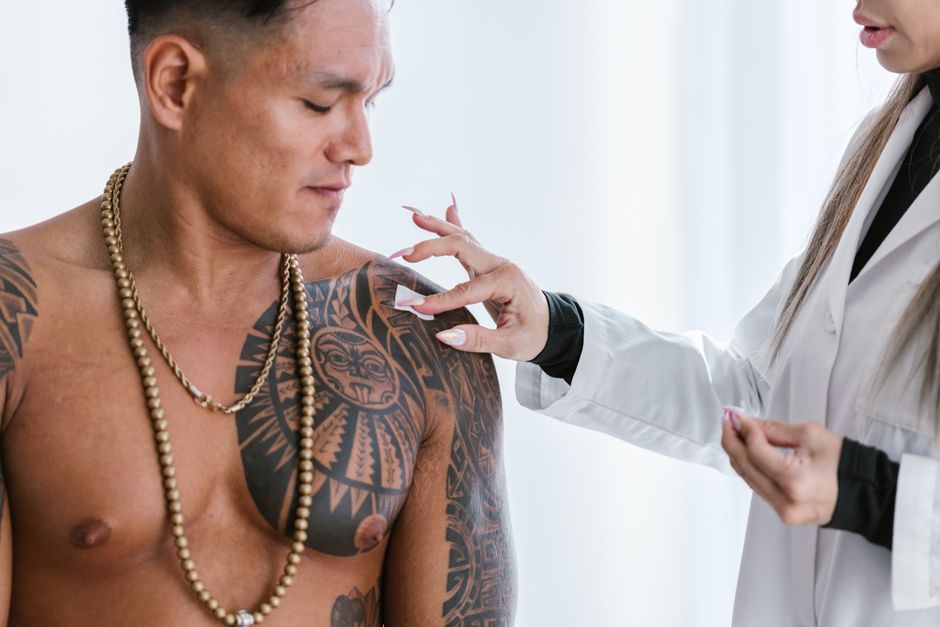
A new tattoo is a wound, and wounds can get infected. Most heal without trouble, but recognizing an infection early matters because treatment works best when it starts soon. The signs to watch for are spreading redness, increasing pain, warmth, swelling, pus, and fever. If you see these, contact a healthcare provider rather than waiting to see if it improves.
This guide explains what normal healing looks like, how it differs from infection, and when a skin problem after tattooing is something other than an infection. Knowing the difference helps you respond correctly instead of guessing.
What Does Normal Tattoo Healing Look Like?
A fresh tattoo is an open wound, and it goes through predictable stages. In the first few days, mild redness around the tattooed area is common. Some clear fluid called plasma may seep out. The area can be tender and slightly swollen. This is the body’s normal inflammatory response to the needles, not a sign of infection on its own.
Over the next week or two, the skin starts to form a thin scab or flaky layer. Itching is very common during this phase as the skin repairs itself. The tattoo may look dull or patchy while it heals, then brighten once the outer layer settles. Full healing of the surface usually takes a few weeks, though deeper layers can take longer.
The key point: normal healing tends to improve steadily. Infection tends to get worse over time. That direction of change is often more useful than any single symptom on its own.
How To Know If Tattoo Is Infected
An infected tattoo shows signs that are more intense and more persistent than normal healing. The classic signs of infection are redness that spreads, pain that increases rather than fades, warmth, swelling, and pus. These are the same signs doctors look for in any skin infection.
Watch for these specific signals:
- Spreading redness. Redness that expands outward or develops streaks is a warning sign. Normal redness stays close to the tattoo and fades.
- Increasing pain. Pain that gets worse after the first few days, rather than easing, deserves attention.
- Pus. Thick yellow or green discharge is different from the clear plasma of early healing.
- Warmth. The area feeling hot to the touch, especially spreading warmth, is a concern.
- Fever. A fever along with a skin problem suggests the body is responding to an infection and warrants prompt medical care.
- Worsening over time. Symptoms that grow instead of settling point toward infection.
One clarification worth knowing: a little redness and tenderness in the first day or two is expected. The concern is redness and pain that keep building after that window. Context and direction matter more than any single feature.
What Causes a Tattoo to Get Infected?
Infection happens when bacteria get into the skin through the small wounds the tattoo needles create. The source can be the equipment, the ink, the artist’s hygiene practices, or the aftercare. Contaminated water, dirty hands, and picking at scabs all raise the risk during healing.
Certain factors can make infection more likely. These include a weakened immune system, poorly controlled diabetes, and some skin conditions. Getting a tattoo over a healing wound or in an area that is hard to keep clean also adds risk. This is why reputable studios follow strict hygiene and sterilization practices, and why aftercare instructions matter.
It is also worth separating infection from other reactions. Some people develop an allergic reaction to certain ink pigments, which can cause redness, itching, and swelling that looks similar to infection but is not caused by bacteria. The two can be hard to tell apart without a clinician’s assessment, and sometimes both are present.





When Should You See a Doctor?
Contact a healthcare provider if you notice spreading redness, pus, increasing pain, warmth, or a fever. These signs suggest an infection that may need treatment. Do not wait for symptoms to resolve on their own when they are getting worse.
Seek care promptly, and treat it as urgent, if you see any of the following:
- Red streaks spreading from the tattoo toward the body
- Fever or chills
- Rapidly spreading redness or swelling
- Severe pain
- Signs of pus with increasing unwellness
These can signal a more serious infection that needs medical attention quickly. In rare cases, skin infections can spread beyond the skin, which is why fever and fast-spreading redness should not be ignored. A clinician can examine the area and decide whether treatment is needed.
How Are Infected Tattoos Treated?
Treatment depends on how severe the infection is and is decided by a healthcare provider. Mild skin infections are sometimes managed with topical treatments, while more involved infections may need oral antibiotics. Some deeper or spreading infections require intravenous antibiotics in a medical setting.
This is a decision for a clinician, not something to self-treat. Antibiotics are prescription medicines, and using them without guidance can be ineffective or contribute to resistance. A provider will assess the type and extent of the infection and choose an appropriate approach.
Do not try to drain pus, scrub the area aggressively, or apply harsh home remedies. These can make things worse. Follow the provider’s instructions and keep the area clean as directed.
How Can You Lower the Risk of Infection?
The biggest steps happen before the needle ever touches your skin. Choose a licensed, reputable studio that follows proper hygiene and sterilization practices. Ask about their equipment handling if you are unsure. A clean, professional environment reduces the chance of contamination.
After the tattoo, follow the artist’s aftercare instructions carefully. Keep the area clean and follow their guidance on washing and covering. Wash your hands before touching the tattoo. Avoid swimming pools, hot tubs, and soaking the area in water during early healing, since these can introduce bacteria.
Do not pick or scratch at scabs, even when it itches. Picking opens the skin and lets bacteria in. Keep the area away from dirt and avoid tight clothing that rubs against it. If you notice the early signs of infection, contact a provider rather than trying to manage it alone.
Can a Tattoo Reaction Be Something Other Than Infection?
Yes, and this distinction matters. Not every red, swollen tattoo is infected. Allergic reactions to ink pigments can cause redness, itching, and raised areas, sometimes appearing weeks or even later after the tattoo was done. These are immune reactions to the ink, not bacterial infections, and they are managed differently.
Some people also develop a localized skin condition in response to tattooing, such as inflammation around specific colors. Certain pigments are more often linked to reactions than others, though reactions can occur with any ink. Because allergic reactions and infections can look alike, a clinician’s evaluation is often the only reliable way to tell them apart.
There is also a normal healing response that includes redness and itching. The overlap between normal healing, allergic reaction, and infection is exactly why symptoms that worsen over time deserve a professional look rather than a guess.
The Bottom Line
Normal healing improves. Infection worsens. Spreading redness, increasing pain, warmth, pus, and fever are the signals to act on, and they warrant a call to a healthcare provider. Most tattoos heal without problems, but when something looks wrong, getting it checked early is the safer path.
Frequently Asked Questions
How soon can a tattoo get infected?
Infection can develop within the first few days after tattooing, though it can also appear later during healing. Watch for redness and pain that worsen rather than fade.
What does an infected tattoo look like?
It often shows spreading redness, warmth, swelling, and pus, sometimes with increasing pain. These signs differ from the mild redness and itching of normal healing.
Can I treat an infected tattoo at home?
Do not try to treat a suspected infection on your own, especially if there is pus, spreading redness, or fever. Contact a healthcare provider for an assessment.
Is redness around a new tattoo always an infection?
No, mild redness in the first day or two is a normal part of healing. Redness that spreads or worsens over time is the concern that warrants medical attention.
