
Your baby will get sick at daycare. That part is close to unavoidable. The goal is not a germ-free baby — it is fewer illnesses, milder symptoms, and a baby who recovers without complications. Handwashing, up-to-date vaccines, a daycare with clear illness policies, and keeping your baby home when they are genuinely sick are the measures that actually move the needle.
Infants in group care do get more infections than babies cared for at home, especially in the first year. That sounds like bad news, and in the short term it is. The trade-off is that many of those same children have fewer infections once they start school. The total number of sick days tends to even out over time.
Why Do Babies In Daycare Get Sick So Often?
Babies are born with an immune system that is functional but inexperienced. They have not yet met most viruses and bacteria, so every first encounter is a real infection rather than a mild re-exposure. Group care puts many of these first encounters close together.
Three things make daycare a strong environment for spreading germs:
- Babies explore with their mouths. Toys, hands, and surfaces all go in.
- Infants cannot cover a cough or wash their own hands.
- Many common viruses spread before a child looks sick, so a baby can pass something on before anyone knows they have it.
Respiratory viruses, stomach bugs, and hand, foot, and mouth disease are the usual suspects. Many are contagious for a day or two before symptoms appear, which is why outbreaks are hard to stop once they start.
How To Keep Your Baby From Getting Sick At Daycare
No single step prevents illness. What works is stacking several small measures that each reduce exposure a little.
Hand hygiene, done properly
Hands are the main highway for germs in a daycare room. Soap and water is best when hands are visibly dirty. An alcohol-based hand sanitizer with at least 60 percent alcohol works when soap is not available. Wash or sanitize your own hands before and after drop-off and pickup, and ask staff how often they wash the babies’ hands during the day.
Keep vaccines current
Following the recommended childhood immunization schedule is one of the most protective steps available. Vaccines do not cover every daycare germ, but they prevent some of the most serious ones. Ask your pediatrician about your baby’s schedule and about annual flu vaccination, which is recommended for children 6 months and older.
Ask about the daycare’s illness policy
A daycare with clear rules sends sick children home and requires them to stay home until they are no longer contagious. Ask how they handle a child with a fever, vomiting, or diarrhea. Ask whether they require up-to-date vaccinations for enrolled children. A written policy that staff actually follow matters more than a friendly brochure.
Keep your baby home when they are sick
This protects other babies and also protects yours. A baby who is still fighting an infection is more vulnerable to catching a second one. Most daycares have specific rules about fever, vomiting, and diarrhea. Follow them.
Reduce what comes home
Change your baby’s clothes and wash your hands when you get home. Clean pacifiers and bottles daily. These steps are simple and they reduce how much of the daycare environment travels into your house.
Does Daycare Actually Make Babies Sicker Long-Term?
In the short term, yes. Infants and toddlers in group care have more respiratory and gastrointestinal infections than children cared for at home, and the difference is largest in the first year of daycare attendance.
The picture shifts with time. Research following children through the school years has generally found that the early disadvantage shrinks, and in some studies children who attended group care early had somewhat fewer infections later in childhood. The evidence on this is not perfectly consistent, but the overall pattern suggests the extra illnesses are front-loaded rather than permanent.
It is worth being honest about what this does not mean. It does not mean daycare is harmless. Some babies, particularly those born prematurely or with certain heart or lung conditions, are at higher risk from common infections. If your baby falls into a higher-risk group, talk with your pediatrician about whether group care is the right choice and what extra precautions make sense.




What Actually Spreads In A Daycare Room?
Knowing the main offenders helps you understand what you are up against. Most daycare illness falls into a few categories.
| Type | Common examples | How it spreads |
|---|---|---|
| Respiratory viruses | RSV, common cold viruses, influenza | Droplets from coughs and sneezes, contaminated hands and surfaces |
| Gastrointestinal viruses | Norovirus, rotavirus | Hands, diapers, contaminated food or water, surfaces |
| Contact-spread infections | Hand, foot, and mouth disease | Direct contact with saliva, fluid from blisters, or stool |
Respiratory syncytial virus, or RSV, deserves special mention. It is very common and usually causes a mild cold in older children and adults. In infants under a year, and especially in premature babies, it can cause more serious breathing problems. There is now a preventive antibody product available for high-risk infants, and maternal vaccination during pregnancy also protects newborns. Ask your pediatrician whether either applies to your family.
When Should You Keep Your Baby Home?
Most daycares have written exclusion rules, and following them protects everyone. The most common reasons a baby needs to stay home include:
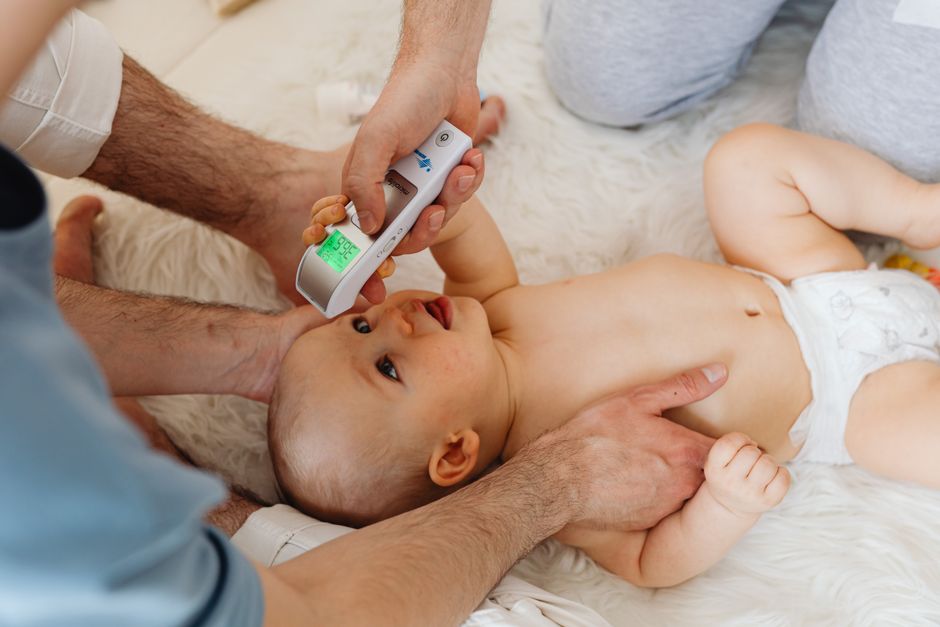
- A fever, generally defined as a temperature of 100.4°F (38°C) or higher
- Vomiting two or more times in 24 hours
- Diarrhea that cannot be contained in a diaper
- Signs of a serious illness, such as trouble breathing, unusual sleepiness, or a rash that does not fade when pressed
The fever number matters because it is a widely used threshold in clinical care and daycare policy. A baby under 3 months with a fever of 100.4°F or higher needs prompt medical attention, not just a day at home. Call your pediatrician.
Some rules are less clear-cut. A mild runny nose with no fever and a baby who is acting normally usually does not require staying home. A persistent cough that is getting worse might. When in doubt, call the daycare and describe what you see.
Does Breastfeeding Or Any Supplement Help?
Breast milk contains antibodies and other immune factors that pass from mother to baby. Breastfed infants do tend to have somewhat lower rates of certain infections, particularly gastrointestinal ones, and this protection is strongest in the early months. The effect on daycare-acquired respiratory illness specifically is smaller and less consistent in the research.
What about supplements marketed for immune support? This is where honesty matters. Vitamin D is recommended for all breastfed infants and is important for bone health, but it is not an infection-prevention measure. Probiotics have been studied for preventing respiratory and gastrointestinal infections in children, and the results have been mixed. No supplement has been shown to reliably prevent daycare illness. If you are considering one, talk with your pediatrician first, especially for an infant.
What If Your Baby Seems Sick All The Time?
Many parents feel like their baby is sick constantly during the first year of daycare. Often they are. A healthy infant can have several respiratory infections in a single season, and each one can last a week or two. It can feel like one long illness with brief breaks.
That pattern is common and usually not a sign that something is wrong with your baby’s immune system. Most of these are ordinary viral infections. Still, there are times to check in with a doctor:
- Fever in a baby under 3 months
- Trouble breathing, or breathing that looks like hard work
- Fewer wet diapers, or signs of dehydration
- Symptoms that keep getting worse instead of better
- An illness that lasts much longer than expected
Trust your instincts. You know your baby’s normal better than anyone. If something feels off, call.
Frequently Asked Questions
Can I prevent my baby from ever getting sick at daycare?
No. Group care means exposure to viruses your baby has never met, and some spread before symptoms appear. You can reduce how often and how severely your baby gets sick, but you cannot eliminate it.
How long does it take for a baby to stop getting sick so often at daycare?
Most babies have the most frequent illnesses during their first year in group care. The pattern usually eases over time as your child builds immunity to common viruses, though the exact timeline varies widely from child to child.
Is it safe to send my baby to daycare with a runny nose?
A mild runny nose with no fever and a baby who is acting normally is usually fine, and most daycares allow it. A runny nose with fever, poor feeding, or unusual sleepiness means keeping your baby home and calling your pediatrician.
Does breastfeeding protect my baby from daycare illnesses?
Breast milk does pass immune factors to your baby, and breastfed infants tend to have somewhat lower rates of certain infections, especially gastrointestinal ones. The protection against respiratory illness picked up at daycare is smaller and less consistent in the research.
