

Professional whitening gives you the brightest result you will likely see. Keeping that result is a separate job, and it starts the day the treatment ends. The main enemies of white teeth are everyday staining agents, gradual surface stain buildup, and the natural re-darkening that happens as pigments settle back into the outer enamel layer over time. You cannot stop that process completely, but you can slow it down a lot with a few consistent habits.
How To Keep Teeth White After Whitening Treatment
The first 48 hours after whitening matter more than any other window. During that time, the enamel is temporarily more permeable, and pigments from food and drink can move into the tooth structure more easily. Most dental professionals advise sticking to a “white diet” for the first two days — foods and drinks that will not leave color behind.
Safe choices during that window include:
- Water, milk, and unflavored sparkling water
- Plain chicken, turkey, and white fish
- White rice, pasta, and bread
- Bananas, peeled apples, and pears
- Eggs, plain yogurt, and white cheese
- Cauliflower, potatoes, and peeled cucumbers
Avoid coffee, tea, red wine, cola, tomato sauce, berries, curry, soy sauce, chocolate, and anything with artificial food coloring for those first two days. After that, the enamel has largely returned to its normal state, and the rules relax.
One thing worth knowing: the whitening effect is not permanent even with perfect habits. Results typically last anywhere from several months to a few years depending on your diet, smoking status, and natural tooth color. That range is wide because it depends heavily on individual behavior.
Which Foods and Drinks Stain Teeth the Most?
Some of the biggest staining offenders are also some of the most common daily habits. Coffee, black tea, red wine, and cola are the usual suspects. But the list goes deeper than most people expect.
High-stain foods and drinks include:
- Coffee and espresso
- Black and green tea
- Red wine
- Cola and dark sodas
- Berries — blueberries, blackberries, cherries
- Tomato sauce and ketchup
- Curry, turmeric, and heavily spiced dishes
- Soy sauce and balsamic vinegar
- Beets
- Dark chocolate
- Popsicles and sports drinks with artificial dyes
The mechanism is straightforward. These foods contain chromogens — pigment molecules that bind to the protein layer on your enamel called the pellicle. Over time, that binding becomes harder to remove with normal brushing. Acidic foods and drinks make it worse because acid temporarily softens enamel and opens the surface slightly, letting pigments penetrate deeper.
If you are not willing to give up coffee or red wine, you do not have to. Drinking through a straw reduces contact with front teeth. Rinsing with plain water right after helps flush pigments before they bind. Waiting about 30 minutes before brushing after something acidic gives your enamel time to re-harden, since brushing softened enamel can wear it down.
Does Brushing and Flossing Really Protect Whitening Results?
Yes, and the reason is more mechanical than chemical. Whitening removes existing stain from the enamel surface and lightens the tooth from within. But it does not stop new stain from forming. Daily plaque removal is what keeps new stain from taking hold.
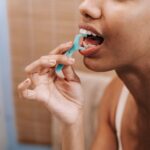
Twice-daily brushing with a soft-bristled brush and fluoride toothpaste is the baseline. Flossing once a day matters too — plaque between teeth traps pigments and creates stain that a toothbrush cannot reach. If you skip flossing, you will often see the whitening fade unevenly, with the spaces between teeth looking darker than the front surfaces.
What about whitening toothpaste? These products contain mild abrasives and sometimes low concentrations of hydrogen peroxide. They can help remove surface stain, but they do not change the underlying tooth color the way professional whitening does. Some whitening toothpastes are abrasive enough to wear enamel over time if used aggressively. A common clinical suggestion is to alternate a whitening toothpaste with a standard fluoride toothpaste rather than using the abrasive one at every brushing.
An electric toothbrush is not required, but it does remove plaque more thoroughly for many people, which indirectly helps protect whitening results.



Do At-Home Touch-Ups Help or Hurt?
They can help, but only if you use them correctly. Over-the-counter whitening strips and trays with hydrogen peroxide or carbamide peroxide can extend professional results between office visits. The key word is moderation.
Using whitening strips more often than the package directions allow is one of the most common mistakes. Overuse can cause tooth sensitivity and gum irritation, and in some cases it can wear down enamel. Sensitivity happens because peroxide temporarily opens channels in the tooth that connect to the nerve. This is usually temporary, but repeated overuse can make it worse.
Custom trays made by your dentist fit better than drugstore trays and hold the whitening gel against the teeth more evenly. If you had professional whitening, ask your dentist whether a take-home maintenance kit makes sense for you. Not everyone needs one, and not everyone is a good candidate — people with gum disease, worn enamel, or many cavities may be advised against further whitening.
The evidence on how often touch-ups are safe is not strong enough to give a universal schedule. Some clinicians recommend a single touch-up session every few months, others less often. Follow the specific instructions you were given rather than a general rule.
What Habits Speed Up Whitening Loss?
Smoking and vaping are the biggest ones. Tobacco contains tar and nicotine that stain teeth quickly and deeply. Nicotine itself is colorless, but it oxidizes into a yellow-brown substance when exposed to air. Smokers often see whitening results fade noticeably faster than non-smokers.
Other habits that accelerate fading:
- Frequent sipping of coffee or tea throughout the day, rather than drinking it quickly
- Swishing acidic drinks like soda or citrus juice around the mouth
- Brushing immediately after acidic food or drink
- Using a hard-bristled toothbrush or brushing too aggressively
- Skipping regular dental cleanings
- Grinding teeth at night, which can wear enamel and expose the more yellow dentin underneath
Grinding is worth mentioning because it is easy to overlook. Enamel is the white outer layer. Beneath it is dentin, which is naturally yellow. When enamel wears thin from grinding or over-brushing, the yellow shows through more. No amount of whitening can change the color of dentin from the outside.
When Should You See a Dentist About Whitening Fading?
See a dentist if your whitening fades much faster than you expected, if you develop new or lasting sensitivity, or if you notice a single tooth that is darker than the others. A single dark tooth can signal an internal issue — like a dead nerve or a cracked filling — that whitening cannot fix.
Regular dental cleanings every six months, or as often as your dentist recommends, remove surface stain and tartar that brushing cannot. Many people find that a professional cleaning alone restores a noticeable amount of brightness. This is different from whitening — it is stain removal, not color change — but it often makes the difference between teeth that look dull and teeth that look clean.
If you want to maintain professional whitening long-term, the most realistic plan is: a two-day white diet after treatment, consistent brushing and flossing, moderation with staining foods and drinks, no smoking, and occasional touch-ups under your dentist’s guidance. There is no way to keep teeth white forever, and anyone who promises that is overstating what is possible.
Frequently Asked Questions
How long do teeth stay white after professional whitening?
Results typically last from several months to about two years, depending on your diet and habits. Smoking and frequent coffee or tea drinking shorten that window significantly.
Can I drink coffee after teeth whitening?
Not during the first 48 hours, when enamel is more permeable to pigments. After that, coffee is fine in moderation, and using a straw or rinsing with water afterward can reduce staining.
Does whitening toothpaste actually keep teeth white?
It removes surface stain but does not change the underlying tooth color. It can help maintain results between professional treatments, but it is not a substitute for whitening.
Why do my teeth look yellow again so quickly after whitening?
Most often it is diet, smoking, or thin enamel that lets the yellow dentin underneath show through. A dentist can help identify which factor is driving it.
