
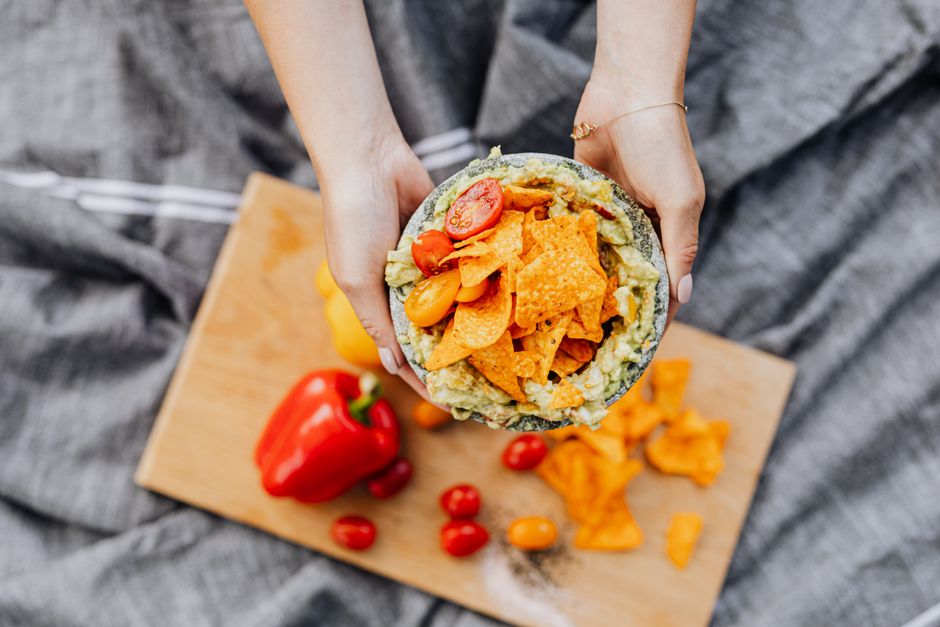
Guacamole turns brown because of a chemical reaction between oxygen and enzymes in the avocado. The fix is simple: block the oxygen. Press plastic wrap directly onto the surface of the guacamole, seal it in an airtight container, and refrigerate. That single step does more than any lime juice, pit, or onion trick. This guide explains why browning happens, which methods actually work, and which popular tips do not hold up.
Why Does Guacamole Turn Brown?
Avocado flesh contains an enzyme called polyphenol oxidase. When you cut or mash the fruit, that enzyme is exposed to air. Oxygen reacts with the enzyme and with naturally present compounds called phenols. The result is a brown pigment.
This process is called enzymatic browning. It is the same reaction that browns a sliced apple or a cut potato. It is not spoilage, and it is not bacteria. Browning is a chemical reaction with oxygen, nothing more.
The reaction needs two things to proceed: oxygen and the enzyme. Remove either one and browning slows or stops. Remove both and it essentially halts. That is the entire logic behind every storage method worth using.
One clarification that surprises people: the lime juice in your recipe is not what keeps guacamole green. Lime adds flavor and a little acidity. Acid can slow the enzyme somewhat, but it is a minor player compared to blocking oxygen. Most of the anti-browning credit people give to lime actually belongs to the plastic wrap.
How To Keep Guacamole From Going Brown: What Actually Works
The most reliable method is direct contact between plastic wrap and the guacamole surface. Press the wrap down so no air pockets remain. Then seal the whole container with a lid.
Why this works: browning requires oxygen at the surface. Plastic wrap pressed flat against the guacamole leaves no air gap. No air, no reaction. The guacamole touching the wrap may discolor slightly, but the bulk of it stays green.
Here is how to do it well:
- Use a container that is just big enough for the amount of guacamole. Less headspace means less trapped air.
- Press plastic wrap directly onto the surface, pushing out air bubbles with your fingers.
- Add a second layer over the rim of the container, or use an airtight lid on top.
- Refrigerate promptly. Cooler temperatures slow the enzyme.
The container choice matters more than most people expect. A wide, shallow container with a lot of exposed surface will brown faster than a narrow, deep one with the same volume. Surface area is the battleground.
Does Lime Juice Really Stop Browning?
Lime juice helps a little, but far less than most recipes suggest. Its main job is flavor.
The acidity in lime can slow polyphenol oxidase, and vitamin C in citrus can interfere with the browning reaction to some degree. But unless the guacamole is heavily acidic, the effect is modest. A squeeze of lime will not keep a bowl of guacamole green on its own.
This is where a lot of kitchen advice goes wrong. People add extra lime, skip the plastic wrap, and end up with brown guacamole anyway. The lime was never the workhorse.
There is also a practical limit. Adding enough lime to meaningfully slow browning would make the guacamole taste sharp and unbalanced. Flavor and preservation pull in opposite directions here, and flavor should win.



Does Leaving The Pit In Work?
No. The avocado pit does not prevent browning. This is one of the most persistent food myths.
The idea is that the pit releases something that protects the surrounding flesh. But the pit only touches the guacamole directly beneath it. The rest of the surface is still exposed to air. Any protective effect would be limited to a small area, and even that is not well supported.
When people leave the pit in and the guacamole stays green, the pit is not the reason. The guacamole was probably covered, refrigerated, or eaten quickly. The pit gets the credit that belongs to storage.
You can leave the pit in if you like. It does no harm. Just do not count on it for anything.
Do Onions, Olive Oil, Or Water Help?
Several popular tricks get partial credit at best. Here is an honest look at each.
Onions. Some people press raw onion into the surface. Onion contains sulfur compounds that can interfere with browning to a small degree. But the effect is limited and inconsistent. It is not a substitute for blocking air.
Olive oil. A thin layer of oil can create a barrier against oxygen. The problem is coverage. Oil tends to pool and leave gaps, and it changes the texture and taste of the guacamole. It can help at the edges, but it is unreliable across a whole bowl.
Water. A thin layer of water on top can block oxygen, and it is easy to pour off before serving. The downside is that water can make the guacamole watery and dilute the flavor at the surface. Some cooks use it successfully, but it is messier than plastic wrap.
None of these beat direct plastic wrap contact. They are fallbacks, not first choices.
How Long Does Guacamole Last In The Fridge?
Stored properly with plastic wrap pressed to the surface and an airtight lid, guacamole can stay green for about one to two days in the refrigerator. After that, quality declines even if the color holds.
Color and safety are different questions. Guacamole that has browned is not necessarily unsafe. Browning is an oxygen reaction, not a sign of spoilage. But guacamole is a moist, low-acid food that can support bacterial growth, so it should not sit out at room temperature for long.
A common guideline is to discard perishable foods that have been left at room temperature for more than two hours. In hot conditions above 90°F, that window shrinks to one hour. If guacamole has been sitting out at a party, that rule applies regardless of how green it looks.
Signs that guacamole should be thrown out include an off smell, a slimy or stringy texture, visible mold, or any sour or fermented taste. Color alone is not a reliable safety signal.
Can You Fix Guacamole That Has Already Browned?
You can improve the appearance, but you cannot reverse the reaction. The brown pigment has already formed.
The practical move is to scrape off the top brown layer and use what is underneath. If the guacamole was stored with wrap pressed to the surface, only a thin layer will have discolored, and the rest will still be green.
Stirring the brown surface into the rest will spread the discoloration and make the whole bowl look worse. Do not stir. Scoop the brown layer off and discard it.
If the guacamole is brown all the way through, it was likely exposed to air on all sides or stored too long. At that point, flavor and texture have usually suffered too, and it is better to start fresh.
Does Freezing Guacamole Work?
Freezing can preserve guacamole for longer storage, but the texture changes. Avocado flesh is high in water, and freezing forms ice crystals that disrupt cell structure. After thawing, guacamole tends to be softer and sometimes watery.
If you freeze it, press plastic wrap onto the surface first, then seal in an airtight container or freezer bag. Leave a little headspace for expansion. Thaw in the refrigerator rather than at room temperature.
Frozen and thawed guacamole works better as an ingredient than as a dip. It holds up reasonably in dishes where texture matters less. For serving fresh with chips, freshly made guacamole is clearly better.
Frequently Asked Questions
What is the best way to keep guacamole from turning brown?
Press plastic wrap directly onto the surface of the guacamole so no air is trapped, then seal the container with a lid and refrigerate. Blocking oxygen is the single most effective method.
Does lime juice stop guacamole from browning?
Lime juice slows browning only slightly and mainly adds flavor. It is not strong enough to keep guacamole green on its own.
Does leaving the avocado pit in guacamole keep it green?
No, the pit does not prevent browning. It only touches a small area, and any protective effect is not well supported.
How long does guacamole last in the fridge?
Stored with plastic wrap pressed to the surface and an airtight lid, guacamole can stay green for about one to two days. Discard it if it has been left at room temperature for more than two hours.
