
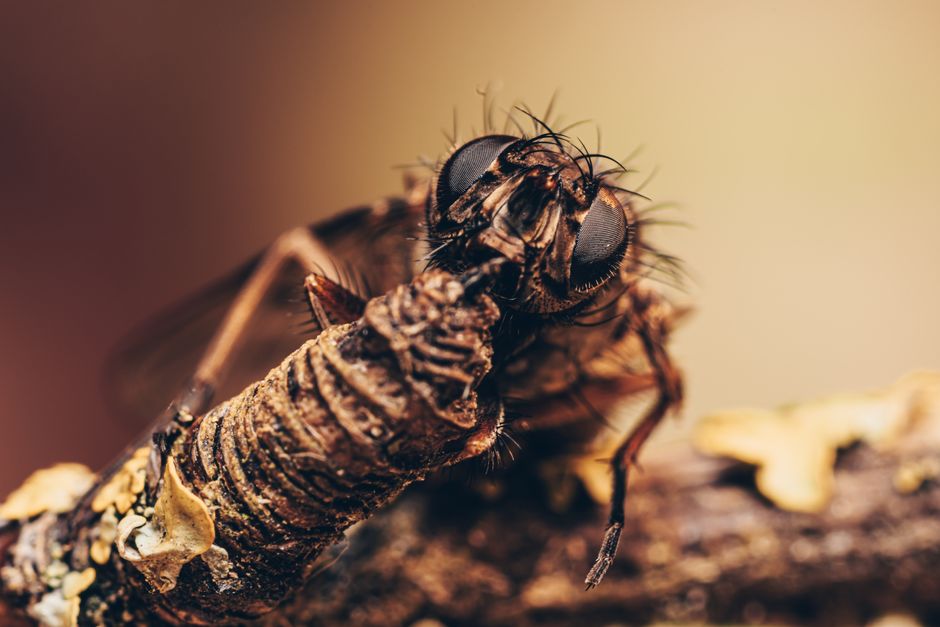
Flies land on you because you look and smell like food, moisture, and warmth. The most reliable natural ways to keep them off are physical barriers like loose clothing and screened spaces, air movement from a fan, and removing what attracts them — sweat, food residue, and standing water nearby. No spray, oil, or plant extract has strong evidence behind it for personal fly repellency, so treat those as extras rather than your main defense.
Why Do Flies Land On Some People More Than Others?
Flies are drawn to carbon dioxide, body heat, moisture, and certain organic compounds on skin. Anyone exhaling and sweating is a candidate. The differences between people come down to how much of these cues they give off.
Carbon dioxide is the big one. Flies detect it from a distance and follow the gradient toward its source. Larger bodies and people breathing harder — after exercise, for example — release more. Body heat and water vapor in your breath and sweat add to the signal.
Skin chemistry matters too. Sweat itself is mostly water and salt, but bacteria on skin break down the oily and protein-rich components of sweat into compounds that flies find attractive. This is why you can smell stale sweat on yourself after a few hours, and why flies seem to find some people more interesting than others.
There is also a practical, non-biological factor. People who work outdoors near livestock, compost, or garbage simply have more flies around them. It is not that the flies prefer them. The flies were already there.
One clarification worth knowing: flies are not “attacking” you. They are foraging. A fly that lands on your arm is investigating whether you are a food source or a place to rest. Understanding that changes what works — you are trying to make yourself a less interesting target, not fight them off.
What Actually Keeps Flies From Landing On You?
Physical barriers and air movement are the two most dependable natural methods. Both work by interrupting the fly’s approach rather than by repelling it chemically.
Covering skin is straightforward. Long sleeves and long pants reduce the landing area. Light colors are generally less attractive to many fly species than dark colors, though this varies by species. Loose-fitting clothing helps because flies have trouble landing on moving fabric and cannot bite through it easily.
A fan is underrated. Flies are small and their flight is disrupted by steady air currents. A fan moving air across you creates a zone that is difficult for them to navigate. This is not folklore — it is the same principle behind the air curtains used at commercial doorways. For a patio table or a porch chair, a fan pointed at you is one of the most effective things you can do.
Screened spaces — window screens, screened porches, mosquito netting over a bed or stroller — are the most complete barrier available. If you are dealing with a serious fly problem indoors, fixing screens is more effective than any product you can put on your skin.
What about the things people commonly recommend for the body? The evidence is much weaker than most articles suggest.
- Essential oils such as citronella, eucalyptus, and peppermint have some documented insect-repellent activity in laboratory settings. Whether they work reliably on flies in real outdoor conditions is not well established. They also evaporate quickly, so any effect is short-lived.
- Vanilla extract, vinegar, and dryer sheets are widely shared online as fly deterrents. No clinical or field research confirms these work. They are harmless to try, but do not rely on them.
- Vitamin B supplements are a persistent myth for mosquito and fly repellency. Controlled studies have not found that taking B vitamins changes how attractive you are to biting insects. This one has been tested and did not hold up.
If you want a topical option, the repellents with the strongest evidence base for biting insects are DEET and picaridin. These are synthetic, not “natural,” and their evidence is mostly for mosquitoes and ticks rather than flies specifically. Some fly species respond to them; others do not. If your concern is bites from biting flies, that is worth knowing. If your concern is houseflies landing on your picnic, a topical repellent is not the right tool — environmental control is.
How Do You Reduce What Attracts Flies To You?
Reducing your own attractiveness cues is the part most people skip. It is also where you can make real progress without buying anything.
Shower and change clothes after heavy sweating. The bacterial breakdown products on sweaty skin are part of what draws flies. Freshly washed skin gives off fewer of these cues. This is not a guarantee against flies, but it removes one layer of attraction.
Wear clean, light-colored clothing. Sweat-soaked fabric holds moisture and odor. Dark fabric absorbs heat, which raises your surface temperature. Both make you a better target.
Keep food and drink covered. A fly landing on your skin is a nuisance. A fly landing on your food is a potential disease issue. Flies can carry pathogens on their bodies and in their digestive tracts, and they regurgitate and defecate when they feed. Covering food, especially at outdoor gatherings, is a genuine food-safety step, not just a comfort one.
Avoid strongly scented products outdoors. Perfume, hair products, and scented lotions add to the chemical cloud around you. Whether they specifically attract flies is not firmly established, but they do not help, and reducing them costs nothing.




What Natural Repellents Have Real Evidence Behind Them?
This is where honesty matters most. The natural repellent market is large, and most of the specific claims made for fly repellency are not supported by controlled studies.
Here is what the evidence actually shows, separated by how strong it is:
- Well established for biting insects: DEET and picaridin have the strongest evidence base for preventing bites from mosquitoes, ticks, and some biting flies. These are not botanical products, but they are the standard against which everything else is measured.
- Some evidence, mostly laboratory: Oil of lemon eucalyptus (the formulated product, not the raw essential oil) has documented repellent activity against some insects. Citronella, peppermint, and eucalyptus oils show activity in lab tests. How well they perform against flies in real-world conditions is not well characterized.
- Weak or absent evidence: vanilla, vinegar sprays, dryer sheets, B vitamins, garlic eaten as food, and most “fly repellent” bracelets. No reliable research confirms these work.
One practical point about essential oils: they are not risk-free. Undiluted essential oils can irritate skin, and some are toxic if swallowed, particularly to children and pets. Tea tree oil and eucalyptus oil are dangerous to cats and dogs. If you use them, dilute them and keep them away from animals and children. No clinical guidelines exist for safe essential oil use on infants, and they should not be applied to young children.
If you are heading somewhere with a serious biting fly problem and want something with a real evidence base, the honest recommendation is to use a registered repellent rather than a botanical one. Natural does not mean more effective. It sometimes means less tested.
How Do You Keep Flies Out Of Your Space?
The most effective fly control is environmental. You are not trying to repel every fly in the area — you are trying to reduce the population near you and block their access.
Find and remove breeding sites. Many fly species lay eggs in moist organic material — garbage, compost, manure, and standing water. A garbage can with a loose lid or a compost bin that is too wet can produce flies continuously. Sealing waste, keeping compost balanced and turned, and eliminating standing water nearby reduces the population at the source.
Use screens and netting. Window and door screens, screened porches, and food covers are the most reliable barrier methods available. Check for tears and gaps. A single gap in a screen door lets in a surprising number of flies.
Add air movement. Fans on a porch or patio create a zone flies struggle to enter. This works better than most people expect.
Use traps carefully. Sticky traps and ultraviolet light traps can catch flies, but placement matters. A UV trap placed near where people sit can actually draw more flies toward you. Place traps away from seating areas.
Indoors, the same logic applies. A fly that gets inside is usually following a scent trail or came in through an opening. Fixing the opening is more effective than chasing the fly.
Does Anything You Eat Or Drink Keep Flies Away?
No food or drink has been shown to make you less attractive to flies. This is one of the most persistent myths in the natural-repellent world.
Garlic, B vitamins, and apple cider vinegar are frequently recommended online for repelling mosquitoes and flies. Controlled studies on B vitamins have not found a repellent effect. The evidence for garlic is weak and mostly from laboratory or animal studies, not from trials showing that eating garlic reduces fly landings on people. Apple cider vinegar has no supporting evidence for this use at all.
There is a reason these myths persist. People who try them often also change other things — they spend less time outdoors, or they shower more, or the season shifts. It is easy to credit the supplement when something else changed.
None of these are harmful in normal amounts, so there is no urgent reason to avoid them. Just do not count on them. If flies are a real problem, spend your effort on barriers, air movement, and removing what attracts them.
Frequently Asked Questions
What scent keeps flies away naturally?
Citronella, eucalyptus, and peppermint oils show some repellent activity in laboratory tests, but how well they work on flies in real outdoor conditions is not well established. No scent has strong evidence for reliably keeping flies off your body.
Why do flies land on me and not others?
Flies are drawn to carbon dioxide, body heat, moisture, and the compounds produced when bacteria break down sweat on skin. People who give off more of these cues — through heavier breathing, more sweating, or proximity to fly breeding sites — tend to attract more flies.
Does a fan really keep flies away?
Yes, steady air movement disrupts fly flight and makes it hard for them to land on you. A fan pointed at your seating area is one of the more effective natural methods available.
Do B vitamins or garlic keep flies away?
No. Controlled studies have not found that taking B vitamins changes how attractive you are to flies, and the evidence for garlic is weak. Neither has been shown to reduce fly landings on people.
