
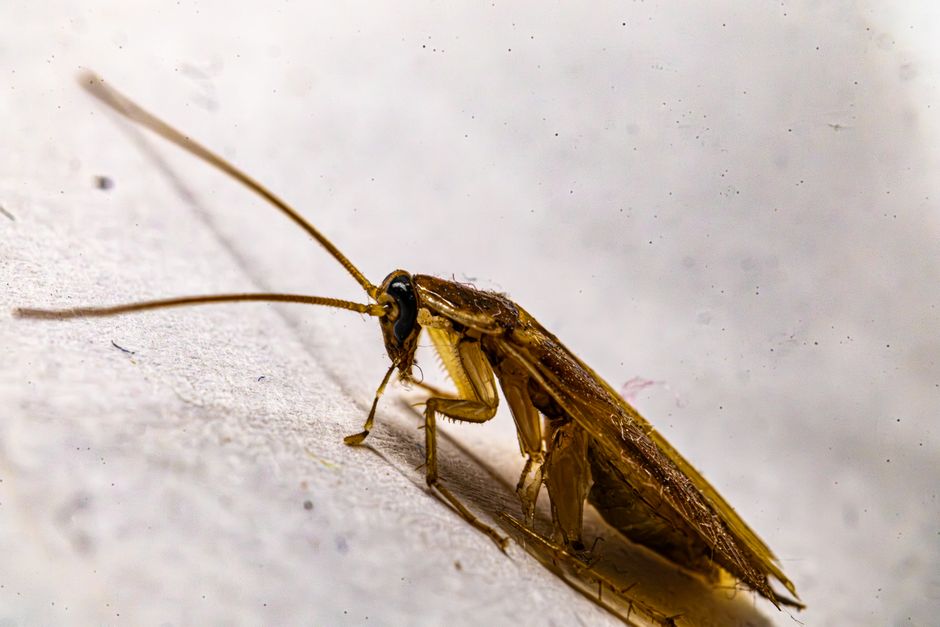
Waking up to a cockroach skittering across your pillow is enough to ruin anyone’s night. The good news is that you don’t have to share your bed with them. Keeping cockroaches away while you sleep comes down to removing their food and water sources, sealing their entry points, and making your bedroom a place they don’t want to be. A clean, dry, and sealed room is your best defense.
Why Are Cockroaches In Your Bedroom At Night?
Cockroaches are nocturnal. They are most active when the lights are off and the house is quiet. That is why you see them at night, often in the bathroom or kitchen, but sometimes in the bedroom.
They are not attracted to you. They are attracted to what you leave behind. Dead skin cells, hair, crumbs, and even the moisture from your breath or a glass of water on the nightstand are enough to bring them in.
They also enter homes looking for warmth and shelter. A bedroom with clutter, piles of laundry, or cardboard boxes provides perfect hiding spots. If you have a severe infestation, they will spread to every room, including where you sleep.
How To Keep Cockroaches Away While Sleeping
Start with your bedroom itself. Remove food and drink from the room. Do not eat in bed. Do not leave a half-empty water glass on the nightstand. Cockroaches need water to survive, and a single drop of condensation can sustain them.
Vacuum and sweep regularly. Pay attention to the edges of the room, under the bed, and inside closets. Crumbs and dust accumulate in these areas. A weekly vacuuming routine removes the food particles that attract them.
Take out the trash. Do not let a full trash can sit overnight in your bedroom or bathroom. If you must keep a bin in the room, use one with a tight-fitting lid and empty it daily.
Laundry is another attractant. Dirty clothes carry body oils, sweat, and skin cells. Keep dirty laundry in a sealed hamper, not on the floor. Wash bedding regularly to remove the skin cells and oils that accumulate while you sleep.
Sealing Entry Points To Your Bedroom
Cockroaches are flat and can squeeze through gaps smaller than a coin. They enter through cracks in walls, gaps under doors, and openings around pipes and electrical outlets. Sealing these entry points is essential.
Check the bottom of your bedroom door. If you can see light under it, a cockroach can get through. Install a door sweep or weatherstripping to close the gap.
Inspect the walls for cracks and gaps. Caulk any openings you find. Pay attention to the areas where pipes enter the room, such as behind radiators or near baseboards. Seal these with caulk or expanding foam.
Check your windows. Make sure screens are intact and that the window seals tightly when closed. Even a small gap around the frame is an invitation.





How To Keep Cockroaches Away While Sleeping: Natural Deterrents
Some natural scents are known to repel cockroaches. These are not a cure for an infestation, but they can help keep roaches out of a specific area.
Essential oils like peppermint, eucalyptus, and tea tree oil have shown some repellent effects in laboratory studies. You can dilute a few drops in water and spray the mixture around your bed frame, baseboards, and doorways. The scent fades quickly, so you need to reapply it regularly.
Bay leaves are a traditional home remedy. Some people place dried bay leaves in cabinets and drawers, believing the smell keeps roaches away. The evidence is anecdotal. It is a low-cost option that may help, but it is not a reliable solution on its own.
Diatomaceous earth is a non-toxic powder that works differently. It is made from fossilized algae. When cockroaches walk over it, the powder damages their exoskeleton and causes them to dehydrate. It is not a repellent. It kills them slowly over several days. You can sprinkle a thin layer under your bed, along baseboards, or behind furniture. It only works when dry, so do not place it in damp areas.
When To Use Traps And Baits
If you are seeing cockroaches regularly, you have an active problem. Repellents will not solve it. You need to kill the roaches that are already in your home.
Sticky traps are a good first step. Place them along walls, under the bed, and behind furniture. These traps do not kill instantly, but they tell you where the roaches are traveling. Check them after a few days to see how many you catch.
Gel baits are more effective. They contain a slow-acting poison mixed with a food attractant. Cockroaches eat the gel, return to their hiding spots, and die. Other roaches eat the dead one and also die. This creates a chain reaction that can eliminate a colony.
Place small dots of gel bait in corners, under the bed, and along baseboards. Do not spray insecticide in the same areas. Sprays contaminate the bait and make it less attractive to the roaches.
Insecticide sprays kill only the roaches they directly contact. They do not address the nest. Use them sparingly and only for immediate relief, not as a long-term strategy.
Is It Safe To Sleep With Cockroaches In The Room?
No one wants to hear this, but cockroaches can trigger allergies and asthma symptoms. Their saliva, droppings, and shed skins contain proteins that act as allergens. For some people, exposure to these allergens at night can worsen coughing, wheezing, or skin rashes.
Cockroaches also carry bacteria. They pick up pathogens as they crawl through garbage and sewage. They can transfer these bacteria to surfaces in your home, including your bedding and nightstand. The risk of getting sick from a cockroach in your bedroom is low for most healthy adults, but it is not zero.
If you have asthma or a known cockroach allergy, you should take extra steps to keep them out of your sleeping area. Washing your bedding in hot water weekly and keeping the room dust-free can reduce your exposure to allergens.
When To Call A Professional
Home remedies and store-bought traps work for small problems. If you are seeing cockroaches during the day, that is a warning sign. Cockroaches are nocturnal and avoid light. Seeing them in daylight usually means the population is so large that they are being forced out of their hiding places.
If you see them in multiple rooms, or if you keep catching them for weeks despite your efforts, you likely have a full infestation. This is the time to call a licensed pest control professional. They can identify the species, locate the nesting sites, and apply treatments that are not available to consumers.
Professional treatment is the most reliable way to eliminate a cockroach problem. It is more expensive than DIY methods, but it is also more effective and longer-lasting.
Frequently Asked Questions
Will cockroaches crawl on me while I sleep?
It is rare, but it can happen. Cockroaches are looking for food and water, not people, but they may crawl across you if you have food residue on your skin or if your bed is near their travel path.
Does keeping the light on keep cockroaches away?
Light does not repel cockroaches for long. They may avoid bright areas temporarily, but if there is food, water, or shelter in your room, they will come out even with the light on.
Can cockroaches get into a bed with a mattress cover?
Yes, they can. Mattress covers are designed to block dust mites and bed bugs, but cockroaches can climb over or around them. Sealing cracks and removing food sources are more effective than any cover.
How fast can a cockroach infestation grow?
Very fast. A single female cockroach can produce hundreds of offspring in her lifetime. Under the right conditions, a small problem can become a large infestation within a few months.
