
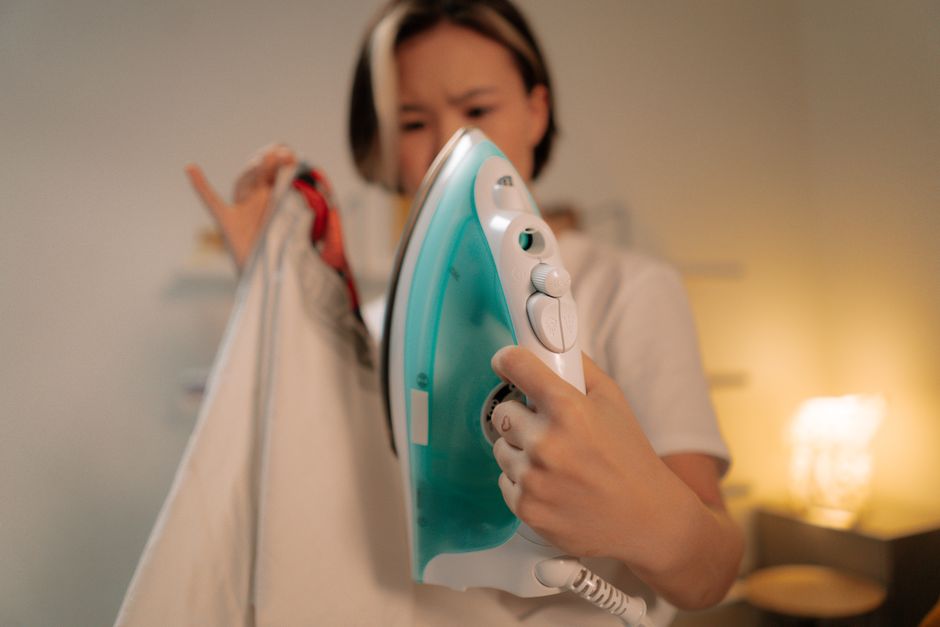
Chiffon can be ironed safely, but only on low heat with care. The fabric is delicate and heat-sensitive, and many chiffon garments are made from polyester or other synthetics that melt rather than scorch. Use the lowest iron setting, press on the reverse side through a pressing cloth, and keep the iron moving. Never hold a hot iron still on chiffon.
Most chiffon damage comes from two mistakes: too much heat and too much pressure. Get those two things right and the fabric will smooth out without shine marks, melted fibers, or flattened texture.
What Is Chiffon and Why Is It So Easy to Ruin?
Chiffon is a lightweight, plain-weave fabric made from tightly twisted yarns. That open, airy weave is what gives it the floaty drape people love. It is also what makes it fragile.
The fibers are fine and the weave is loose. Heat passes through quickly, and the surface can flatten or glaze with very little pressure. Chiffon also comes in several fiber types, and they behave differently under an iron:
- Polyester chiffon is the most common and the most heat-sensitive. It can melt and leave a hard, shiny mark that will not come out.
- Silk chiffon is more heat-tolerant than polyester but can water-spot and lose its luster if pressed too hard.
- Rayon or viscose chiffon can shrink or distort with heat and moisture.
Because the fiber content changes everything, the first step is always the same: check the care label. If it says dry clean only, believe it. Some chiffon garments are constructed with finishes or trims that will not survive home pressing.
What Setting Should You Use to Iron Chiffon?
Use the lowest heat setting your iron offers. For polyester and other synthetic chiffon, that is the synthetic or “low” setting, often marked with a single dot. Silk chiffon can usually take the silk setting, which is also low.
Turn off steam for synthetic chiffon. Steam plus heat is a common way to create shine and distortion on polyester. For silk, a little steam can help, but keep it light.
If your iron has no fabric-specific settings, test on an inside seam or hem first. Turn the garment inside out and press a small hidden area. Wait a few seconds and check for shine, melting, or texture change before you touch the visible fabric.
How To Iron Chiffon Without Burning Or Ruining It
The method matters more than the iron. Work slowly, use a barrier between the iron and the fabric, and never let the soleplate sit still.
Here is the sequence that protects the fabric:
- Start damp or dry? Press chiffon dry. Moisture plus heat is a common cause of water marks on silk and distortion on synthetics.
- Turn it inside out. Press the reverse side whenever the construction allows it.
- Use a pressing cloth. A clean cotton cloth or a thin cotton towel between the iron and the fabric adds a layer of protection.
- Keep the iron moving. Short, light strokes. No lingering, no heavy pressing.
- Lift, don’t drag. Lift the iron between strokes rather than sliding it across the surface.
- Let it cool before you move on. Chiffon can stretch while warm. Let each section cool flat before handling it.
If the fabric is heavily wrinkled, work in small sections rather than trying to smooth a whole panel at once. Patience is the tool here, not pressure.





Can You Use Steam on Chiffon?
Yes, but carefully, and it depends on the fiber. A handheld steamer or a hanging garment steamer is often the safer choice for chiffon than a flat iron, because it removes wrinkles without direct contact or pressure.
Hold the steamer a few inches from the fabric and let the steam do the work. Do not press the steamer head against the cloth. For polyester chiffon, keep the steamer moving and test on a hidden area first.
One clarification worth knowing: steam relaxes wrinkles, but it does not remove creases that have been pressed into the fibers. If a sharp fold has set into chiffon, steam alone may not lift it, and you may need light pressing through a cloth.
What Happens If You Iron Chiffon Too Hot?
Synthetic chiffon does not scorch the way cotton does. It melts. The result is a hard, shiny, stiff patch that cannot be reversed. That is the single most common way people ruin chiffon at home.
Silk chiffon behaves differently. Too much heat or pressure can cause a dull shine, called glazing, or leave a yellowed mark. Silk can also water-spot if moisture sits on it.
If you see a shiny mark forming, stop immediately. Sometimes a light press through a cloth can reduce a mild shine on silk, but a melted synthetic mark is permanent. Prevention is the only real fix.
How Should You Store Chiffon to Avoid Wrinkles?
Most chiffon wrinkles come from storage, not wear. Hang chiffon garments on padded hangers in a cool, dry place. Avoid cramming them into a crowded closet where folds set in.
Do not store chiffon in plastic bags. Trapped moisture and lack of airflow can cause damage over time, especially on silk. A breathable garment bag is a better choice.
If a garment does develop deep creases, hang it in a steamy bathroom for a short time before you reach for the iron. Gentle humidity can relax light wrinkles without any direct heat.
When Should You Skip the Iron Entirely?
Some chiffon should never see an iron. If the care label says dry clean only, follow it. If the garment has beading, sequins, embroidery, or delicate trims, home pressing risks damaging the embellishment even if the fabric itself could take the heat.
Lined chiffon and layered constructions also deserve caution. The lining may be more heat-sensitive than the outer fabric, and pressing through layers can set creases you cannot remove.
When in doubt, a professional dry cleaner is the safer route. It costs more than doing it yourself, but it costs far less than replacing a ruined garment.
Frequently Asked Questions
Can you iron chiffon on a normal setting?
No. Chiffon needs the lowest heat setting, and synthetic chiffon can melt on higher settings. Always test on a hidden area first.
Should you iron chiffon inside out?
Yes, press the reverse side whenever possible. This protects the visible surface from shine and heat marks.
Can you use a steamer instead of an iron on chiffon?
Yes, a steamer is often the safer choice because it removes wrinkles without direct contact or pressure. Hold it a few inches away and keep it moving.
What happens if you burn polyester chiffon?
It melts rather than scorches, leaving a hard, shiny mark that cannot be reversed. Prevention is the only real protection.
