
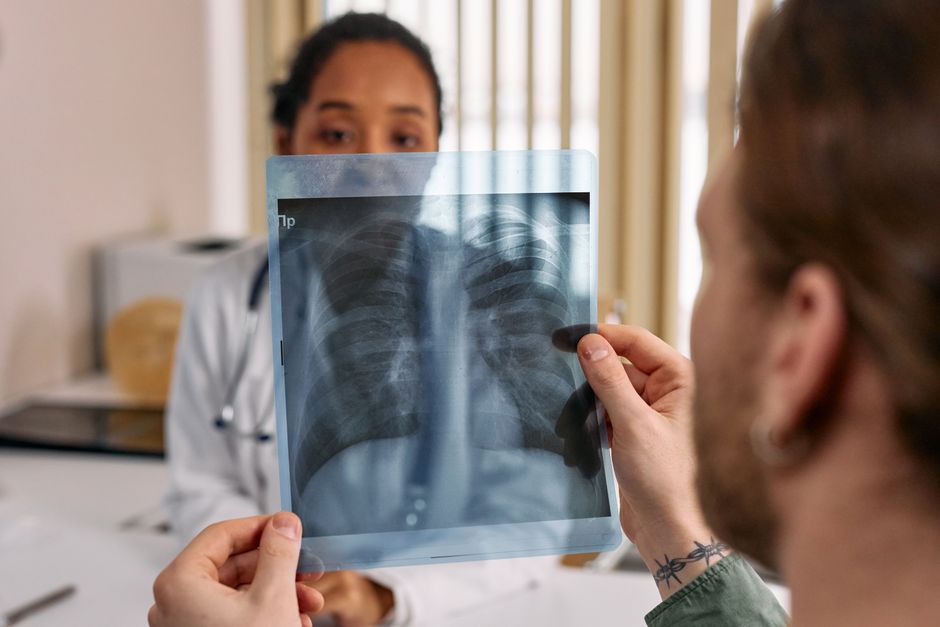
Spirometry measures how much air you can breathe out and how fast. The results show whether your lungs are working normally or if a breathing problem exists. To interpret spirometry results, you compare your numbers to predicted values based on your age, height, sex, and race. The two most important numbers are FVC and FEV1, and their ratio tells you if a problem is obstructive or restrictive. A doctor uses these values to diagnose conditions like asthma and COPD, but the test itself does not tell you what disease you have.
What Do the Numbers on a Spirometry Report Mean?
A spirometry report looks like a spreadsheet full of abbreviations. You do not need to understand every line. Focus on the key measurements that define how your lungs function.
FVC stands for Forced Vital Capacity. This is the total amount of air you can forcefully exhale after taking the deepest breath possible. It is measured in liters. Think of it as the total volume of your lungs.
FEV1 stands for Forced Expiratory Volume in one second. This is the amount of air you can blow out in the very first second of that forceful exhale. It measures how quickly your lungs can empty. This number reflects the size of your airways and how much resistance exists.
FEV1/FVC ratio is the percentage of your total lung capacity that you can exhale in one second. A healthy person can blow out about 70-80% of their total air in that first second. This ratio is the single most useful number on the report because it separates the two main types of lung disease.
You will also see predicted values on the report. These are the average numbers for a healthy person of your age, height, sex, and ethnic background. The report also shows your actual results and a percentage of predicted. Anything at or above 80% of predicted is generally considered normal for FVC and FEV1.
How To Interpret Spirometry Results For Lung Function: The FEV1/FVC Ratio
The FEV1/FVC ratio is where interpretation begins. This ratio determines whether your lung problem is obstructive or restrictive. These are two different patterns with different causes.
In a healthy adult, the FEV1/FVC ratio is greater than 0.70. This means you can exhale more than 70% of your total lung volume in one second. When this ratio drops below 0.70, it indicates an obstructive pattern. This happens when airways narrow, making it harder to push air out quickly. Asthma, chronic bronchitis, and emphysema all produce this pattern. The total lung capacity (FVC) may be normal or slightly reduced, but the speed of exhalation is the problem.
A restrictive pattern is different. Here the FEV1/FVC ratio is normal or even high, often above 0.80. But the FVC itself is reduced. This means the lungs cannot hold enough air in the first place. The air that is there comes out quickly because the airways are not narrowed. Restrictive patterns come from conditions that stiffen the lungs or limit chest expansion, such as pulmonary fibrosis, scoliosis, or obesity.
This distinction matters because the treatments are completely different. Obstructive diseases respond to bronchodilators that open airways. Restrictive diseases do not respond to those medications because the problem is not airway narrowing.
What Is a Normal Spirometry Result?
A normal result means your FVC and FEV1 are both above 80% of the predicted value, and your FEV1/FVC ratio is above 0.70. If all three conditions are met, your lungs are functioning within the expected range for someone like you.
Predicted values are not universal. They are calculated from population studies and adjusted for your age, height, sex, and race. This is why two people of different heights can have different normal values. A taller person naturally has larger lungs and higher expected volumes.
Age matters significantly. Lung function peaks around age 20-25 and then gradually declines. The predicted values account for this. What is normal for a 65-year-old is not normal for a 35-year-old, even if they are the same height.
A single normal test does not rule out all lung disease. Some conditions, particularly mild asthma, can produce normal spirometry when you are not having symptoms. In these cases, a doctor may repeat the test after giving you a medication that opens airways or after having you exercise.




Understanding Obstructive vs Restrictive Patterns
The FEV1/FVC ratio is the dividing line between these two patterns. Once you know which pattern exists, the severity helps guide next steps.
For obstructive diseases, severity is graded by the FEV1 percentage of predicted:
- Mild: FEV1 at or above 80% of predicted
- Moderate: FEV1 between 50-79% of predicted
- Severe: FEV1 between 30-49% of predicted
- Very severe: FEV1 below 30% of predicted
These ranges come from the Global Initiative for Chronic Obstructive Lung Disease (GOLD) guidelines. They are widely used in clinical practice to classify COPD severity.
Restrictive patterns are not graded the same way. The severity is typically based on how low the FVC falls. More importantly, restrictive patterns require further testing to find the cause. Spirometry alone cannot tell you why your lungs are restricted. Doctors often order additional tests like lung volume measurements or imaging studies to understand the underlying condition.
Some people have a mixed pattern where both obstruction and restriction exist. This is more complex and usually requires specialist evaluation.
What Happens During a Spirometry Test?
Understanding the test procedure helps you trust the results. You will be seated and asked to place a clip on your nose. You breathe into a tube connected to a machine called a spirometer.
The technician will ask you to take the deepest breath you can, then blow out as hard and as fast as possible for at least six seconds. This requires real effort. You need to keep blowing until your lungs feel completely empty.
The test is repeated at least three times to ensure consistency. The best results from these attempts are used for interpretation. If your efforts vary widely, the technician may ask you to repeat the test. Good coaching from the technician improves accuracy.
You may be given a bronchodilator — an inhaled medication that opens airways — and asked to repeat the test 15-20 minutes later. This is called post-bronchodilator testing. An improvement of 12% or more in FEV1 suggests the obstruction is reversible, which is characteristic of asthma rather than COPD.
Certain things can affect your results. Do not smoke for at least one hour before the test. Avoid heavy meals and caffeine beforehand. Wear loose clothing. If you use inhalers, ask your doctor whether to hold them before the test.
What Spirometry Cannot Tell You
Spirometry is a powerful tool, but it has limits. The test identifies a pattern of abnormal lung function. It does not diagnose the specific disease causing that pattern.
For example, an obstructive pattern could come from asthma, COPD, bronchiectasis, or cystic fibrosis. Each requires different management. Your doctor combines spirometry results with your symptoms, medical history, physical exam, and other tests to reach a diagnosis.
Spirometry also does not measure how well oxygen moves from your lungs into your blood. That requires a different test called pulse oximetry or an arterial blood gas. You can have abnormal spirometry with normal oxygen levels, or vice versa.
Some people with early lung disease have normal spirometry. Small airway disease can exist before it shows up on standard testing. This is why doctors sometimes order additional tests if symptoms persist despite normal spirometry.
When Should You Get Spirometry Testing?
Doctors order spirometry when you have symptoms like shortness of breath, chronic cough, wheezing, or excess mucus production. It is also used to monitor known conditions like asthma or COPD to see if treatment is working.
Spirometry is recommended for people at high risk of lung disease. This includes current or former smokers, especially those over age 40 with a smoking history. Occupational exposure to dust, chemicals, or fumes also increases risk.
If you have been diagnosed with asthma or COPD, regular spirometry helps track disease progression. It can show whether your medications are keeping your airways open or if adjustments are needed.
The test is safe and non-invasive. The main risk is feeling lightheaded or short of breath from the forceful breathing. This passes quickly. People with recent heart attacks, uncontrolled high blood pressure, or recent eye or abdominal surgery may need to delay testing. Your doctor will determine if spirometry is appropriate for you.
Frequently Asked Questions
What is a normal FEV1/FVC ratio?
A normal FEV1/FVC ratio is greater than 0.70 in adults. A ratio below 0.70 indicates an obstructive pattern where airways are narrowed.
What does 80% of predicted mean on spirometry?
It means your result is 80% of the average value for a healthy person of your age, height, sex, and race. Values at or above 80% of predicted are generally considered normal.
Can spirometry diagnose asthma?
Spirometry can show an obstructive pattern that improves after bronchodilator use, which strongly suggests asthma. A definitive diagnosis also requires symptoms and often additional testing.
How long does a spirometry test take?
The actual breathing maneuvers take about 15 minutes. If post-bronchodilator testing is done, the entire appointment lasts 45-60 minutes.
