
Breathing exercises can genuinely improve your lung capacity, but the results depend on your starting point and what is limiting your lungs. For most healthy adults, specific exercises like diaphragmatic breathing and pursed-lip breathing can strengthen the muscles that drive breathing and improve how efficiently you use your lungs. These exercises do not grow new lung tissue, but they can help you get more air in and out with less effort. For people with chronic lung conditions, breathing exercises are a standard part of pulmonary rehabilitation and have been shown to improve symptoms and quality of life.
What Does Lung Capacity Actually Mean?
Lung capacity is a broad term that covers several different measurements. Total lung capacity is the maximum amount of air your lungs can hold when you take the deepest breath possible. Vital capacity is the amount you can exhale after that deepest breath. Forced expiratory volume measures how much air you can forcefully blow out in one second.
These numbers naturally decline with age. After about age 25, your lung function begins a slow, gradual decline. By age 65, most people have lost roughly 25 to 30 percent of their maximum lung capacity. This is a normal part of aging, not a disease. The tissue loses elasticity, and the rib cage becomes less flexible.
Breathing exercises cannot reverse this structural aging. What they can do is improve the efficiency of the muscles that move air in and out. Stronger breathing muscles can compensate for some of the natural decline. This distinction matters because it sets realistic expectations.
How To Increase Lung Capacity With Breathing Exercises: The Core Techniques
Diaphragmatic breathing is the foundation. Most adults breathe shallowly using the upper chest muscles. Diaphragmatic breathing trains you to use the diaphragm, the large dome-shaped muscle below the lungs, as your primary breathing muscle. This pulls air deeper into the lungs and recruits more alveoli, the tiny air sacs where oxygen exchange happens.
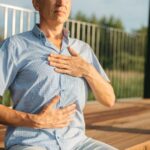
To practice: sit or lie comfortably. Place one hand on your chest and one on your belly. Inhale slowly through your nose, focusing on pushing your belly out against your hand. Your chest should stay relatively still. Exhale slowly through pursed lips. Practice this for five to ten minutes, twice daily.
Pursed-lip breathing is a simple technique that slows your breathing and keeps airways open longer. Inhale through your nose. Purse your lips as if you are about to whistle. Exhale slowly and gently through your pursed lips, taking about twice as long to exhale as you took to inhale. This creates mild back-pressure in the airways, which can help prevent small airways from collapsing during exhalation.
Segmental breathing targets specific areas of the lungs. Place your hands on the sides of your rib cage. Breathe in and focus on expanding your ribs outward into your hands. This encourages the lower lobes of the lungs to expand more fully. Some clinicians use this technique after surgery or illness to prevent shallow breathing in specific lung regions.
What the Evidence Shows About Breathing Exercise Benefits
Research consistently shows that breathing exercises improve symptoms in people with chronic obstructive pulmonary disease (COPD). Studies have found that patients who practice these techniques require less effort to breathe, experience less shortness of breath during daily activities, and report better quality of life. The evidence for COPD is strong enough that these exercises are a standard component of pulmonary rehabilitation programs worldwide.
For healthy adults, the evidence is more modest but still meaningful. Some studies indicate that breathing exercises can increase respiratory muscle strength and endurance in healthy people, particularly in athletes and musicians. A trained singer or wind instrument player often demonstrates greater vital capacity than an untrained person of the same age and build.
One important finding: breathing exercises do not increase the maximum amount of oxygen your body can use during intense exercise, a measurement called VO2 max. That requires cardiovascular training like running or cycling. Breathing exercises improve breathing efficiency at rest and during moderate activity, but they are not a substitute for aerobic exercise.



How Breath-Holding Techniques Fit In
Some breathing programs emphasize breath holds. The idea is that holding your breath after exhaling creates a mild oxygen deficit, which trains your body to tolerate higher carbon dioxide levels. Over time, this may reduce the urge to breathe and improve breathlessness tolerance.
The evidence here is mixed. Some research on yoga practitioners and freedivers shows impressive breath-hold abilities, but these individuals train for years and their results do not necessarily translate to the general population. For most people, the practical benefit of breath holds is learning to stay calm when breathing feels difficult.
If you try breath holds, start gently. Hold only until you feel a moderate urge to breathe, never to the point of struggling. If you have heart disease, high blood pressure, or a lung condition, talk to your doctor before attempting any breath-hold technique.
Who Should Be Cautious With Breathing Exercises
Most healthy adults can practice breathing exercises without risk. But certain groups need to be careful.
People with asthma should not use breathing exercises as a replacement for their prescribed inhalers. Breathing techniques can be a complementary tool, but they do not treat acute bronchospasm. If you feel your chest tightening, use your rescue inhaler as prescribed.
People with COPD should practice breathing exercises under the guidance of a respiratory therapist, especially when first starting. Incorrect technique can increase the work of breathing rather than decrease it. A therapist can also help you coordinate breathing with physical activity, which is where the real functional gains happen.
Pregnant women can safely practice gentle diaphragmatic breathing, but should avoid prolonged breath holds. No clinical guidelines currently exist for breath-hold training during pregnancy, so err on the side of caution.
If you have a history of spontaneous pneumothorax, a collapsed lung, ask your doctor before practicing any deep breathing exercises that involve forceful inhalation or breath holding.
How Long Before You Notice a Difference
Some people notice improved breath control within a week of daily practice. The sensation of breathing more easily often comes before any measurable change in lung function. Respiratory muscles, like any skeletal muscle, respond to training over weeks to months.
Most pulmonary rehabilitation programs run for six to twelve weeks. Patients typically report reduced breathlessness during daily activities by the end of the program. Measurable improvements in respiratory muscle strength usually appear after four to eight weeks of consistent practice.
Consistency matters more than intensity. Ten minutes of focused breathing practice daily beats one hour once a week. The goal is to make these patterns automatic so that you use them during normal daily activities, not just during practice sessions.
Combining Breathing Exercises With Physical Activity
Breathing exercises produce the most meaningful gains when paired with physical activity. Walking, swimming, and cycling all challenge your respiratory system while building cardiovascular fitness. The combination addresses both the muscles of breathing and the heart’s ability to deliver oxygen.
Try coordinating your breathing with movement. Inhale for two steps, exhale for four steps while walking. This pattern naturally slows your breathing rate and increases the time for oxygen exchange. As you get fitter, you can extend the pattern to longer strides or faster paces.
For people with lung conditions, this coordination is best learned in a supervised setting. Pulmonary rehabilitation programs teach patients how to pace their breathing during exertion, which is one of the most effective strategies for reducing the feeling of breathlessness during daily life.
What Does Not Work
Several products claim to increase lung capacity through resistance training devices. Some of these devices do have evidence for strengthening inspiratory muscles, particularly in people with weakened breathing muscles from conditions like COPD or after prolonged mechanical ventilation. But for healthy adults, the benefit is less clear. Some research suggests modest improvements in respiratory muscle strength, but no consistent evidence that these devices improve exercise capacity or overall health in people with normal lung function.
Oxygen therapy does not increase lung capacity. It raises the oxygen concentration in your blood, but it does not change how much air your lungs can hold. Oxygen therapy is a medical treatment for people with low blood oxygen levels, not a training tool.
Spirometry devices sold as “lung training” tools simply measure how much air you move. They do not increase capacity on their own. The exercise is what matters, not the measuring device.
When To See a Doctor About Shortness of Breath
Breathing exercises are not a substitute for medical evaluation. If you experience unexplained shortness of breath, especially if it comes on suddenly or worsens over time, see a doctor before starting any breathing program.
Warning signs include shortness of breath with minimal exertion, wheezing, chest pain, coughing up blood, or swelling in your ankles or feet. These can indicate conditions like heart failure, asthma, COPD, or pulmonary embolism. Breathing exercises will not address these underlying problems and could delay appropriate treatment.
If you have a diagnosed lung condition, ask your doctor whether breathing exercises are appropriate for you and whether a referral to pulmonary rehabilitation makes sense. Many people with COPD or post-COVID breathing difficulties benefit substantially from a structured program led by respiratory therapists.
Frequently Asked Questions
How long does it take to increase lung capacity with breathing exercises?
Most people notice easier breathing within one to two weeks of daily practice. Measurable improvements in respiratory muscle strength typically appear after four to eight weeks of consistent training.
Can breathing exercises help if I have COPD?
Yes. Breathing exercises are a standard part of pulmonary rehabilitation for COPD and have been shown to reduce breathlessness and improve quality of life. They should complement, not replace, your prescribed medications.
Do breathing exercises replace cardio exercise?
No. Breathing exercises improve breathing efficiency but do not increase your body’s maximum oxygen use during intense exercise. Aerobic exercise like walking, cycling, or swimming is still necessary for cardiovascular fitness.
Are breathing exercises safe for everyone?
Most healthy adults can practice them safely. People with heart disease, asthma, COPD, or a history of collapsed lung should check with their doctor first, especially before attempting breath holds.
