
Falling is not a normal part of getting older. Your balance can improve at any age with the right training. The proven ways to improve balance as you age focus on three things: strengthening your legs and core, practicing specific balance exercises daily, and training your body to react quickly to stumbles. Research from the CDC shows that one in four adults over 65 falls each year, but studies have also found that targeted exercise programs can reduce falls by up to 54 percent. You do not need special equipment or a gym membership. You need consistency and the right movements.
Why Does Balance Get Worse With Age?
Three body systems work together to keep you upright. Your vision tells your brain where you are in space. Your inner ear senses motion and gravity. And sensors in your muscles and joints send signals about your position. All three slow down with age.
Muscle mass naturally declines after age 30. This loss, called sarcopenia, affects your legs and core first. Weaker muscles mean slower reactions when you trip. The National Institute on Aging reports that older adults who are inactive lose up to 5 percent of muscle mass per decade. That loss directly impacts balance.
Your inner ear also changes. The tiny hair cells that detect movement die off and do not grow back. This affects your vestibular system, which is your body’s gyroscope. Some people notice dizziness or a feeling of unsteadiness. That is often the inner ear, not the legs.
The good news is that you can train all three systems. Vision exercises, vestibular therapy, and strength training all work. You are not stuck with the balance you have today.
What Are the Most Effective Exercises for Balance?
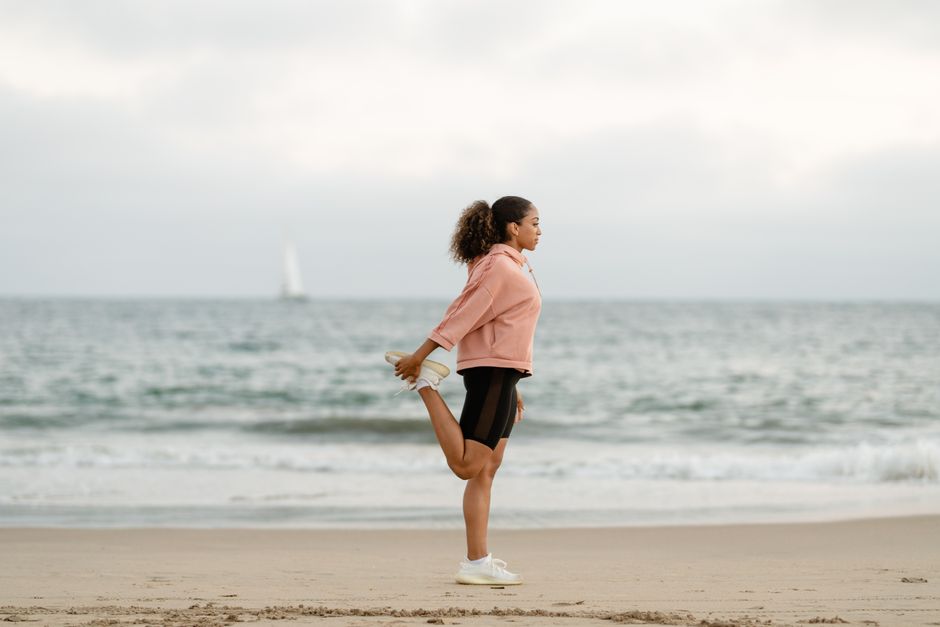
Single-leg stands are the gold standard. Stand behind a sturdy chair and lift one foot off the ground. Hold for 10 seconds. Switch legs. Work up to 30 seconds per leg. This exercise directly challenges your body’s balance systems and builds ankle strength.
The heel-to-toe walk is another proven method. Place one foot directly in front of the other as if walking on a tightrope. Do this along a counter or wall for safety. Aim for 20 steps. This trains your dynamic balance, which is what you use when walking on uneven ground.
Tai chi has the strongest research support of any exercise for fall prevention. A 2017 study published in the Journal of the American Geriatrics Society found that people who practiced tai chi twice a week for 12 weeks reduced their fall risk by 43 percent. Tai chi combines slow, controlled movements with weight shifting. It improves both physical balance and mental focus.
Here is a simple weekly routine backed by research:
- Monday: Single-leg stands, three sets per leg, 15 seconds each
- Tuesday: Heel-to-toe walk, 20 steps, two rounds
- Wednesday: Tai chi or balance-focused yoga, 30 minutes
- Thursday: Single-leg stands, work up to 30 seconds
- Friday: Heel raises, 15 reps, three sets
- Saturday: Tai chi or walking on varied surfaces
- Sunday: Rest or gentle stretching
Consistency matters more than intensity. Ten minutes daily beats one hour once a week. Your brain needs repeated practice to build new pathways for balance control.
How Does Strength Training Help Balance?
Strong legs catch you when you stumble. The muscles that matter most are your glutes, quadriceps, hamstrings, and calves. Weakness in any of these makes recovery from a trip harder.
Squats are the most effective single exercise for fall prevention. Stand with feet shoulder-width apart. Lower yourself as if sitting in a chair. Keep your chest up and knees behind your toes. Do not go deeper than 90 degrees. Three sets of 10 reps, three times per week, builds functional leg strength.
Calf raises strengthen the muscles that control ankle stability. Stand on the edge of a step with your heels hanging off. Rise up onto your toes, then lower slowly. This mimics the motion your ankles make when catching yourself on uneven ground. The American Council on Exercise recommends two sets of 15 reps.
Deadlifts, even with light weight, train your posterior chain. This is the chain of muscles along your backside that keeps you upright. Use a dumbbell or kettlebell. Hinge at your hips, not your waist. Keep your back straight. This exercise directly translates to picking things up off the floor without falling.
| Exercise | Muscles Worked | How It Helps Balance |
|---|---|---|
| Squat | Glutes, quads, hamstrings | Improves ability to lower and rise safely |
| Calf raise | Calves, ankle stabilizers | Strengthens ankle response to trips |
| Deadlift | Hamstrings, glutes, lower back | Trains hip hinge and upright posture |
| Side leg raise | Hip abductors | Improves lateral stability when stepping |
| Plank | Core, shoulders | Stabilizes torso during movement |
Core strength is often overlooked. Your core connects your upper and lower body. A weak core makes your torso wobble, which throws off your center of gravity. Planks and bird-dog exercises build core endurance without straining your back.


What Role Does Footwear and Home Safety Play?
Your shoes are your contact point with the ground. Flat, thin-soled shoes with good grip are best. Thick cushioning, like in many running shoes, reduces sensory feedback from your feet. Your brain needs that feedback to adjust your balance. A 2019 study in the Journal of Foot and Ankle Research found that minimalist shoes improved balance in older adults compared to standard walking shoes.
Walking barefoot at home can help if you have healthy feet. It strengthens the small muscles in your feet and improves sensory input. But if you have diabetes or neuropathy, always wear shoes. Nerve damage in your feet makes you unaware of uneven surfaces.
Home hazards cause about half of all falls in older adults. Loose rugs, clutter on the floor, and poor lighting are the biggest risks. The CDC recommends removing throw rugs entirely. Install grab bars in the bathroom next to the toilet and in the shower. Use nightlights in hallways and bathrooms.
Stair safety is critical. Ensure handrails are on both sides of every staircase. Do not carry items while using stairs. If you feel unsteady on stairs, consider a stairlift or moving your bedroom to the first floor. This is not giving in to age. It is removing unnecessary risk.
Does Vision and Inner Ear Health Affect Balance?
Your eyes tell your brain where the horizon is. If your vision is off, your balance suffers. Get your eyes checked every year. Update your glasses prescription as needed. Bifocals and progressive lenses can distort depth perception, especially on stairs. Some people benefit from separate distance and reading glasses to avoid this issue.
Inner ear problems are a common cause of dizziness and imbalance. Benign paroxysmal positional vertigo, or BPPV, happens when tiny calcium crystals in your inner ear move out of place. It causes brief but intense spinning when you turn your head. A simple series of head movements called the Epley maneuver can fix it. An audiologist or physical therapist can perform this in one session.
Vestibular therapy is a specialized form of physical therapy for people with inner ear disorders. It involves exercises that retrain your brain to interpret signals from your inner ear correctly. Studies show it reduces dizziness and improves balance in 80 percent of people with vestibular disorders.
Some medications cause balance problems as a side effect. Blood pressure drugs, antidepressants, and sedatives are common culprits. If you started feeling unsteady after a new medication, talk to your doctor. Do not stop taking any medication without medical guidance. A simple dose adjustment may solve the problem.
Frequently Asked Questions
How many minutes per day should I practice balance exercises?
Ten to fifteen minutes daily is enough to see improvement within four to six weeks. Consistency matters more than duration.
Can balance be improved after age 70?
Yes. Studies show that people in their 70s, 80s, and 90s can improve balance with regular exercise. Age is not a barrier to progress.
What is the single best exercise for balance?
The single-leg stand is the most effective because it directly challenges all three balance systems and builds ankle strength quickly.
Do balance boards and wobble cushions work?
They can be effective when used correctly but increase fall risk for beginners. Start with floor-based exercises before trying unstable surfaces.
