
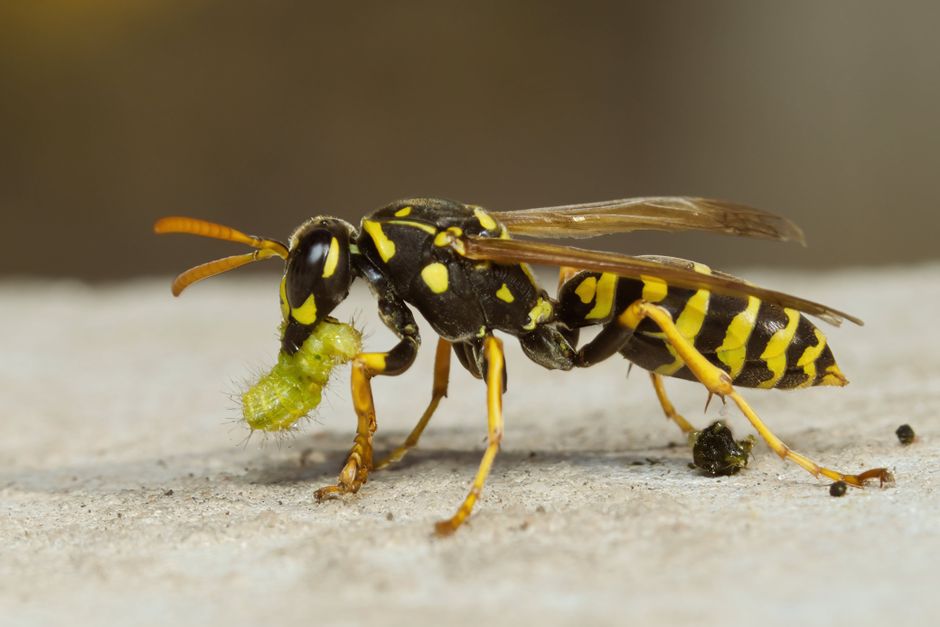
Spotting a yellow jacket queen is mostly about size and timing. The queen is noticeably larger than the workers you see in summer, often measuring around 3/4 to 1 inch long. However, the most reliable way to identify her is by season: in early spring, any yellow jacket you see is almost certainly a queen, as she is the only one that survives the winter to start a new colony.
Why Size Alone Is Not Enough
Many people think a large yellow jacket is automatically a queen. That is not always true. Yellow jacket workers within a single colony can vary in size. Some workers are naturally larger than others, which makes size a useful clue but not a guarantee.
The queen is built differently, not just bigger. Her body is more elongated, especially the abdomen. She also has a slightly different head shape. But unless you have a queen and a worker side by side, these differences are hard to spot on a live, moving insect.
If you are looking at a dead specimen, measure it. A true queen will typically exceed 3/4 of an inch. A large worker might reach that size, but it is far less common. When in doubt, do not rely on size alone.
The Timing Method Is Most Reliable
The single best way to identify a yellow jacket queen is to know when you are seeing her. Yellow jacket colonies are annual. Only the newly mated queens survive the winter. They hide in leaf litter, rotting logs, and soil cavities until spring.
In early spring, as temperatures warm, these queens emerge. They are hungry and looking for a nest site. If you see a yellow jacket in March or April, it is a queen. There are no workers yet because the colony has not been built.
Workers appear later, usually by late spring or early summer. By mid-summer, the colony is fully active. If you see a yellow jacket in July, it is almost certainly a worker. The queen is inside the nest laying eggs and rarely comes out.
Physical Features To Look For
When you do see a queen, look for specific markings. Yellow jackets have a distinct pattern of black and yellow bands on their abdomen. Queens display this same pattern, but the yellow may appear more vibrant or slightly more orange in some species.
The wings are another clue. Queens have longer wings relative to their body compared to workers. Their wings also extend past the abdomen when folded. This is not always easy to see in the field, but it helps with a captured specimen.
Look at the waist. Yellow jackets have a narrow “wasp waist” where the thorax meets the abdomen. This is more pronounced in queens. The petiole, or the narrow connection, is slightly more visible in the queen due to her larger abdomen.





How To Tell A Queen From A Common Wasp
People often confuse yellow jackets with paper wasps and other stinging insects. The yellow jacket queen has a shorter, thicker body than a paper wasp. Paper wasps have long legs that dangle in flight and a more slender body.
Yellow jackets also have a pattern that is more like a striped pattern with less separation between bands. Bald-faced hornets, which are actually a type of yellow jacket, are mostly black with white markings. A true yellow jacket queen will always show yellow bands.
Another key difference is behavior. Yellow jackets are aggressive scavengers. They are drawn to sugary drinks and meat. Paper wasps are less interested in human food. If the insect is hovering around your soda can at a picnic, it is likely a yellow jacket worker, not a queen.
Queen Size Comparison Table
| Feature | Queen | Worker |
|---|---|---|
| Body length | Typically 3/4 to 1 inch | Typically 1/2 to 5/8 inch |
| Abdomen | Longer, more pointed | Shorter, more rounded |
| Wings | Longer relative to body | Shorter relative to body |
| Season visible | Early spring, again late summer | Late spring through fall |
When You Will See Queens Again
There is a second time you may see queens in late summer or early fall. This is when new queens are produced. The colony raises reproductive males and new queens. These new queens leave the nest to mate.
After mating, the males die. The newly fertilized queens find a protected spot to overwinter. You might see these new queens in late August through October. They often appear sluggish as they search for hibernation spots.
These new queens look the same as the spring queens. They are the same size and have the same markings. The only difference is their behavior. They are not building a nest yet. They are preparing for winter dormancy.
Why Queens Matter For Control Efforts
Understanding queen identification matters if you have a yellow jacket problem. In early spring, killing a single queen can prevent an entire colony from forming. This is the most effective time for control.
By mid-summer, killing the queen is much harder and less useful. The queen stays deep inside the nest. Workers will defend the nest aggressively. If you remove the queen in summer, the workers may continue to function for a while, and some may even raise a new queen.
If you find a nest, do not attempt to remove it yourself. Yellow jacket stings are painful and can cause severe allergic reactions in some people. Professional pest control is the safest option for nest removal. They have the equipment and protective gear to handle aggressive colonies safely.
Common Mistakes In Queen Identification
The biggest mistake is assuming every large yellow jacket is a queen. Some workers are simply robust. You need to confirm the size, the season, and ideally the behavior before concluding you are looking at a queen.
Another mistake is confusing yellow jackets with honeybees. Honeybees are fuzzy and have a rounded, furry appearance. Yellow jackets have a smooth, shiny exoskeleton. A yellow jacket queen is not fuzzy at all. Her body is sleek and hard-shelled.
Do not confuse drones with queens either. Male yellow jackets, called drones, can be similar in size to queens. They have longer antennae and no stinger. They also have a slightly different abdomen shape. Drones appear only in late summer and fall, which adds to the confusion.
Safe Observation Tips
If you want to identify a queen in your yard, observe from a distance. Do not swat at the insect. Do not block her flight path. Queens in spring are not defending a nest yet, but they can still sting if provoked.
Wear light-colored clothing if you go near areas where yellow jackets are active. Dark colors and floral patterns attract them. Avoid wearing perfume or scented lotions. Yellow jackets are attracted to sweet scents.
If a queen lands near you, stay still. She is likely foraging for nectar or looking for a nest site. She will move on quickly. Sudden movements are more likely to trigger a defensive response than the insect’s own aggression.
Remember that yellow jackets are beneficial in some ways. They pollinate plants and prey on pest insects. A queen starting a nest in a remote part of your property may not need to be removed. Only intervene if the nest is near high-traffic areas where stings are likely.
Frequently Asked Questions
How big is a yellow jacket queen compared to a worker?
A queen is typically 3/4 to 1 inch long, while workers are usually 1/2 to 5/8 inch. The queen’s abdomen is also longer and more pointed than a worker’s.
What time of year do yellow jacket queens come out?
Queens emerge in early spring, usually around March or April, to start new colonies. New queens also appear in late summer and early fall to mate before overwintering.
Can a yellow jacket queen sting you?
Yes, a queen can sting. She has a smooth stinger that can be used repeatedly, unlike a honeybee which stings only once.
How can you tell a yellow jacket queen from a paper wasp?
Yellow jackets have shorter, thicker bodies with less visible legs in flight. Paper wasps have long legs that dangle and a more slender body shape.
