
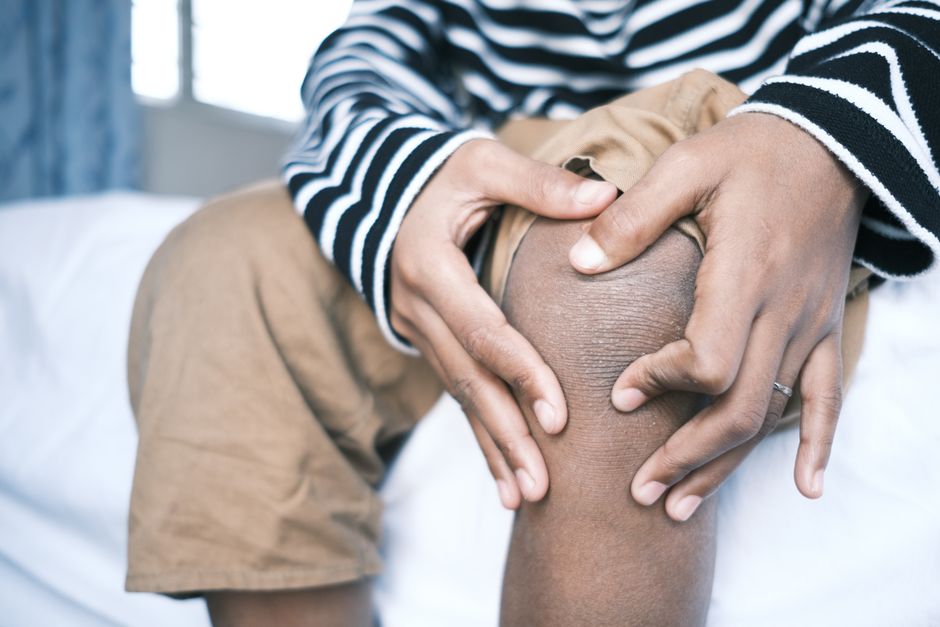
Knee pain stops runners in their tracks. The fix is not just resting until it feels better — it is finding the actual cause and addressing it. Lasting relief comes from a combination of correcting training errors, strengthening the right muscles, and knowing when the pain needs professional care. You can help knee pain from running for good by identifying the specific type of pain you have, adjusting your training load, and building strength in the muscles that support the knee joint.
What Causes Knee Pain In Runners?
Most running-related knee pain falls into a few common categories. The most frequent is pain on the front of the knee, around or behind the kneecap. This is often called runner’s knee, and it usually comes from the kneecap not tracking smoothly over the thigh bone.
Pain on the outside of the knee is the second most common type. This typically involves the iliotibial (IT) band, a thick band of tissue running from the hip to the shin. It can become irritated where it crosses the knee joint.
Other causes include patellar tendinitis, which is pain just below the kneecap, and meniscus issues, which often feel like pain deep inside the joint. Each type has different triggers and needs a different approach.
Running form, muscle weakness, and training errors all contribute. Weak hip and glute muscles are a major factor. When these muscles tire, the knee collapses inward with each step, putting extra strain on the joint.
How To Help With Knee Pain From Running For Good
The lasting solution is not a single treatment. It is a system. You need to reduce the current irritation, fix the weakness that caused it, and adjust your training so it does not return.
Start with relative rest. This does not mean stopping all activity. It means stopping the running that hurts. You can usually cross-train with swimming, cycling at low resistance, or upper-body strength work while the knee calms down.
Ice can help reduce acute pain and swelling in the first few days. Apply it for 15-20 minutes at a time, several times a day. Over-the-counter anti-inflammatory medication like ibuprofen can help short-term, but it does not fix the underlying problem.
The real work begins with strengthening. The muscles that matter most are the glutes, hips, and quadriceps. Weakness in these areas changes how your knee moves and absorbs force. Targeted exercises are the most reliable way to change that pattern.
Return to running gradually. Many runners try to resume at their previous mileage and pace, which re-injures the knee. A slow, progressive return is essential. Start with short runs on flat, soft surfaces and increase distance by no more than 10% per week.
What Strength Exercises Actually Help Knee Pain?
Research consistently shows that strengthening the muscles around the hip and knee reduces knee pain in runners. The goal is to improve how the knee tracks and how force is absorbed through the leg.
Key exercises include:
- Squats — bodyweight or with light weight, focusing on keeping the knees aligned over the toes
- Lunges — forward or reverse, building strength in the quadriceps and glutes
- Glute bridges — activating the glutes to support the hip and knee
- Side-lying leg lifts — targeting the hip abductors, which control knee alignment
- Calf raises — supporting the lower leg and ankle, which affects knee mechanics
- Wall sits — building quadriceps endurance without putting impact through the joint
Perform these exercises two to three times per week. Start with two sets of 10-12 repetitions. The movement quality matters more than the weight. If you cannot keep your knee aligned during an exercise, reduce the range of motion or the load.
Some research suggests that eccentric exercises — where the muscle lengthens under load — are particularly helpful for tendon problems like patellar tendinitis. A decline squat is a common example. Lower yourself slowly over three to five seconds, then rise normally.





Should You Stretch Or Foam Roll?
Stretching gets a lot of attention in the running community, but the evidence for it preventing knee pain is limited. Stretching alone does not correct muscle weakness. It can improve flexibility and reduce tightness, but it should not be the main treatment.
Foam rolling the IT band is popular, but the IT band itself does not stretch — it is a thick, fibrous structure. What you are actually releasing is the muscle tissue around it, particularly the tensor fasciae latae muscle at the hip. Rolling the side of the thigh can reduce tension and discomfort, but it will not fix the underlying weakness that caused the problem.
Stretching the quadriceps, hamstrings, and calves can help maintain range of motion. Hold each stretch for 30 seconds. Do this after a warm-up or after running, not on cold muscles.
If you have patellar tendinitis, stretching the quadriceps can reduce tension on the tendon. But again, the strengthening work is what produces the lasting change.
When Should You See A Doctor Or Physical Therapist?
Not all knee pain should be managed at home. Some situations require professional evaluation. Seek medical care if you have any of these signs:
- Swelling that does not go down after a few days of rest and ice
- Pain that prevents you from putting weight on the leg
- A feeling that the knee is giving way or locking
- Pain that gets worse despite reducing your running
- Redness or warmth around the knee, which can signal infection
- Pain that persists for more than two weeks despite consistent self-care
A physical therapist can assess your running form, muscle strength, and flexibility. They can identify the specific weaknesses contributing to your pain and design a program to address them. This is often the fastest route to lasting relief.
For some conditions, imaging like an X-ray or MRI may be needed. This is not necessary for every runner with knee pain, but it can rule out structural damage like a meniscus tear or cartilage wear.
What Running Changes Prevent Knee Pain From Returning?
Your training habits play a major role in whether knee pain comes back. The most common mistake is doing too much, too soon. This includes increasing mileage too fast, adding hills too quickly, or returning to speed work before the knee is ready.
Running shoes matter, but not the way marketing suggests. There is no single best shoe for knee pain. The right shoe depends on your foot shape, running style, and comfort. Replace shoes when they show significant wear — typically after 300-500 miles. Running in worn-out shoes can change your foot strike and increase stress on the knee.
Running on softer surfaces can reduce impact. Grass, dirt trails, and rubber tracks are gentler on the knees than concrete or asphalt. But do not switch surfaces abruptly. Your body needs time to adapt.
Consider your cadence — the number of steps you take per minute. A higher cadence, around 170-180 steps per minute, is associated with less impact through the knee. You can work on this gradually by taking shorter, quicker steps.
Cross-training is not optional if you want to run pain-free long-term. Two days per week of strength work, cycling, or swimming builds resilience. Runners who strength train have lower rates of overuse injuries.
Does Running Itself Wear Down The Knee?
Many runners worry that running causes arthritis. The evidence does not support this fear. Studies have found that recreational runners have lower rates of knee osteoarthritis than sedentary people. Running strengthens cartilage and keeps joints healthy.
Elite and competitive runners may have slightly higher rates of knee arthritis, but the overall picture is reassuring. Regular, moderate running does not destroy knees. It protects them.
This matters for your mindset. If you believe running is damaging your knee, you may stop running entirely or avoid the strengthening work that would help. The evidence says the opposite. A strong, well-supported knee can handle running for many years.
How Long Does It Take To Recover From Runner’s Knee?
Recovery time varies. Mild cases may improve within a few weeks of rest and strengthening. More stubborn cases can take two to three months. The key is consistency with the strengthening program, not just waiting for pain to disappear.
Pain is a guide. You can continue activities that do not cause pain. If a specific exercise hurts the knee, modify it or skip it temporarily. Push through pain and you will extend the recovery time.
A common mistake is returning to running as soon as the pain stops. The pain may be gone, but the muscle weakness that caused it remains. Complete at least two weeks of pain-free strengthening before you resume running. Then build mileage slowly.
Frequently Asked Questions
Should I stop running completely if my knee hurts?
Stop the running that causes pain, but you do not need to stop all activity. Cross-training with cycling, swimming, or strength work can keep you fit while the knee recovers.
Is it better to ice or heat a runner’s knee?
Use ice in the first few days after pain starts to reduce inflammation and swelling. Heat is more useful for muscle tightness before activity, not for acute knee pain.
Can I run through knee pain if it is mild?
Running through pain usually makes the problem worse. If pain is mild and does not worsen during a run, you may continue at reduced mileage, but any increase in pain is a sign to stop.
Do knee braces or straps help runner’s knee?
Some runners find temporary relief from a patellar strap or sleeve, but the evidence for lasting benefit is limited. Braces do not correct the muscle weakness that causes the pain.
