
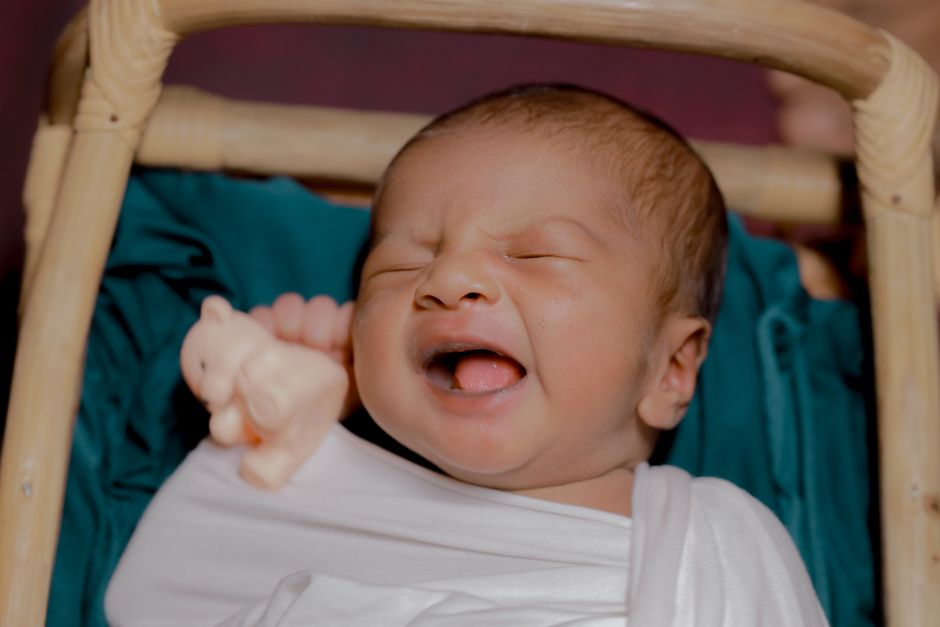
Teething can disrupt your baby’s sleep, often for weeks at a time. The most effective way to help is to address the gum pain before bedtime, use a consistent calming routine, and offer comfort during night wakings without creating new sleep habits. Most babies find relief from a combination of pressure on the gums, cooling, and a predictable, soothing environment.
What Does Teething Actually Do to Sleep?
Teething is the process of a baby’s primary teeth breaking through the gum tissue. This is a physical event that causes localized inflammation and pressure. That pressure is what makes gums feel sore and tender.
The discomfort is not constant. It tends to be worse in the hours before a tooth actually cuts through the gum. This means your baby may have several rough nights, followed by a period of calm, and then another rough patch when the next tooth starts moving.
Research on teething symptoms is consistent. Studies that follow babies daily show that the classic signs—drooling, irritability, and chewing on things—peak around the day the tooth emerges. Sleep disruption follows the same pattern. It is usually brief and tied to the active cutting phase, not a constant issue for months on end.
A common misconception is that teething causes long stretches of poor sleep. If your baby is waking frequently for weeks with no break, teething is probably not the only cause. It may be a sleep association, a growth spurt, or an illness. Treating every bad night as teething can delay finding the real issue.
How To Help Teething Baby Sleep: What Works Before Bed
The goal before bed is to reduce gum inflammation so your baby can settle into deep sleep. A few simple steps done consistently can make a meaningful difference.
Apply pressure to the gums. This is the most reliable non-medication approach. A clean finger, a chilled (not frozen) teething ring, or a damp washcloth placed in the freezer for a few minutes gives your baby something firm to bite down on. The pressure counteracts the upward force of the tooth pushing through the gum.
Use something cold, not frozen. Cold numbs the gums and reduces swelling. Frozen items are too hard and can actually bruise already tender tissue. A teething ring that has been in the refrigerator is ideal. A frozen washcloth becomes rigid and can be uncomfortable for the same reason.
Wipe away excess drool. Teething increases saliva production. Drool sitting on your baby’s chin and neck can cause a rash, which adds irritation on top of gum pain. Gently pat the area dry before bed and apply a thin layer of petroleum jelly to protect the skin.
Time the last feeding carefully. If your baby uses a bottle or breastfeeds to fall asleep, the gums are still sore afterward. Try to offer a brief gum massage or a few minutes of pressure after the feeding, before the actual transition to the crib. This separates the pain relief from the sleep association.
Should You Use Teething Gels or Medication?
This is where parents need the most careful information. Not everything sold for teething is safe or effective.
Over-the-counter pain relievers. Acetaminophen (Tylenol) and ibuprofen (Advil, Motrin) are the medications most pediatricians recommend for teething pain that is clearly interfering with sleep. Ibuprofen is generally preferred for inflammation because it reduces swelling directly. It is only approved for infants older than 6 months. Acetaminophen can be used from 2 months of age.
Always use the weight-based dose on the package or from your pediatrician. Never guess based on age alone. These medications are effective but should be used sparingly—only for a few consecutive nights during the worst of the cutting phase, not for weeks on end.
Teething gels with benzocaine. These are marketed for babies but are not recommended. Benzocaine can cause a rare but serious condition called methemoglobinemia, which reduces oxygen in the blood. The FDA has warned against these products for children under 2 years old. Do not use them.
Homeopathic teething tablets and gels. The FDA has also warned about these products. Some were found to contain belladonna, a toxic substance, in amounts that varied between batches. There is no reliable evidence that homeopathic remedies relieve teething pain. Avoid them.
Teething necklaces and bracelets. These are a strangulation and choking hazard. They have no proven benefit for pain. The American Academy of Pediatrics advises against them. Skip them entirely.





Managing Night Wakings Without New Habits
The middle-of-the-night approach should be different from the bedtime approach. At bedtime, you have time to soothe. At 2 a.m., the goal is to get your baby back to sleep quickly without teaching them that waking up means playtime or feeding.
Keep it dark and boring. Do not turn on lights, talk in a normal voice, or engage. Offer comfort in the crib if possible. Pick up only if your baby is truly distressed.
Offer a pacifier. The sucking motion provides pressure that can distract from gum pain. If your baby uses a pacifier at other times, offering it during a teething night is reasonable. If your baby does not use one, do not introduce it now.
Reassess before feeding. If your baby is over 6 months and was sleeping through the night before teething started, they likely do not need extra milk. The pain is the issue, not hunger. Offering a bottle at every wake can create a new feed-to-sleep association that persists long after the tooth cuts through.
Wait before intervening. Babies often fuss or cry briefly during sleep cycles. If your baby wakes and cries for a minute then settles, do not rush in. Intervening too quickly can turn a normal brief arousal into a full wake-up.
When to See a Pediatrician
Most teething discomfort resolves on its own within a few days. But some symptoms are not caused by teething and need medical attention.
Call your pediatrician if your baby has:
Teething does not cause high fevers or digestive issues. A baby who is genuinely sick will often have these symptoms in addition to being irritable. If you are unsure, a quick call to your pediatrician’s office is always appropriate.
Also seek advice if the sleep disruption lasts longer than a few nights without improvement. Persistent night wakings can signal an ear infection, which causes pain when lying flat. This is a common misdiagnosis for teething because the symptoms overlap.
Setting Realistic Expectations
Teething is not a single event. Most babies get their first tooth around 6 months, but the process continues until all 20 primary teeth have emerged, usually by age 3. That is a lot of potential disruption.
The good news is that most teething-related sleep problems are short. The worst nights are typically the 2 to 3 days before the tooth breaks through. Once the tooth is visible, the pressure drops and sleep usually returns to normal.
If your baby is a poor sleeper in general, teething will make it worse. If your baby is a good sleeper, teething will cause temporary blips, not a permanent regression. Keeping that distinction in mind can help you respond appropriately rather than overcorrecting.
Try to avoid making major sleep-training changes during a teething episode. If you are in the middle of teaching your baby to fall asleep independently, pause for a few nights. Comfort them as needed, then resume once the tooth has cut through. Trying to push through sleep training during an active teething phase often fails and frustrates everyone.
Frequently Asked Questions
How long does teething disrupt sleep?
Typically 2 to 3 nights per tooth, centered around the day the tooth breaks through the gum. Longer stretches of poor sleep usually have another cause.
Can I give my baby pain reliever for teething at night?
Yes. Acetaminophen or ibuprofen, given at the weight-based dose, can help for a few nights during the worst phase. Ibuprofen is only approved for babies over 6 months.
Are frozen teething rings safe?
Chilled is better than frozen. Frozen items are too hard and can bruise already swollen gums. Refrigerate the ring instead of freezing it.
Is it safe to let my teething baby cry it out?
No. Sleep training methods that involve extended crying are not appropriate during an active teething episode. Your baby is in genuine discomfort and needs comfort, not isolation.
