
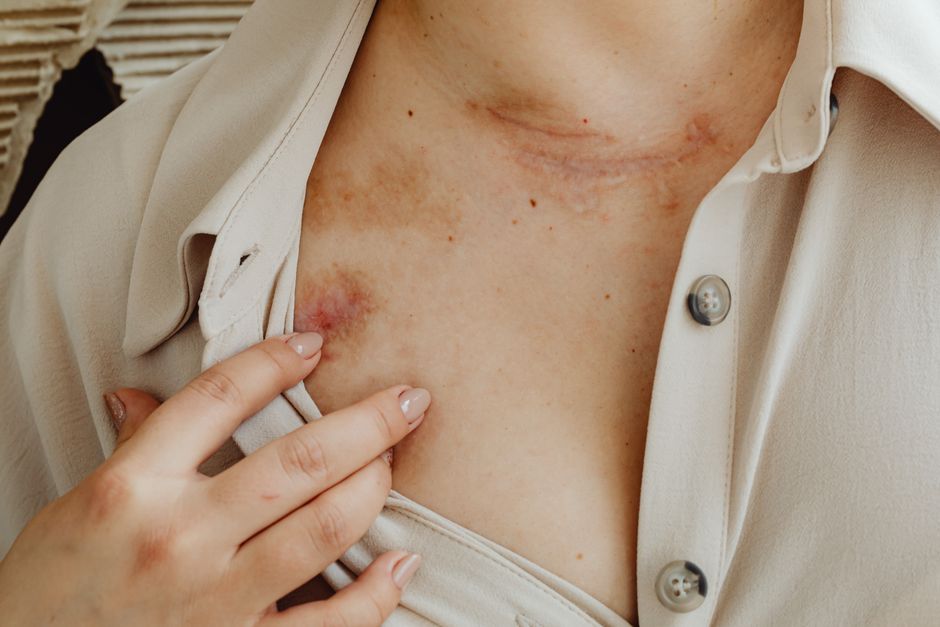
Retinol burn happens when a vitamin A derivative irritates the skin faster than it can adapt. The fastest way to heal it is to stop all retinoids immediately, strip your routine down to a gentle cleanser and a plain moisturizer, and protect the skin from sun while the barrier rebuilds. Most mild retinol irritation settles within one to two weeks, but a severe reaction with blistering or oozing needs medical care.
What follows is what actually helps, what makes it worse, and how to tell the difference between normal adjustment and a genuine barrier injury.
What Is Retinol Burn and Why Does It Happen?
Retinol burn is not a true thermal burn. It is a form of irritant contact dermatitis caused by a vitamin A compound disrupting the outer layer of your skin.
Your skin barrier — the stratum corneum — works like a brick wall. Skin cells are the bricks, and lipids (fats) like ceramides, cholesterol, and fatty acids are the mortar holding them together. This layer keeps water in and irritants out.
Retinoids speed up cell turnover and thin the top layer of dead skin. That is part of how they work. But when the process outpaces your skin’s ability to repair itself, the mortar breaks down. Water escapes, irritants get in, and you get redness, stinging, peeling, and tightness.
Several things raise the risk:
- Starting at too high a concentration or applying too often
- Applying to damp skin, which increases penetration and irritation
- Layering with acids, benzoyl peroxide, or vitamin C
- Using more than a pea-sized amount for the whole face
- Sun exposure without protection
- Having naturally dry or sensitive skin, or a condition like eczema or rosacea
One clarification worth knowing: the “retinoid ugliness” phase some people describe — flaking, redness, and purging — is not the same as a burn. Purging is a temporary worsening of acne in the first weeks. A burn is barrier damage. They look different and they are handled differently.
How Do You Tell Retinol Burn From Normal Retinoid Adjustment?
Mild adjustment and true irritation overlap, so the distinction comes down to severity and function.
Normal adjustment tends to look like light flaking, a bit of dryness, and mild pinkness. It usually eases as your skin adapts. It does not stop you from wearing moisturizer or going about your day.
Retinol burn is different. Signs include:
- Bright red or raw-looking skin
- Stinging or burning that continues after you stop applying the product
- Peeling in sheets rather than light flaking
- Skin that feels tight, hot, or painful
- Swelling, blistering, or oozing
- Increased sensitivity to water, even lukewarm
If you have blistering, oozing, or pain that is getting worse rather than better, that is beyond at-home care. See a doctor or dermatologist. Those signs can also point to an allergic contact dermatitis or an infection, which need different treatment.
How To Heal Retinol Burn Fast Repair Your Skin Barrier
The core strategy is subtraction, not addition. Most people make retinol burn worse by adding more products to fix it.
Step 1: Stop all retinoids and active ingredients
Stop the retinol, and stop anything else that exfoliates or stimulates: retinol, tretinoin, adapalene, glycolic acid, salicylic acid, lactic acid, benzoyl peroxide, vitamin C, and strong fragranced products. Give your barrier a clean slate.
Step 2: Simplify to three products
A gentle, non-foaming cleanser. A bland moisturizer. A mineral sunscreen. That is it.
Wash with lukewarm water — hot water strips lipids further. Pat dry instead of rubbing. Apply moisturizer while skin is still slightly damp to trap water.
Step 3: Moisturize more than feels necessary
Barrier repair needs both water-binding ingredients and lipid replacement. Look for products containing:
- Ceramides — replace the mortar between skin cells
- Glycerin — pulls water into the skin
- Hyaluronic acid — holds water, though it needs a sealant on top
- Petrolatum or dimethicone — reduce water loss by forming a barrier
- Cholesterol and fatty acids — the other two parts of the barrier lipid mix
An occlusive layer like petrolatum at night is one of the most reliable ways to reduce water loss while the barrier rebuilds. It is not elegant. It works.
Step 4: Protect from sun
Damaged skin is more vulnerable to ultraviolet damage. Mineral sunscreens with zinc oxide or titanium dioxide tend to sting less than chemical filters on compromised skin. If even sunscreen stings, stay out of direct sun and use a hat and shade until the skin calms.
Step 5: Resist the urge to exfoliate the peeling
Do not scrub, pick, or use a peeling mask to remove flakes. The flakes are your barrier shedding. Pulling them off takes healthy skin with them and delays healing.




How Long Does Retinol Burn Take To Heal?
Mild irritation usually improves within a few days and resolves in one to two weeks once you stop the retinoid. More significant barrier damage can take longer.
The timeline depends on how much damage occurred, how aggressively you treated it, and your baseline skin health. Someone with eczema or rosacea may take longer to recover than someone with resilient skin.
Two things reliably slow healing: continuing to use actives “just a little,” and sun exposure without protection. Both restart the injury.
If your skin is not improving after two weeks of gentle care, or if it is getting worse, that is a signal to get it looked at.
What Should You Avoid While Your Barrier Heals?
Almost everything marketed for “repair” can set you back if it contains an active. Read labels.
Avoid:
- Retinoids of any kind, including over-the-counter retinol serums
- Chemical exfoliants (AHA, BHA, PHA)
- Physical scrubs and cleansing brushes
- Benzoyl peroxide and high-percentage vitamin C
- Essential oils, denatured alcohol, and heavy fragrance
- Hot showers, saunas, and steam rooms
- Waxing, threading, or chemical peels on the affected area
Some people reach for hydrocortisone cream to calm the redness. That is a judgment call worth discussing with a clinician rather than self-prescribing. Topical steroids can thin skin with prolonged use, and using them on the face without guidance is not recommended.
How Do You Restart Retinol Without Burning Again?
Once your skin is fully calm — no redness, no stinging, no flaking — you can reintroduce retinol slowly. The mistake most people make is restarting at the same dose and frequency that caused the problem.
A common approach clinicians suggest:
- Wait until skin has been calm for at least a week
- Start with a lower concentration than before
- Apply a pea-sized amount to dry skin, two to three nights per week
- Use the “sandwich” method: moisturizer, then retinol, then moisturizer
- Increase frequency only after several weeks without irritation
- Keep using sunscreen daily
This is general clinical practice rather than a strict protocol backed by large trials. Individual tolerance varies widely, and there is no single schedule that works for everyone.
If you burned badly once, consider asking a dermatologist about a gentler retinoid or a different active entirely. Not everyone tolerates retinoids, and that is a legitimate outcome, not a failure.
When Should You See a Doctor?
Most retinol irritation is manageable at home. Some situations need professional care.
See a doctor or dermatologist if you have:
- Blistering, oozing, or open sores
- Severe pain or swelling
- Signs of infection — spreading redness, warmth, pus, or fever
- No improvement after two weeks of gentle care
- Worsening symptoms despite stopping all actives
- A history of eczema, rosacea, or another skin condition that is now flaring
These signs can overlap with allergic reactions and skin infections, which need different treatment than simple barrier repair. Getting them evaluated is the safe move.
Frequently Asked Questions
How long does retinol burn last?
Mild retinol irritation usually improves within a few days and clears in one to two weeks after you stop using the product. More significant barrier damage can take longer, and symptoms that worsen or fail to improve after two weeks should be evaluated by a doctor.
Can I put moisturizer on retinol burn?
Yes, and you should. A bland moisturizer with ceramides, glycerin, or petrolatum helps replace lost lipids and reduce water loss while the barrier rebuilds, and applying it to slightly damp skin helps trap moisture.
Should I exfoliate the peeling skin from retinol burn?
No. Scrubbing or picking at the flakes removes healthy skin underneath and delays healing, so let the peeling shed on its own while you keep the area moisturized.
Can I use retinol again after a burn?
Usually yes, once your skin has been fully calm for at least a week. Restart at a lower concentration and lower frequency than before, and stop again if irritation returns.
