
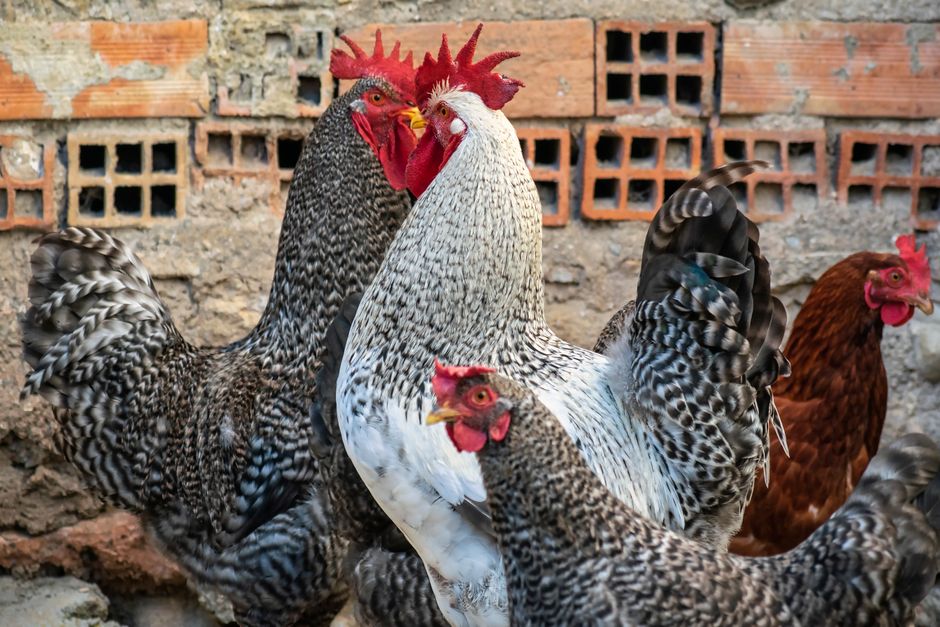
Hatching your own chicks means you get to choose the genetics, but you cannot choose the sex. The reality is that roughly half of all chicks that hatch will be roosters. You can improve your odds of hatching more hens by using specific egg storage methods, temperature profiles, and even newer egg-sorting technology, but no backyard method guarantees 100% hens. The most reliable way to get hens is to buy sexed chicks from a hatchery, which uses vent sexing to identify females with about 90% accuracy.
Why Do Hatched Chicks Come Out About 50% Male?
Sex in chickens is determined by the hen’s genetics, not the rooster’s. A hen has ZW chromosomes, and a rooster has ZZ chromosomes. The hen passes one chromosome to each egg. If she passes a Z, the chick is male. If she passes a W, the chick is female. This means the sex of every chick is set before the egg is even laid.
Because the ratio of Z to W eggs is roughly equal, you will naturally get about half males and half females. No incubation method can change the genetics of the egg. What some methods attempt to do is influence which eggs hatch best under certain conditions, which can slightly shift the ratio in one direction.
Can Temperature During Incubation Influence Chick Sex?
Some research suggests that temperature during incubation may have a small effect on the sex ratio of hatched chicks. Studies have found that incubating eggs at slightly higher temperatures, around 100.5°F to 101.5°F, may produce a slightly higher percentage of female chicks. Cooler temperatures, around 98.5°F to 99.5°F, may favor males.
The evidence here is not strong enough to call it a reliable method. The differences observed in studies are small, and results vary between breeds and between different research trials. If you want to try it, keep the temperature within the safe range for embryo development. Going too high or too low will kill the embryos, not change their sex.
Does Egg Storage Time Affect Whether You Get Hens?
Egg storage time before incubation appears to have a more consistent effect than temperature. Research has shown that eggs stored for longer periods, around 7 to 14 days, tend to hatch a higher percentage of female chicks. Eggs incubated within the first few days after being laid tend to produce more males.
The reason appears to be related to embryo viability. Male embryos are slightly more fragile and may not survive the longer storage period as well as female embryos. This is not a perfect method. You will still get a mix of sexes, but the ratio may shift toward females with longer storage.





What Is Egg Sexing Technology and Does It Work?
Commercial egg sexing technology is the most accurate method available today. There are two main approaches. One uses spectroscopy to analyze the color of the feathers inside the egg. The other uses hormone analysis of the egg’s allantoic fluid. Both methods are performed at around day 9 to 14 of incubation.
These technologies are accurate, with some systems reporting over 95% accuracy in identifying female eggs. However, they are not available to backyard hatchers. The equipment is expensive, and the testing is done at commercial hatcheries. If you want guaranteed hens, your best option is to buy sexed chicks rather than hatching your own eggs.
Is There a Way to Tell Sex Before Hatching at Home?
There is no reliable home method to determine chick sex before hatching. Candling eggs, which means shining a bright light through the shell, can show you the embryo’s development, but it cannot reveal the sex. Some people claim that the shape of the egg or the position of the air cell indicates sex, but these claims have no scientific support.
Some breeders use a method called “egg shape” sexing, which claims that pointier eggs produce males and rounder eggs produce females. Studies have not confirmed this. If you rely on this method, you will likely end up with close to a 50/50 split, just like everyone else.
What Is the Most Reliable Way to Get Hens?
If your goal is to maximize the number of hens, the most reliable approach is to buy sexed chicks from a reputable hatchery. Hatcheries use a technique called vent sexing, where a trained professional examines the chick’s vent to identify its sex. This method is about 90% accurate when performed by an experienced person.
Some hatcheries also offer sex-linked chicks. These are chicks bred with specific feather color or down color genes that allow you to visually identify males and females at hatch. Sex-linked crosses are nearly 100% accurate when done correctly. This is the best option if you want to avoid roosters entirely.
If You End Up With Roosters, What Are Your Options?
Even with the best methods, you may still hatch some roosters. Many municipalities have restrictions on keeping roosters due to noise. You have a few options if you end up with males.
You can rehome them through local farm groups or social media. Some people raise them for meat, as young roosters are perfectly good for eating. You can also keep one rooster if your situation allows, as a flock with a rooster will produce fertile eggs and the rooster will protect the hens.
If you are hatching eggs specifically to get hens for egg production, you should be prepared for the possibility of culling young males. This is a reality of hatching your own chicks that many new keepers do not anticipate.
Does Breed Affect the Sex Ratio?
Some breeds have a slightly higher natural tendency to produce one sex over the other, but the differences are small and not predictable enough to rely on. For example, some older heritage breeds may produce slightly more females, while some commercial hybrids may produce slightly more males. These differences are not consistent enough to recommend one breed over another if your goal is hens.
The sex of the chick is determined at the moment the egg is formed. Breed can influence the ratio slightly, but it does not override the basic genetics of ZW and ZZ chromosomes.
What Are the Best Incubation Practices for Healthy Hatch Rates?
Regardless of your goal for sex ratio, healthy incubation practices matter most. If you want any chicks at all, you need to get the basics right.
- Set the incubator temperature to 99.5°F for forced-air models and 101°F for still-air models.
- Keep humidity between 40% and 50% for the first 18 days, then raise it to 65% to 70% for the last 3 days before hatch.
- Turn eggs at least 3 times per day for the first 18 days.
- Stop turning eggs on day 18 and do not open the incubator until all chicks have hatched.
These practices do not influence sex, but they do influence whether your eggs hatch at all. A healthy incubation environment gives every embryo the best chance to survive, regardless of its sex.
Frequently Asked Questions
Can you tell if an egg is male or female before it hatches?
No reliable home method exists to determine chick sex before hatching. Candling can show embryo development but not sex, and commercial technology that can identify sex is not available to backyard hatchers.
Does incubator temperature really determine chick sex?
Some research suggests a small shift toward females with slightly higher incubation temperatures, but the effect is inconsistent and not reliable. Temperature extremes will kill embryos rather than change their sex.
What is the best way to get only hens?
Buying sexed chicks from a hatchery is the most reliable method, with vent sexing about 90% accurate. Sex-linked breeds allow visual sex identification at hatch and are nearly 100% accurate.
How long can eggs be stored before incubation to get more hens?
Storing eggs for 7 to 14 days before incubation may produce a slightly higher percentage of females. This is because male embryos are more fragile and may not survive longer storage as well as females.
