
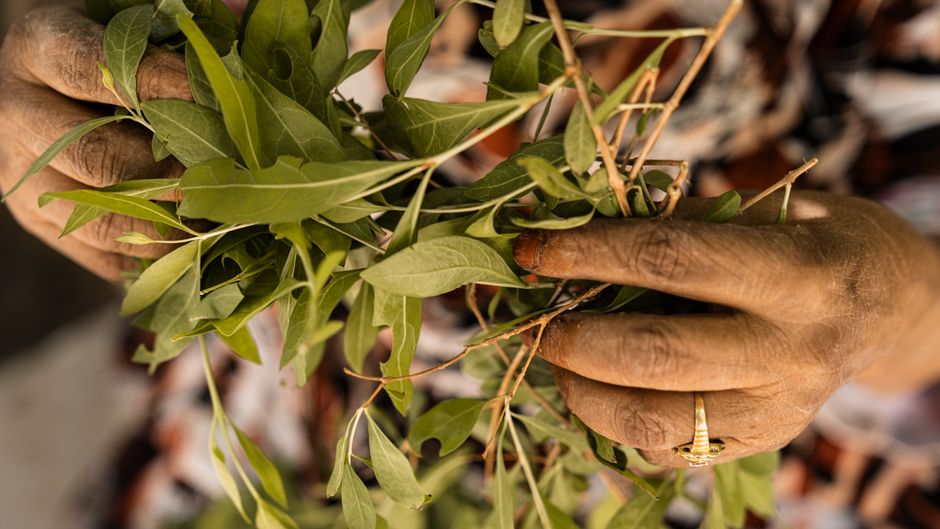
Harvest mugwort in late summer when the plant is flowering and before the first hard frost. Cut stems a few inches above the ground with clean shears, bundle them loosely, and hang them upside down in a warm, dark, dry room with good airflow until the leaves crumble easily. Store the dried leaves whole in an airtight container away from light and heat, and they will keep their aroma for about a year.
Mugwort (Artemisia vulgaris) is a tall, common perennial with deeply lobed leaves and a silvery underside. It grows widely along roadsides, field edges, and disturbed ground. People harvest it for teas, smudge bundles, and traditional preparations. The plant itself is easy to grow and easy to find. Drying it well takes a little patience and attention.
When Is The Best Time To Harvest Mugwort?
The best window is late summer into early fall, while the plant is in flower and before cold weather sets in.
Mugwort typically blooms from midsummer through early fall, depending on your region. The flowering tops hold the strongest aroma at that stage. Herbalists often favor this period because the essential oils in the leaves and flowers are at their peak. Leaves picked earlier in the season are usable but tend to be milder.
Pick a dry morning after the dew has lifted. Wet plant material invites mold during drying. Avoid harvesting right after rain, and skip plants that look damaged, dusty, or wilted.
If you want the leaves only, you can harvest earlier in the summer. Just know the scent and flavor will be less pronounced than a flowering-stage harvest.
Where Should You Look For Mugwort And Which Plants To Avoid?
Mugwort grows in sunny, disturbed ground: field edges, fence lines, roadsides, and neglected garden corners. It spreads readily and often appears in patches.
Location matters more than technique here. Plants growing near busy roads, industrial sites, or sprayed fields can carry dust, exhaust residue, or herbicide. Harvest well away from those areas. If you are not sure whether a site has been treated with chemicals, choose another spot.
Correct identification is the part people skip, and it is the part that matters most. Mugwort has a distinctive look:
- Leaves are deeply lobed and dark green on top with a silvery, almost white underside
- Stems are tall, often reddish or purplish near the base
- Flowers are small and greenish-yellow, clustered in loose spikes
- The plant has a sage-like, slightly bitter scent when a leaf is crushed
Mugwort belongs to a family that includes several look-alikes, and some related plants are not safe to consume. Do not harvest from any plant you cannot identify with confidence. If you are new to foraging, learn from a local expert or a reliable regional field guide before you pick anything.
How To Harvest Mugwort Cut Dry And Store It Step By Step
Harvesting is the quick part. Cutting, drying, and storing are where quality is won or lost.
Cutting
Use clean, sharp garden shears or scissors. Cut stems a few inches above the soil line. Take the whole stem rather than stripping leaves in the field. Leaving the stem attached makes bundling and hanging easier.
Wipe your tools with rubbing alcohol between plants if you are harvesting from more than one location. This is a simple step that limits the spread of plant disease.
Harvest in the cooler part of the morning. Plant material that has been sitting in hot sun all day wilts faster and dries less evenly.
Drying
Gather a small handful of stems into a loose bundle. Tie it with string or a rubber band. Keep the bundle loose enough that air moves through it. A tight bundle traps moisture in the center and can mold.
Hang the bundles upside down in a room that is warm, dark, and dry, with decent air circulation. A dark closet, attic, or spare room works well. Direct sunlight fades the color and drives off the aromatic oils you are trying to preserve.
Drying usually takes one to three weeks. The exact time depends on humidity and airflow. The mugwort is ready when the leaves feel dry and crumbly and the stems snap rather than bend. If the stems still bend like rubber, give it more time.
You can also dry mugwort flat on a screen or rack in a single layer. This works well in humid climates where hanging bundles stay damp too long. Turn the leaves every day or two so they dry evenly.
Storing
Once fully dry, strip the leaves from the stems and store them whole. Whole leaves hold their aroma longer than crushed ones. Crush or grind only what you plan to use.
Use an airtight glass jar or a sealed container. Keep it in a cool, dark, dry place, away from the stove and out of direct sun. Label the jar with the harvest date.
Properly dried and stored mugwort keeps its quality for roughly a year. After that, it is not spoiled, but the aroma and flavor fade. Check stored jars now and then. Any sign of moisture, mustiness, or mold means the batch should be thrown out.





How Do You Know Mugwort Is Fully Dry?
Mugwort is fully dry when the leaves crumble between your fingers and the stems snap cleanly instead of bending.
This is the single most important check. Plant material that feels dry on the outside but still holds moisture inside will mold in the jar. That mold can be invisible at first.
If you are unsure, do a simple test. Seal a small amount in a jar for a day or two. If condensation forms on the glass, the plant is not dry yet. Return it to the drying area and check again later.
Humid weather slows drying and raises the risk of mold. In damp conditions, give the bundles more space, add a fan for airflow, or use a dehydrator on a low setting. Keep the temperature gentle so you do not cook off the aromatic oils.
What Are The Safety Considerations With Mugwort?
Mugwort is a traditional herb, but traditional use is not the same as proven safety, and some people should be cautious.
Mugwort contains compounds called thujones, which are present in several plants in this family. Thujone is a substance the body does not handle well in large amounts. This is why mugwort is generally treated as an occasional herb rather than a daily staple, and why it is not recommended in large or concentrated doses.
Because of these compounds, mugwort is generally not recommended during pregnancy. Some traditional sources describe it as a uterine stimulant, and the safety margin for thujone-containing herbs in pregnancy is not well established. People who are pregnant or breastfeeding should avoid it unless a qualified clinician advises otherwise. No clinical guidelines currently set a safe dose for these groups.
Mugwort is also related to ragweed and other plants in the daisy family. People with allergies to that family may react to mugwort, whether through tea or through handling the plant. If you have seasonal allergies, start with small contact and watch for a reaction.
Beyond these points, the evidence on mugwort’s health effects is limited. Many traditional uses have not been confirmed in large human trials. Treat it as a traditional herb with real cautions, not a proven remedy.
Common Harvesting Mistakes To Avoid
Most poor results come from a handful of avoidable errors.
- Harvesting wet plants, which invites mold during drying
- Bundling stems too tightly, which traps moisture in the center
- Drying in direct sun, which fades color and aroma
- Storing before the plant is fully dry
- Crushing the leaves before storage, which speeds up aroma loss
- Harvesting from roadsides or sprayed ground
- Picking a plant you cannot positively identify
The fix for most of these is patience. Give the plant time to dry completely, and store it whole in a sealed jar away from light. That covers the biggest risks.
Frequently Asked Questions
Can you harvest mugwort after it flowers?
Yes, you can harvest mugwort after flowering, though the aroma is strongest during the flowering stage. Late-season plants are still usable if they are healthy and dry.
How long does it take to dry mugwort?
Hanging bundles usually dry in one to three weeks, depending on humidity and airflow. The plant is ready when the leaves crumble and the stems snap.
Can you dry mugwort in the oven?
You can dry mugwort in an oven on its lowest setting with the door slightly open, but the heat can drive off the aromatic oils. Air drying in a warm, dark room gives better quality.
How long does dried mugwort last?
Properly dried mugwort stored in an airtight jar away from light and heat keeps its quality for about a year. After that it is still usable but the aroma fades.
