
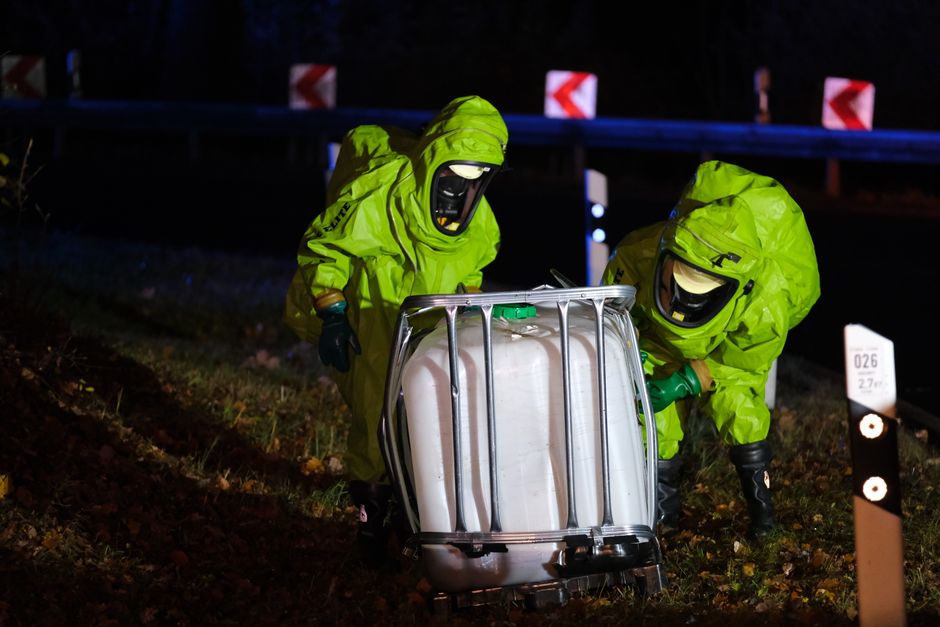
Every household and workplace contains products that can burn, poison, or explode if handled the wrong way. The core rule of safe handling is simple: identify the hazard before you touch it, read the label and safety data sheet, wear the right protection, and never mix unknown substances. Most serious injuries from hazardous materials happen because someone skipped one of those steps.
How To Handle Hazardous Materials Safely: The Basic Steps
Safe handling is a sequence, not a single action. Skip a step and the others stop protecting you.
Start with identification. Read the product label, the Safety Data Sheet (SDS), or the container marking. In workplaces, OSHA’s Hazard Communication Standard requires employers to provide SDSs for hazardous chemicals and to train workers on them. At home, the label is your SDS.
Next, control exposure. That means ventilation, gloves, eye protection, and correct storage. Never eat, drink, or smoke while working with a hazardous material. Wash hands after handling, even if you wore gloves.
Finally, plan for the failure. Know where the nearest eyewash station, fire extinguisher, or fresh water source is before you open the container. If you cannot answer “what do I do if this spills?” do not start.
What Are the Main Types of Hazardous Materials?
Hazard classes describe how a material can hurt you. The same chemical can belong to more than one class.
- Flammable and combustible liquids — gasoline, paint thinner, alcohol-based solvents. Vapors can ignite from a spark, pilot light, or static discharge.
- Corrosives — drain cleaners, oven cleaners, bleach, battery acid. They destroy skin, eyes, and metal on contact.
- Acute toxins — pesticides, some cleaning agents, carbon monoxide. Harm occurs after a single exposure.
- Reactive and oxidizing materials — pool chlorine, peroxides. They can react violently with other substances or with water.
- Compressed gases — propane, helium, oxygen cylinders. Physical hazard comes from pressure and from oxygen displacing air.
- Radioactive and biological materials — handled under separate regulatory frameworks, not general chemical rules.
Household products follow the same logic. The Consumer Product Safety Commission requires signal words on labels — DANGER (most serious), WARNING, and CAUTION — to signal relative hazard level. Those words are not decoration.
Which Protective Equipment Actually Matters?
Protection must match the material and the task. There is no universal glove or mask that works for everything.
Gloves are the most misunderstood item. Nitrile gloves resist many water-based chemicals but offer poor protection against some solvents. Latex degrades quickly with oils and solvents. Butyl and laminate gloves handle specific aggressive chemicals. The SDS specifies which glove material is appropriate for a given substance. A glove that swells, softens, or changes color is failing — remove it and replace it.
Eye protection ranges from safety glasses to full face shields to goggles that seal against the face. Splash risk calls for sealed goggles or a face shield. Dust calls for different protection entirely.
Respiratory protection is the most commonly misused category. A dust mask does not protect against vapors. A surgical mask protects against neither. For airborne chemical hazards, the SDS and workplace exposure limits determine the correct respirator and filter type. In workplaces where respirators are required, OSHA requires medical evaluation, fit testing, and training before use.
Ventilation is often more effective than any wearable gear. Working outdoors or with a fan moving air away from your face reduces inhalation exposure more reliably than a mask worn incorrectly.





How Should Hazardous Materials Be Stored and Disposed Of?
Storage and disposal cause more household incidents than active use. Both have clear rules.
Store materials in their original containers with labels intact. Never transfer a chemical into a food or drink container. This single practice accounts for a large share of accidental poisonings, particularly in children.
Keep incompatible materials apart. Bleach and ammonia produce chloramine vapors when mixed. Bleach and acid produce chlorine gas. Both reactions have caused serious respiratory injury in home bathrooms and kitchens. Store flammables away from heat sources and pilot lights. Keep compressed gas cylinders upright and secured.
Disposal depends entirely on the material and your local rules. Many communities run household hazardous waste collection days for paint, solvents, pesticides, batteries, and electronics. Pouring these down a drain or into a trash bin can contaminate groundwater or injure sanitation workers. The EPA maintains guidance on household hazardous waste, but collection programs are run locally — check your city or county website for what they accept and when.
What Should You Do If Something Goes Wrong?
Response depends on the route of exposure, and the first move is almost always the same: stop the exposure and get to fresh air or clean water.
For skin contact, remove contaminated clothing and flush the area with water. For eye contact, flush with clean water for at least 15 minutes and keep the eyelid open. For inhalation, move to fresh air immediately. For swallowing, do not induce vomiting unless a poison control professional tells you to — some corrosives cause additional damage coming back up.
Call Poison Control at 1-800-222-1222 for any suspected poisoning, and have the container with you when you call. For a spill, evacuate the area, ventilate if safe to do so, and use the SDS to determine cleanup. Never attempt to clean up an unknown spilled material without knowing what it is.
One point worth clarifying: “flush with water” is not universal advice. A small number of reactive materials — certain metals and some industrial chemicals — react with water and can ignite or release toxic gas. This is rare in household products but common enough in industrial settings that the SDS should always be checked first. When in doubt, call for guidance before adding water.
Why Do People Get Hurt Despite Knowing Better?
Familiarity is the leading cause. People who handle a chemical daily stop treating it as hazardous. The label fades, the gloves come off for “just a second,” the ventilation gets skipped because the task is quick.
Small exposures accumulate. A splash that causes no immediate pain can still cause sensitization or chronic harm over repeated contact. Solvents absorbed through skin are a well-documented route of exposure that many workers underestimate, because the skin does not always react visibly.
Children face a different version of the same problem. They cannot read labels and explore by mouth and touch. The CDC reports that a large share of child poisoning cases involve products stored within reach in homes. Locking cabinets and keeping materials in original containers do more than any educational effort aimed at young children.
Training works when it is specific. General “be careful” messaging does not change behavior. Knowing exactly which glove, which ventilation, and which first-aid step applies to a specific product does.
Frequently Asked Questions
What is the first thing you should do when handling a hazardous material?
Identify the material and read its label or Safety Data Sheet before touching it. That tells you the hazards, the required protective equipment, and what to do in an emergency.
Can you mix bleach and ammonia?
No. Mixing them produces chloramine vapors that can cause serious respiratory injury. The same applies to bleach and any acid, which releases chlorine gas.
What should you do if a hazardous chemical gets in your eye?
Flush the eye with clean water for at least 15 minutes, holding the eyelid open, and seek medical attention. Do not use eye drops or neutralizers unless a medical professional directs you to.
Is it safe to pour household chemicals down the drain?
Usually not. Many chemicals can contaminate water systems or injure sanitation workers, so check your local household hazardous waste program for proper disposal. The SDS or product label may also specify disposal instructions.
