
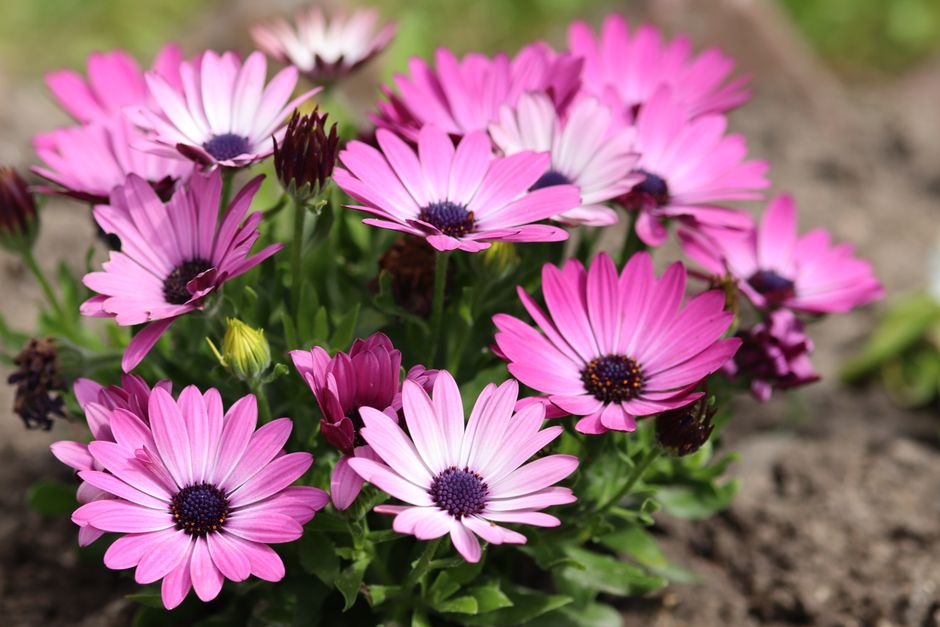
Osteospermum Serenity Rose Magic is a patented African daisy cultivar grown for its pink-and-white flowers and its tidy, compact habit. Grow it in full sun, plant it in well-drained soil, water it when the top inch of soil dries out, and deadhead the spent blooms to keep new flowers coming. It is a tender perennial that most gardeners in the United States treat as an annual, and it will not survive a hard freeze.
That short answer covers the basics. The details below explain how to actually keep the plant healthy through a full season, and where common advice about African daisies goes wrong.
What Is Osteospermum Serenity Rose Magic?
Osteospermum is a genus in the daisy family, Asteraceae, native mainly to southern Africa. Gardeners know the group collectively as African daisies. Serenity Rose Magic is one named cultivar within the Serenity series, a group bred for compact growth and uniform flowering.
The flowers open pink and fade toward white as they age, often with a darker eye at the center. That color shift is the “Magic” in the name. Because individual blooms change color as they mature, a single plant can carry several shades at once. This is a normal characteristic of the cultivar, not a sign of stress or disease.
Plants typically stay compact rather than sprawling. Exact mature dimensions vary with growing conditions, so treat any specific height or spread figure you see online as approximate. In containers the plant usually stays smaller than it would in open ground.
The “patented” part matters for one practical reason. A plant patent means the cultivar cannot be legally propagated and sold without permission. Saving seed or taking cuttings for your own garden is a different question than commercial propagation, but the distinction is worth knowing before you assume you can freely multiply and sell it.
How Much Sun Does Osteospermum Serenity Rose Magic Need?
Full sun. African daisies evolved in bright, open conditions, and this cultivar flowers best with at least six hours of direct sunlight per day. More sun generally means more flowers and a tighter, sturdier plant.
Less light produces a predictable set of problems. Stems stretch toward the light source. The plant opens up in the middle and flops. Flower count drops. In deep shade, flowering may stop almost entirely.
One behavior surprises people new to the genus. Many osteospermum flowers close at night and on heavily overcast days, then reopen when the sun returns. A plant that looks shut down in the evening is usually not dying. It is following its own daily rhythm.
If you are growing in a hot climate, afternoon shade in the hottest part of summer can help. Intense reflected heat off pavement or a south-facing wall can stress the plant even when light levels are adequate.
What Kind of Soil and Drainage Does It Need?
Well-drained soil is the single most important requirement. Osteospermum roots rot in consistently wet, heavy ground. This is the most common way gardeners lose the plant.
In garden beds, aim for soil that drains freely. If your native soil is dense clay, amend it with organic matter or plant on a slight mound so water moves away from the crown. The crown is the point where stems meet roots, and it is the part most vulnerable to rot.
In containers, use a quality potting mix rather than garden soil. Garden soil compacts in pots and holds water too long. Make sure the container has drainage holes. A pot without drainage is a reliable way to kill the plant.
Soil pH is less critical than drainage. African daisies are not especially fussy about pH as long as the soil is not waterlogged, but they perform best in soils that are not extremely acidic or extremely alkaline.



How Should You Water Osteospermum Serenity Rose Magic?
Water when the top inch or so of soil feels dry to the touch. Then water thoroughly, so moisture reaches the root zone rather than just wetting the surface.
This plant tolerates brief dry spells better than it tolerates constant moisture. The failure mode is almost never underwatering. It is overwatering, especially in containers that sit in saucers of standing water.
Established plants in the ground need less frequent watering than new transplants. During the first couple of weeks after planting, keep the soil consistently moist but not soggy to help roots establish. After that, ease off and let the soil dry between waterings.
In containers, check moisture more often. Potting mix dries faster than garden soil, particularly in summer heat and wind. A container can go from adequately moist to bone dry in a day or two during a hot spell.
Water at the base of the plant rather than over the foliage when you can. Wet leaves and flowers for long stretches create conditions that favor fungal problems, and it wastes water.
Should You Fertilize African Daisies?
Light feeding is usually enough. African daisies are not heavy feeders, and too much nitrogen pushes leafy growth at the expense of flowers.
If you fertilize, use a balanced or bloom-oriented product at a moderate rate, and follow the label directions. Do not exceed the label rate. More fertilizer is not better here, and overfeeding can produce a large, floppy plant with few blooms.
In containers, where nutrients leach out with watering, some regular feeding is generally more useful than it is in garden soil. In rich garden beds, added fertilizer may not be needed at all.
If the plant looks pale and stops growing despite adequate sun and water, a modest feeding may help. If it looks lush and green but will not flower, the problem is more likely too much nitrogen, too little sun, or both.
How Do You Keep It Blooming All Season?
Deadheading is the main lever. Removing spent flowers stops the plant from putting energy into seed production and encourages more blooms. Pinch or snip the flower stem back to a leaf or bud.
Beyond deadheading, the plant benefits from a midseason tidy-up. If flowering slows and stems get long and leggy in midsummer, trimming the plant back lightly can prompt fresh growth and a new flush of flowers. Do not cut back so hard that you remove most of the foliage.
Consistent moisture and full sun support continued flowering. So does avoiding overfeeding. A plant that has everything except enough light will simply not perform, no matter how well you care for it otherwise.
Heat is a real factor. In regions with very hot summers, flowering often slows during the hottest stretch and picks back up when temperatures moderate. This is normal seasonal behavior, not necessarily a problem with your care.
What Pests and Diseases Affect It?
Root and crown rot are the most serious problems, and they trace back to excess moisture. A plant that wilts despite moist soil, or develops a soft, dark base, is often already past saving. Prevention through good drainage and careful watering is far more effective than trying to treat rot once it sets in.
Aphids are a common pest on many garden plants, including African daisies. They cluster on new growth and can be managed with a strong spray of water or insecticidal soap, following label directions. Whiteflies and thrips can also appear, particularly in warm conditions.
Powdery mildew can develop on foliage, especially when air circulation is poor. Spacing plants adequately and watering at the base rather than overhead reduces the risk.
In containers, watch for fungus gnats, which are usually a sign of consistently wet potting mix. Letting the surface dry between waterings helps.
Can You Grow It in Containers?
Yes, and containers suit this cultivar well because of its compact habit. Use a pot with drainage holes, fill it with quality potting mix, and place it where it gets full sun.
Container growing changes a few things. You will water more often, because potting mix dries faster than garden soil. You may need to feed more regularly, because nutrients leach out with each watering. And you should never let the pot sit in a saucer of standing water.
Containers also give you flexibility. You can move the plant to follow the sun, or bring it under cover when cold weather threatens, which extends its life in regions where it would otherwise die at first frost.
What Happens in Winter?
Osteospermum is tender. It does not survive freezing temperatures, and in most of the United States it is grown as an annual. Once cold weather arrives and the plant is hit by frost, it will decline and die.
In frost-free climates, it may behave as a perennial and return year after year. In areas with mild winters but occasional light frost, a protected spot may carry it through, but this is not reliable.
If you want to keep a plant over winter in a cold climate, the realistic option is to bring a container plant indoors before the first frost and keep it in a bright, cool spot. Even then, indoor conditions are often not ideal for African daisies, and results vary.
Many gardeners simply treat it as a seasonal annual and replant the following spring. That is the simplest approach and matches how the plant is usually sold.
How Do You Plant It?
Plant after the last expected frost in your area, once the soil has warmed. Osteospermum does not like cold, wet soil, so planting too early can set it back.
Choose a spot with full sun and good drainage. Set the plant at the same depth it was growing in its nursery container — planting too deep can bury the crown and invite rot. Water it in well after planting.
Space plants so air moves between them. Good air circulation reduces disease pressure and gives each plant room to reach its full size.
If you are planting in a bed with heavy clay, consider amending the soil or planting on a mound before you put anything in the ground. Fixing drainage after planting is much harder than fixing it beforehand.
Frequently Asked Questions
Is Osteospermum Serenity Rose Magic a perennial or an annual?
It is a tender perennial that is usually grown as an annual in most of the United States because it cannot survive freezing temperatures. In frost-free climates it may live for more than one year.
Why do the flowers close during the day?
Many African daisies close their flowers at night and during heavily overcast or rainy conditions, then reopen when sunlight returns. This is normal behavior for the genus, not a sign the plant is dying.
How much sun does it need to bloom well?
At least six hours of direct sun per day is generally needed for good flowering. In deep shade, flowering drops sharply or stops altogether.
Can I keep it alive indoors over winter?
You can try, by bringing a container plant inside before the first frost and keeping it in a bright, cool spot. Results vary, and indoor conditions are often not ideal for this plant.
