
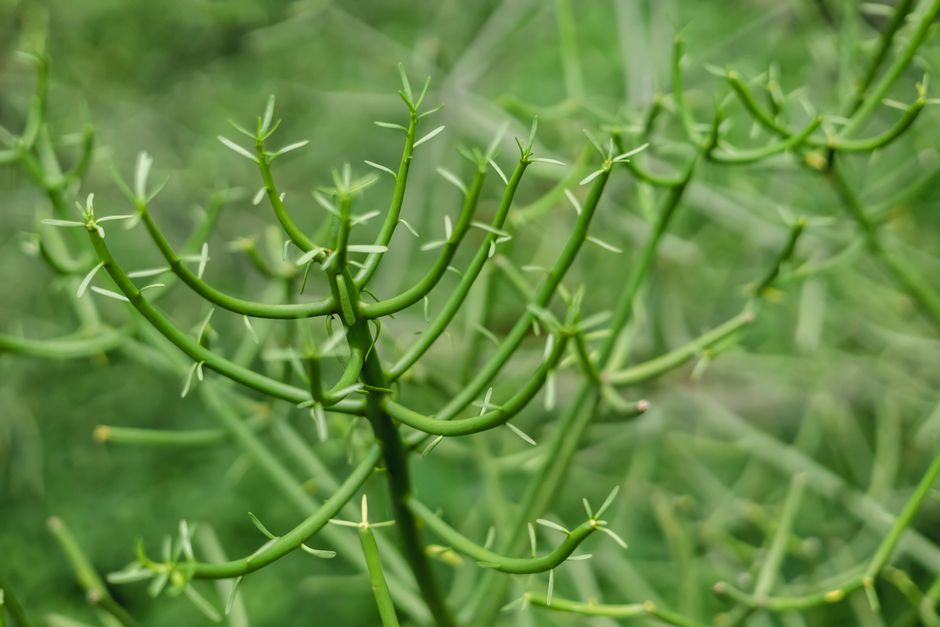
Euphorbia ammak cristata, often called the coral cactus, is a crested succulent that looks like a sculpted green coral. To grow and care for it successfully, provide bright direct sunlight for at least six hours daily, water only when the soil is completely dry, and use a well-draining cactus or succulent mix. Keep it in temperatures between 60°F and 85°F and protect it from frost. This plant is not a true cactus but a crested form of a succulent shrub from the Arabian Peninsula. It grows slowly and can live for decades with the right care.
What Exactly Is Euphorbia Ammak Cristata?
Euphorbia ammak cristata is a mutant form of the standard Euphorbia ammak. The “cristata” part means the plant’s growing tip has flattened and fanned out into a wavy crest. This happens because of a genetic mutation at the growth point. The crest can form swirling patterns that look like a brain or a piece of coral.
This plant is often sold as “coral cactus” but it is not a cactus at all. It belongs to the Euphorbia family. The key difference is that Euphorbias produce a white milky sap when cut, while true cacti do not. The sap is toxic and can irritate skin and eyes, so handle the plant with care. The standard Euphorbia ammak grows as a tall ribbed column, but the crested form stays low and wide, rarely growing more than 12 to 18 inches tall in a pot.
How Much Light Does Euphorbia Ammak Cristata Need?
This plant demands bright direct light. Place it in a south or west-facing window where it gets at least six hours of direct sun each day. Without enough light, the crest will stretch out and lose its tight rippled shape. The green color will also fade to a pale yellow-green.
If you move the plant outdoors in summer, do it gradually. Start with one hour of morning sun and increase by an hour each day over a week. Full direct sun all day can scorch the crest if the plant is not acclimated. Once adjusted, it thrives in full outdoor sun. Indoors, a grow light can supplement weak winter light. Signs of too little light include a thin elongated crest and leaves dropping off the sides.
What Is the Right Watering Schedule?
Water Euphorbia ammak cristata only when the soil is bone dry. Stick your finger two inches into the pot. If it feels dry, water thoroughly until water runs out the drainage holes. If it feels damp, wait. In summer this might mean watering every 10 to 14 days. In winter, you may water only once a month or even less.
Overwatering is the most common cause of death for this plant. The fleshy crest and stems rot quickly in wet soil. Never let the pot sit in standing water. Use a pot with drainage holes. If you are unsure, wait an extra week. The plant stores water in its thick stems and can handle drought much better than soggy roots. Signs of overwatering include soft mushy spots on the crest and yellowing lower leaves.





What Soil and Potting Mix Should You Use?
Use a fast-draining cactus or succulent potting mix. You can buy a commercial mix or make your own by mixing two parts regular potting soil with one part coarse sand and one part perlite or pumice. The goal is soil that dries completely within a few days after watering.
Terracotta pots work best because they are porous and help soil dry faster. Plastic pots hold moisture longer and increase the risk of rot. Choose a pot only one to two inches wider than the root ball. A pot that is too large holds excess wet soil that the roots cannot reach. Repot every two to three years in spring when the plant outgrows its container. When repotting, handle the crest carefully because it is brittle and can snap.
What Temperature and Humidity Levels Work Best?
Euphorbia ammak cristata thrives in warm temperatures between 60°F and 85°F. It can tolerate brief periods up to 100°F if it has good airflow and some afternoon shade. It cannot survive frost. If temperatures drop below 50°F, bring the plant indoors. In winter, keep it away from cold drafts and windows that get icy.
This plant prefers low to average humidity. Normal indoor humidity between 30% and 50% is fine. High humidity combined with poor airflow can encourage fungal rot on the crest. Do not mist the plant. The crest does not absorb water through its surface, and wet leaves can lead to rot. If your home is very humid, place the pot in a spot with good air circulation.
How Do You Fertilize Euphorbia Ammak Cristata?
Fertilize lightly during the growing season from spring through early fall. Use a balanced liquid fertilizer diluted to half strength. A fertilizer with an N-P-K ratio around 10-10-10 works well. Apply once a month. Do not fertilize in winter when the plant is resting.
Euphorbias are not heavy feeders. Too much fertilizer can cause the crest to grow too fast and lose its tight compact shape. It can also burn the roots. If you see white crust forming on the soil surface, that is salt buildup from fertilizer. Flush the soil by watering heavily until water runs out the bottom, then wait to fertilize again. Organic cactus fertilizers are also fine but do not use slow-release pellets because they release nutrients unpredictably in dry soil.
Common Problems and How to Fix Them
The most common problem is root rot from overwatering. If the stem base turns soft and brown, the plant is rotting. Remove the plant from the pot, cut away all soft mushy tissue with a sterile knife, let the cut area dry for a week, and repot in dry soil. Do not water for two weeks after repotting. This works only if the rot is caught early.
Pests are rare but mealybugs and scale can appear. Mealybugs look like white cottony spots on the crest and stems. Wipe them off with a cotton swab dipped in rubbing alcohol. Scale insects look like small brown bumps. Scrape them off gently with your fingernail or a soft brush. Isolate the plant from other houseplants until the pests are gone.
If the crest turns brown and crispy at the edges, the plant is getting too much direct sun without acclimation. Move it to a spot with bright indirect light for a few weeks, then gradually reintroduce direct sun. If the crest becomes pale and stretched, increase light exposure.
| Condition | Signs | Solution |
|---|---|---|
| Too much water | Soft mushy crest, yellow leaves | Stop watering, let soil dry completely, repot if rot is present |
| Too little light | Pale elongated crest, leaf drop | Move to brighter spot, use grow light if needed |
| Pests | White cottony spots or brown bumps | Wipe with alcohol, isolate plant |
| Sunburn | Brown crispy edges on crest | Move to indirect light, acclimate slowly |
How To Propagate Euphorbia Ammak Cristata
Propagation is possible but not easy. The crested form does not produce seeds reliably. The best method is taking cuttings from the side growths or “arms” that sometimes appear on the crest. Use a clean sharp knife to cut a piece that is at least three inches long. Wear gloves because the sap is toxic and sticky.
Let the cutting dry for one to two weeks until the cut end forms a callus. Do not skip this step. Planting a fresh cut piece in soil causes rot. Once callused, place the cutting in dry cactus soil. Do not water for the first three weeks. After that, water lightly once a month until roots form, which can take two to three months. New growth at the tip means rooting was successful. Even with good technique, many cuttings fail, so take several if possible.
Is Euphorbia Ammak Cristata Safe Around Pets and Children?
No. This plant is toxic. The milky sap contains diterpene esters that cause severe skin irritation, blistering, and eye pain. If ingested, it causes intense burning in the mouth and throat, vomiting, and diarrhea. Keep it out of reach of children and pets. The sap can also damage furniture and carpets, so place the plant where drips will not be a problem.
If sap gets on skin, wash immediately with soap and cool water. Do not rub your eyes. If sap gets in eyes, rinse with cool water for 15 minutes and seek medical attention. The American Society for the Prevention of Cruelty to Animals lists Euphorbia species as toxic to cats and dogs. Symptoms in pets include drooling, vomiting, and pawing at the mouth. Call a veterinarian if your pet chews on the plant.
Common Misconceptions About This Plant
One common myth is that Euphorbia ammak cristata needs misting or high humidity because it looks like a cactus. This is wrong. Misting increases the risk of fungal rot and does not benefit the plant. Another myth is that the crest will eventually grow into a normal column. It will not. The mutation is permanent. The plant will always grow in the crested form.
Some sellers claim this plant is easy for beginners. It is not. It requires careful watering and plenty of light. Beginners who overwater or place it in a dark corner will kill it quickly. Another misleading claim is that the plant can survive indoors with no direct sun. It will survive for a few months but will slowly decline. It needs real sunlight to thrive.
Frequently Asked Questions
How often should I water Euphorbia ammak cristata in winter?
Water once a month or less in winter when the soil stays dry longer. Only water if the soil is completely dry two inches deep.
Why is my Euphorbia ammak cristata turning yellow?
Yellowing usually means overwatering or too little light. Check the soil moisture first and move the plant to a brighter spot.
Can Euphorbia ammak cristata grow outdoors?
Yes in USDA zones 10 and 11 where temperatures stay above 50°F. It can also go outdoors in summer in cooler climates but must come inside before frost.
How big does Euphorbia ammak cristata get?
In a pot it usually stays under 18 inches tall and 12 inches wide. In the ground it can grow larger but the crested form stays compact.
