
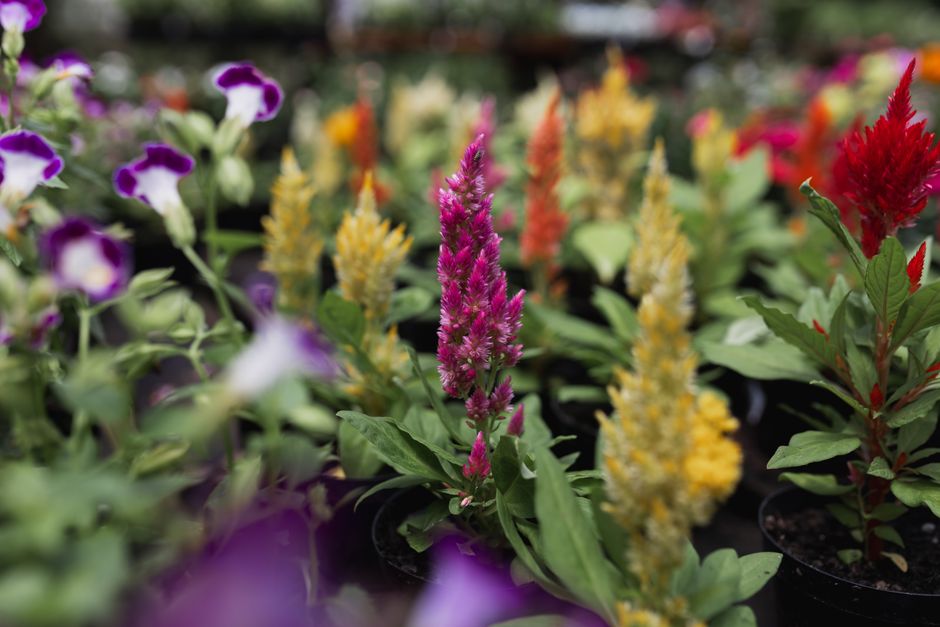
Celosia ‘First Flame Red’ is a compact annual grown for its bright red, flame-shaped flower heads that appear from early summer until frost. Grow it in full sun, in well-drained soil, and water it when the top inch of soil dries out. It is easy to keep as long as you never let the roots sit in soggy ground. Start seeds indoors about six to eight weeks before your last frost date, or buy transplants in late spring once the soil has warmed.
What Is Celosia First Flame Red?
Celosia is a warm-season annual in the amaranth family. The genus includes three common flower forms: the crested type (Celosia argentea var. cristata, often called cockscomb), the wheat type (Celosia argentea var. spicata), and the plume type (Celosia argentea var. plumosa).
‘First Flame Red’ belongs to the plume group. Its flower heads are upright, tapering, and vividly red, with a texture closer to a feather than a solid comb. Plants typically stay compact, which makes them useful at the front of a border or in containers.
Like all celosias, it is tender. It has no tolerance for frost. In most of the United States it is grown as an annual, set out after the last spring frost and removed by the first hard freeze in fall.
How Do You Plant Celosia First Flame Red?
Plant it once the soil has genuinely warmed, not just once the calendar says spring. Celosia seed and seedlings stall in cold, wet ground. Soil temperature matters more than air temperature here.
Starting from seed indoors
Sow seeds indoors roughly six to eight weeks before your last expected frost date. Celosia seeds are tiny, so press them onto the surface of a moist seed-starting mix rather than burying them deeply. Light helps germination.
Keep the mix consistently moist but not waterlogged, and provide warmth. Germination is generally faster at warm room temperatures than in a cool basement. Once seedlings appear, give them strong light to keep stems short and sturdy.
Transplanting outdoors
Harden seedlings off over about a week before planting out. Move them outside for gradually longer periods each day, starting in shade and working toward full sun. This reduces transplant shock.
Set plants out after the last frost date for your area, when nights are reliably mild. Space them according to the tag that comes with your plants or seed packet, since spacing varies by grower and container size. Water them in well at planting.
Buying transplants
If you skip seed starting, buy transplants in late spring. Look for stocky plants with healthy green leaves and no yellowing at the base. Avoid plants already root-bound in their pots if you can.
What Kind of Light and Soil Does It Need?
Full sun produces the best flowering. Give celosia at least six hours of direct sun per day. In partial shade, plants tend to stretch, flower less, and flop.
Soil should drain freely. Celosia tolerates average garden soil but resents heavy clay that holds water. If your soil is dense, amend it with compost before planting, or grow celosia in containers where you control the mix.
For containers, use a quality potting mix rather than garden soil. Garden soil compacts in pots and drains poorly, which is one of the most common reasons container celosia declines.




How Often Should You Water Celosia First Flame Red?
Water when the top inch or so of soil feels dry. That is the practical rule, and it works in both beds and containers.
Celosia is more drought-tolerant than many bedding annuals once established, but it is not a cactus. Prolonged dry spells slow flowering and cause leaf drop. On the other hand, constantly wet roots invite rot, and celosia is genuinely prone to root and stem rot in poorly drained, overwatered conditions.
Containers dry out faster than garden beds, so check them more often in hot weather. In peak summer, potted celosia may need water most days. In the ground, established plants often go several days between waterings depending on heat, wind, and soil type.
Water at the base of the plant rather than over the flower heads when you can. Keeping foliage and flowers drier reduces fungal problems.
Does Celosia First Flame Red Need Fertilizer?
It needs less than most people assume. Celosia is not a heavy feeder. In reasonably fertile garden soil, plants often perform well with little or no additional fertilizer.
If you grow in containers, where nutrients leach out with watering, a balanced liquid fertilizer at a modest rate every few weeks during the growing season is a common approach. More fertilizer is not better. Too much nitrogen pushes leafy growth at the expense of flowers.
If plants look pale and growth is slow despite good light and water, a light feeding is reasonable. If they are lush and green but not flowering, the usual culprit is too little sun or too much nitrogen, not too little food.
Should You Deadhead or Prune Celosia?
Deadheading spent flowers can encourage continued blooming through the season. Cut or pinch off faded flower heads just above a set of leaves.
Pruning is rarely necessary for a compact variety like ‘First Flame Red’. If a plant gets leggy or flops, light pinching early in the season can encourage a bushier shape. Avoid heavy pruning late in the season, since new growth may not have time to flower before frost.
One practical note: celosia flowers hold their color well and are popular in fresh and dried arrangements. Cutting stems for bouquets is itself a form of deadheading and does not harm the plant.
What Pests and Diseases Affect Celosia?
The biggest threat is root and stem rot from overly wet soil. This is a cultural problem more than a pest problem, and it is largely preventable with good drainage and sensible watering. Plants that collapse at the base with soft, dark tissue are usually lost and should be removed.
Common insect pests include aphids, spider mites, and whiteflies, particularly in hot, dry conditions or on stressed plants. Spider mites are more of a problem in containers and in greenhouse-started plants. A strong stream of water, insecticidal soap, or horticultural oil are standard options; follow label directions.
Leaf spots and fungal issues can appear when foliage stays wet for long periods. Watering at the base and giving plants good air circulation reduce the risk.
Can You Grow It in Containers?
Yes, and it performs well in pots. Use a container with drainage holes and a free-draining potting mix. Celosia’s compact habit suits it to mixed containers and window boxes.
Container plants need more attention to water and, over a long season, to nutrients. They also benefit from being in full sun. A pot in shade will produce weak, sparse flowering.
Do not let pots sit in saucers of standing water. Empty saucers after heavy rain or watering. Soggy roots are the most common way container celosia fails.
How Do You Keep Celosia Looking Good All Season?
Consistency does most of the work. Steady moisture without saturation, full sun, and moderate feeding keep plants flowering from summer into fall.
Remove spent flowers to keep the display clean and encourage more blooms. Watch for pests early, when they are easiest to manage. In late summer, plants sometimes decline as nights cool; this is normal for a tender annual as the season ends.
Celosia is sensitive to cold. A light frost can damage or kill plants, so if an early frost is forecast and you want to extend the season, covering plants overnight can help for a short time. Once a hard freeze arrives, the plants are done.
Is Celosia First Flame Red Safe Around Pets and Children?
Celosia is generally considered non-toxic to people and pets, but this is a point where you should confirm with a reliable source rather than rely on general garden lore. If you have a pet that chews plants or a young child who might eat plant material, check with your veterinarian or a poison control resource before assuming any plant is safe.
As a general rule, no garden plant should be treated as edible unless you have confirmed it is. Ornamental celosia is grown for display, not for the table.
Common Mistakes to Avoid
- Planting out too early, before soil has warmed and frost risk has passed.
- Overwatering or growing in soil that does not drain.
- Giving too little sun, which reduces flowering and causes floppy growth.
- Overfeeding with nitrogen, which produces leaves instead of flowers.
- Letting container plants sit in standing water.
- Burying seeds too deeply when starting from seed.
Frequently Asked Questions
How much sun does Celosia First Flame Red need?
It needs full sun, meaning at least six hours of direct sunlight per day. Less sun leads to weak growth and fewer flowers.
How often should I water Celosia First Flame Red?
Water when the top inch of soil feels dry. In containers this may be most days in summer; in garden beds, established plants often go several days between waterings.
Is Celosia First Flame Red an annual or a perennial?
It is grown as an annual in most of the United States because it cannot survive frost. In frost-free climates it may persist longer.
Why is my celosia not flowering?
The most common reasons are too little sun and too much nitrogen fertilizer. Both push leafy growth instead of flowers.
