
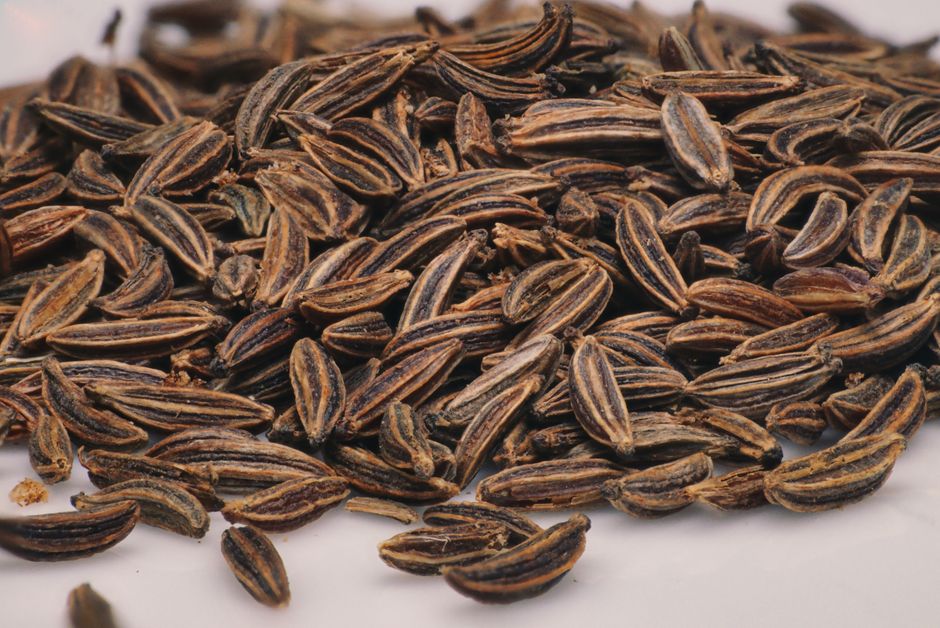
Caraway seeds are small, hard, and shaped like tiny crescents. That shape makes them tricky to break down without the right tool. The good news: you do not need an electric grinder to get the job done. A heavy skillet, a rolling pin, or even the flat side of a chef’s knife can crush caraway seeds effectively. The key is applying steady pressure rather than trying to chop them, since their small size makes chopping messy and uneven.
Caraway’s flavor comes largely from oils trapped inside the seed. Crushing or cracking the seed releases those oils, which is why whole caraway tastes mild and ground caraway tastes much stronger. That single fact should guide how you grind them and how much you use afterward.
Why Does Crushing Caraway Seeds Release So Much Flavor?
The seed coat of caraway is a sealed package. Inside sit volatile oils, and the dominant one is called carvone. That compound is responsible for the sharp, slightly sweet, anise-like taste people associate with rye bread and certain liqueurs. As long as the seed stays whole, most of that oil stays locked in.
When you crack the seed, you expose the interior to air. The oils evaporate and reach your nose and tongue. This is the same principle behind grinding any whole spice, from cumin to coriander. Freshly crushed caraway smells noticeably stronger than a jar of pre-ground powder that has been sitting on a shelf.
There is a tradeoff. The moment you crush the seeds, the clock starts ticking on flavor. Volatile oils escape over time. This is why whole spices generally hold their flavor longer than ground ones, and why grinding caraway right before you use it gives the best result. If you crush a batch and store it, expect the aroma to fade within weeks rather than months.
What Is the Best Way To Grind Caraway Seeds Without a Grinder?
Three methods work well, and each suits a different kitchen situation. None requires special equipment.
- Rolling pin and a sturdy surface. Place the seeds in a sealed plastic bag or between two sheets of parchment. Press down firmly and roll back and forth. The bag keeps the seeds contained so they do not scatter across the counter.
- Heavy skillet or saucepan. Spread the seeds on a cutting board and press the flat bottom of a heavy pan over them, rocking it back and forth with your weight behind it. The pan’s weight does most of the work.
- Flat side of a chef’s knife. Lay the blade flat over a small pile of seeds and press down with the heel of your hand. This works for small amounts but is slow for larger quantities.
For all three methods, the goal is cracked or crushed seeds, not a fine powder. You will get an uneven texture, and that is normal. A mortar and pestle, if you own one, produces the closest thing to a true grind and gives you the most control.
How Do You Keep Caraway Seeds From Flying Everywhere?
Caraway seeds are light and round, which means they roll. A stray tap of the knife or a fast roll of the pin sends them skittering across the counter and onto the floor. Containing them is the single biggest practical challenge.
The simplest fix is a sealed bag. A zip-top plastic bag or a folded parchment packet holds the seeds in one place while you crush them. You can see through the plastic to check your progress, and cleanup is just throwing the bag away.
If you are using a cutting board without a bag, work in small batches and keep the pile centered. A rimmed baking sheet as your work surface also helps, since the raised edges catch runaway seeds. Some people lightly moisten the board first, but this can make the seeds stick and clump, so it is a judgment call.
One more tip: crush only what you need for the recipe. Leftover crushed caraway loses its punch quickly, and you will be back at the board sooner than you think.





Should You Toast Caraway Seeds Before Crushing Them?
Toasting is optional, and it changes the flavor rather than just intensifying it. Dry-toasting in a skillet over medium heat for a short time warms the oils and adds a nutty, rounder note. The seeds also become slightly more brittle, which can make them a little easier to crush.
The risk is burning. Caraway is small, so it goes from toasted to scorched fast. Keep the pan moving and pull the seeds off the heat the moment they smell fragrant. Burnt caraway turns bitter and there is no fixing it.
Whether to toast depends on the dish. In rye bread or a slow-cooked stew, the difference is subtle. In a quick dressing or a fresh slaw, untoasted seeds keep a brighter, sharper edge that some cooks prefer. Neither approach is wrong.
How Much Crushed Caraway Should You Use?
Crushed caraway tastes stronger than whole seeds, so the same volume goes further. If a recipe calls for a teaspoon of whole caraway and you are substituting crushed, start with a little less and adjust. You can always add more, but you cannot take it back out.
Caraway is a potent spice, and a small amount flavors a large batch of dough or a pot of soup. This is one reason it shows up in traditional recipes in modest quantities rather than by the handful. Treat it like a seasoning to build gradually, not a bulk ingredient.
If you are grinding a larger batch to store, keep it in a small airtight jar away from heat and light. A dark cupboard is better than a spot above the stove. Even stored well, crushed caraway will not match the aroma of seeds you crush the same day.
What If You Do Not Have Any of These Tools?
A few everyday objects can stand in. The bottom of a sturdy drinking glass or a coffee mug works like a mini rolling pin. A clean, heavy can from the pantry does the same job. Even the back of a metal measuring cup can press seeds against a board if you lean into it.
What you want to avoid is trying to chop caraway with a knife tip or in a blender with too little volume. A knife just pushes the tiny seeds around, and a blender needs a larger batch to catch them in the blades. Both waste effort and give uneven results.
If none of these options appeal, whole caraway is a fine substitute in many recipes. The flavor will be milder and more spread out, but it is not a mistake. Some dishes, like certain breads and pickles, traditionally call for whole seeds anyway.
The larger point is that grinding spices is a technique, not a piece of equipment. Once you understand that crushing releases oils and that heat and air degrade them, you can adapt to whatever is in your kitchen.
Frequently Asked Questions
Can you grind caraway seeds without a grinder?
Yes. A rolling pin, a heavy skillet, or the flat side of a chef’s knife can all crush caraway seeds. The goal is cracked seeds that release their oils, not a fine powder.
How do you crush caraway seeds without making a mess?
Seal the seeds inside a zip-top bag or a folded parchment packet before pressing down. This keeps the small, round seeds from scattering across your counter and makes cleanup easy.
Do you need to toast caraway seeds before crushing them?
No, toasting is optional. It adds a nutty flavor and makes the seeds slightly easier to crush, but untoasted seeds keep a sharper, brighter taste that works well in dressings and fresh dishes.
How much crushed caraway should you use instead of whole seeds?
Use a little less crushed caraway than the whole-seed amount a recipe calls for, since crushing makes the flavor stronger. Start small and add more to taste.
