
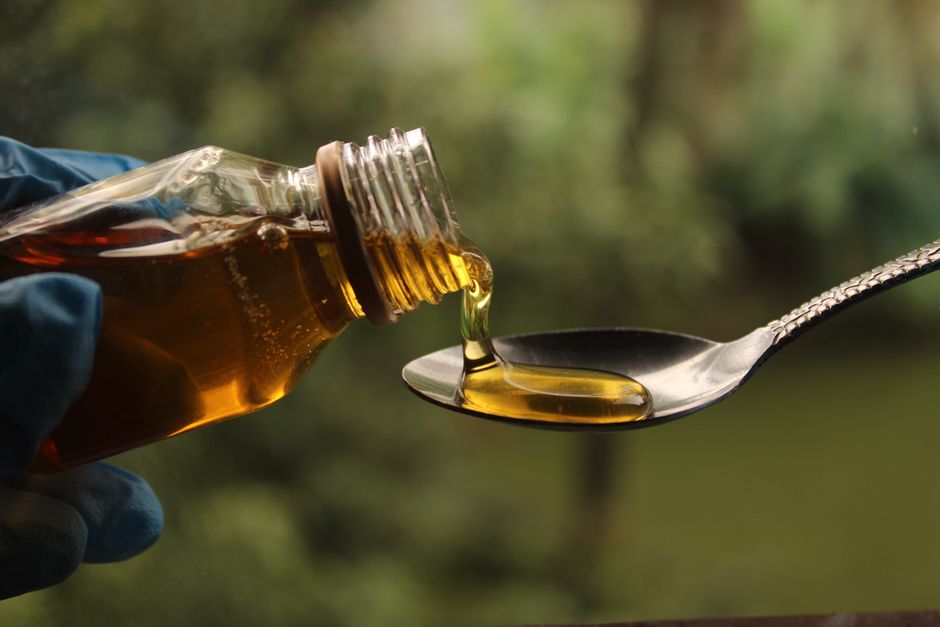
You can give honey to a child over 12 months old for a cough, but never to a baby under 1 year. For toddlers, a small amount — about half a teaspoon to 1 teaspoon — given straight from the spoon or stirred into a warm (not hot) drink can help quiet a nighttime cough. The main safety rule is age: honey is unsafe for infants under 12 months because of the risk of infant botulism.
That single age cutoff is the most important thing to understand. Everything else — how much, when, and what kind — matters far less than making sure your child is old enough. Once your toddler has passed that first birthday, honey becomes a reasonable home option for a cough, and it is one of the few that research actually supports.
Why Is Honey Unsafe For Babies Under 12 Months?
Honey can contain spores of Clostridium botulinum, the bacteria that cause botulism. In older children and adults, the digestive system and gut bacteria are mature enough that these spores pass through without causing harm. In an infant, the gut is not developed enough to stop the spores from germinating and producing toxin.
This is why infant botulism is a real concern for babies under 1 year. It is not a matter of a weak immune system — it is specifically about an immature digestive tract. The spores are harmless to a toddler or adult who swallows them, but they can multiply and release toxin in an infant’s intestines.
Because of this, health agencies including the CDC and the American Academy of Pediatrics advise against giving honey in any form to infants under 12 months. That includes honey baked into food, honey in yogurt, and honey on a pacifier. Cooking does not reliably destroy the spores, so heat-treated honey is not a safe substitute for a baby.
Once a child turns 1, the risk drops sharply. By the toddler years, the digestive system handles the spores the way an adult’s does. This is why the age line is set at 12 months and not later.
How Much Honey Should You Give A Toddler For A Cough?
A reasonable amount is about half a teaspoon to 1 teaspoon, given up to a few times a day as needed. Some research on honey for cough in children has used doses in this range, often given at bedtime. There is no single official dosing standard, so treat this as a general guide rather than a fixed prescription.
Give it slowly and watch your child. Honey is thick and sticky, and a toddler who is coughing or breathing hard can have trouble swallowing it. Offer it from a spoon in small amounts, and stop if your child seems to be struggling.
Honey is a sugar. Giving large amounts throughout the day adds calories and can affect appetite for real meals. Keep the total modest and use it as a comfort measure, not as a food group.
A practical approach many parents use:
- Give honey at bedtime, when cough tends to bother sleep the most
- Use half a teaspoon for a younger toddler and up to 1 teaspoon for an older one
- Repeat no more than a few times in 24 hours
- Offer water afterward to help clear the sticky residue from the mouth
Does Honey Actually Help A Cough?
Some studies suggest honey can reduce nighttime cough frequency and improve sleep for children with minor coughs. The evidence is not overwhelming, but it is more supportive than most other home remedies. Some research has found honey performs at least as well as certain over-the-counter cough medicines in children, which is notable because those medicines are not recommended for young children anyway.
It is worth being honest about the limits. The studies are generally small, and results vary. Honey is not a treatment for the cause of a cough — it does not fight a virus, clear an infection, or shorten how long a child is sick. What it may do is soothe irritated throat tissue and coat the airway, which can make a cough feel less irritating for a while.
That soothing effect is real but temporary. It is a comfort measure, not a cure. If your toddler’s cough is part of a mild cold, honey may help everyone get more sleep. If the cough is severe, lasting, or comes with other symptoms, honey is not the answer — a doctor is.




What Kind Of Honey Should You Use?
Any pasteurized honey sold in stores is fine for a toddler. There is no evidence that raw honey, local honey, or a specific variety works better for a cough. Raw honey carries the same spore risk as any other honey, so it offers no advantage and no extra safety for a child over 1.
Do not give honey that has been sitting open for a long time, and do not use honey from an unknown source. Standard grocery store honey is the simplest and safest choice.
Never add honey to a hot drink for a toddler. Very hot liquids can burn a child’s mouth and throat. If you want to mix honey into something, use a warm drink that has cooled enough to be safe, or stir it into room-temperature food like yogurt or applesauce.
What Are The Risks Of Giving Honey To A Toddler?
For a healthy child over 12 months, the main risks are minor. Honey is a sugar, so too much can affect appetite and dental health. It should not be given right before brushing teeth is skipped, and it should not replace regular meals.
Rarely, a child can have an allergic reaction to honey, especially if they are allergic to bee pollen or bee products. Signs to watch for include rash, swelling, or trouble breathing. Stop giving honey and seek medical care if any of these occur.
There is one more point worth stating plainly. Honey is not a medicine, and it should not delay care when care is needed. A toddler cough that comes with trouble breathing, a high fever, a cough that lasts for weeks, or a child who is limp or hard to wake is a medical situation. Honey does not belong in that picture.
When Should You Not Use Honey For A Cough?
Skip honey and call a doctor if your toddler is under 12 months, has a known allergy to bee products, or has a medical condition that affects blood sugar. Honey raises blood sugar, so it is not a casual choice for a child with diabetes.
Do not rely on honey alone if the cough is severe or unusual. Warning signs in a toddler include:
- Fast or difficult breathing, or a whistling sound when breathing
- Lips or face turning blue or gray
- A cough that has lasted more than a few weeks
- Fever in a child who seems very unwell
- Refusing to drink, or far fewer wet diapers than usual
- A cough that started suddenly after choking or swallowing an object
These are reasons to get medical help, not reasons to try another home remedy. Honey can be part of caring for a mild cough, but it cannot substitute for evaluation when something looks wrong.
What Else Can Help A Toddler’s Cough?
Several simple measures can help alongside or instead of honey. Keeping the air moist with a cool-mist humidifier can ease throat irritation. Offering plenty of fluids keeps the throat from drying out. Raising the head of the bed slightly, or having your child sleep propped up, can reduce nighttime cough for some children.
Over-the-counter cough and cold medicines are not recommended for children under 4, and they should never be given to a toddler without a doctor’s guidance. This is one place where honey has an edge — it is a safer option than most cough syrups for this age group, which is part of why it gets recommended at all.
Saline nose drops can help if a stuffy nose is driving the cough. And rest, time, and fluids remain the backbone of care for a cough caused by a common cold. Most viral coughs improve on their own within a week or two, though a lingering cough can last longer.
Frequently Asked Questions
Can I give my 1-year-old honey for a cough?
Yes, once a child has reached 12 months, honey is considered safe. Give a small amount, about half a teaspoon to 1 teaspoon, and watch for any allergic reaction.
How much honey is safe for a toddler?
About half a teaspoon to 1 teaspoon, up to a few times a day, is a reasonable range. There is no official dosing standard, so keep the total modest because honey is a sugar.
Does honey really work for a toddler’s cough?
Some studies suggest honey can reduce nighttime cough and improve sleep in children with mild coughs. It soothes the throat but does not treat the cause of the cough or shorten the illness.
What happens if I give honey to a baby under 1?
Honey can contain botulism spores that an infant’s digestive system cannot safely handle, which is why it is not given under 12 months. If a baby under 1 has eaten honey, contact a doctor promptly.
