
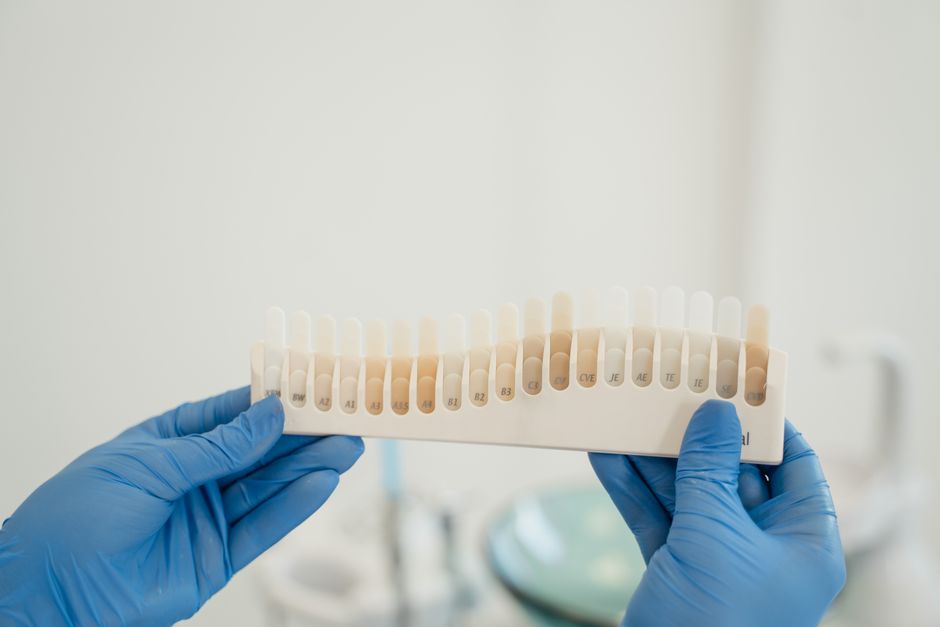
If your teeth need fixing, the path usually runs through a general dentist first, who either treats the problem or refers you to a specialist. Common fixes include fillings, crowns, root canals, implants, bridges, and dentures, with costs ranging from under a hundred dollars for a simple filling to several thousand for an implant. What you pay depends on the procedure, where you live, and whether you have insurance.
How To Get Your Teeth Fixed Options And Costs
The right option depends on what is actually wrong with the tooth. A small cavity, a cracked crown, and a missing tooth are three different problems with three different solutions.
Dentists generally follow a simple rule: save the natural tooth if it can be saved. That is why the order below moves from least invasive to most invasive.
- Fillings — for small to medium cavities. The dentist removes decay and fills the space, usually with a tooth-colored composite resin or silver amalgam.
- Crowns — for teeth that are badly decayed, cracked, or weakened. A crown is a cap that covers the whole visible tooth.
- Root canals — for infection or damage inside the tooth. The dentist removes the pulp, cleans the canal, and seals it. A crown usually follows.
- Extraction — when a tooth cannot be saved. Sometimes the only safe option.
- Implants — a titanium post surgically placed in the jawbone, topped with a crown. This replaces a missing tooth root.
- Bridges — a false tooth anchored to the teeth on either side. A fixed option that does not require surgery.
- Dentures — removable replacements for multiple or all missing teeth.
Costs vary widely by region, dentist, and complexity. The ranges below reflect typical US prices without insurance. They are not quotes, and a real estimate requires an exam and X-rays.
| Procedure | Typical US cost (no insurance) |
|---|---|
| Filling | $50–$300 per tooth |
| Crown | $500–$3,000 |
| Root canal | $300–$2,000 (higher for molars) |
| Simple extraction | $75–$300 |
| Surgical extraction | $150–$650 |
| Dental implant | $1,500–$6,000 per implant |
| Bridge | $500–$3,000 |
| Full denture | $600–$3,000 per arch |
These figures come from consumer cost surveys and dental industry data. Your actual cost could fall outside these ranges, especially in high-cost cities or for complex cases.
What Does Each Dental Fix Actually Involve?
Knowing what happens in the chair helps you understand why costs differ so much.
A filling is usually done in one visit. The dentist numbs the area, removes decay, and places the filling material. Most people return to normal eating the same day.
A crown typically takes two visits. The dentist shapes the tooth, takes an impression or digital scan, and fits a temporary crown. The permanent crown is cemented at the second visit. Some offices now offer same-day crowns using in-office milling machines.
A root canal removes infected tissue from inside the tooth. The canal is cleaned, shaped, and sealed. Many people expect root canals to be painful, but with modern local anesthesia the procedure itself is usually no more uncomfortable than a filling. The pain people associate with root canals is usually the infection that made the procedure necessary.
An implant is a multi-step process. The dentist or oral surgeon places the post into the jawbone. The bone then needs time to fuse with the implant, a process called osseointegration. After healing, a crown is attached. The full timeline often stretches across several months. Smoking and certain health conditions can affect healing and success.
A bridge uses the neighboring teeth as anchors. Those anchor teeth usually need to be shaped down, which is a permanent change. A bridge is often faster and less expensive than an implant, but it does not replace the tooth root, and the bone under the gap may gradually shrink over time.
Dentures are removable. Modern versions fit better than older ones, but they still take an adjustment period for speaking and eating.
Why Do Dental Costs Vary So Much?
Two people can get the same crown and pay very different amounts. The gap comes from several factors.
Geography matters most. A dentist in a major city pays higher rent and staff wages than one in a rural area, and those costs show up in the bill. The type of dentist matters too. A general dentist and a specialist such as a prosthodontist or oral surgeon often charge differently for overlapping work.
The material used also changes the price. A porcelain crown and a metal crown are not the same product. A composite filling and an amalgam filling cost differently. So does the lab the dentist uses to make the restoration.
Complexity is the wild card. A straightforward extraction and a surgical extraction of an impacted wisdom tooth are billed very differently because they are very different procedures.
Finally, insurance status changes what you actually pay out of pocket, even when the listed price is identical.





Does Dental Insurance Cover Getting Teeth Fixed?
Most dental insurance plans cover part of the cost, but the details decide how much.
Plans usually split care into three tiers. Preventive care like cleanings and exams is often covered at or near 100 percent. Basic restorative work like fillings and simple extractions is often covered around 80 percent. Major work like crowns, bridges, and implants is often covered around 50 percent.
These percentages are common but not universal. Every plan sets its own rules.
Two limits catch people off guard. The annual maximum is the most a plan will pay in a year, and it is often fairly low. Once you hit it, you pay the rest yourself. The waiting period is a stretch of time before a plan will pay for major work. If you need a crown next month and your plan has a waiting period for crowns, you may be paying out of pocket.
Implants are a frequent sticking point. Some plans classify them as cosmetic or exclude them entirely. Others cover them but only after a waiting period. It is worth calling your insurer and asking directly about the specific procedure code before you commit to treatment.
What If You Have No Insurance or Limited Funds?
No insurance does not mean no options. Several routes exist, though each has trade-offs.
Dental schools are one of the most reliable low-cost options. Students perform treatment under the supervision of licensed dentists. The work is often high quality because it is closely checked, but appointments take longer and the wait to get in can be substantial.
Community health centers and federally qualified health centers offer sliding-scale fees based on income. Availability varies a lot by location.
Payment plans are offered by many dental offices directly. Some third-party financing companies also offer dental loans, though you should read the interest terms carefully.
Dental discount plans are not insurance. You pay a membership fee and get reduced rates from participating dentists. They can help, but you are still paying most of the cost yourself.
Dental tourism — traveling abroad for cheaper treatment — is sometimes mentioned as a workaround. It carries real risks. Follow-up care is difficult if something goes wrong, and standards and materials vary by country and clinic. This is a personal decision, not a simple money-saving trick.
Can You Prevent Needing Expensive Dental Work?
Most of the expensive procedures on this list start as problems that were cheaper to fix earlier.
A small cavity becomes a root canal becomes an extraction becomes an implant. Each step costs more than the one before it. That is the single strongest argument for regular checkups.
Daily brushing with fluoride toothpaste and cleaning between teeth help remove the plaque that causes cavities and gum disease. Limiting sugary drinks matters because frequent sugar exposure feeds the bacteria that produce acid. Not smoking helps too, since smoking is a well-established risk factor for gum disease.
None of this guarantees you will never need a crown or a filling. Genetics, dry mouth, medications, and grinding your teeth all play a role and are not fully under your control. But routine care catches problems while they are still small and cheap to fix.
How Do You Choose the Right Dentist for the Work?
For simple work, a general dentist is usually the right starting point. For complex work, you may be referred to a specialist.
Ask what the total cost will include. A quoted price for a crown may or may not cover the exam, X-rays, the temporary crown, or the cementation visit. Get the full picture in writing before treatment starts.
Ask about the material being used and why. Ask what happens if the restoration fails. Ask whether a less expensive option would work for your situation, and what the trade-offs are.
A good dentist answers these questions directly. If a quote feels vague or a provider pressures you toward the most expensive option without explaining alternatives, getting a second opinion is reasonable and common.
Frequently Asked Questions
How much does it cost to get your teeth fixed?
Costs range from about $50 for a simple filling to several thousand dollars for a single implant. The total depends on the procedure, your location, and whether you have insurance.
Does dental insurance cover implants?
Some plans cover implants and some exclude them as cosmetic, so coverage varies by plan. Call your insurer and ask specifically about implant coverage and any waiting period before you start treatment.
Is a root canal painful?
With modern local anesthesia, a root canal is usually no more uncomfortable than getting a filling. The pain people associate with root canals typically comes from the infection itself, not the procedure.
What is the cheapest way to fix a missing tooth?
A removable partial denture is generally the least expensive option, followed by a bridge. An implant costs more upfront but replaces the tooth root, which a bridge and denture do not.
