
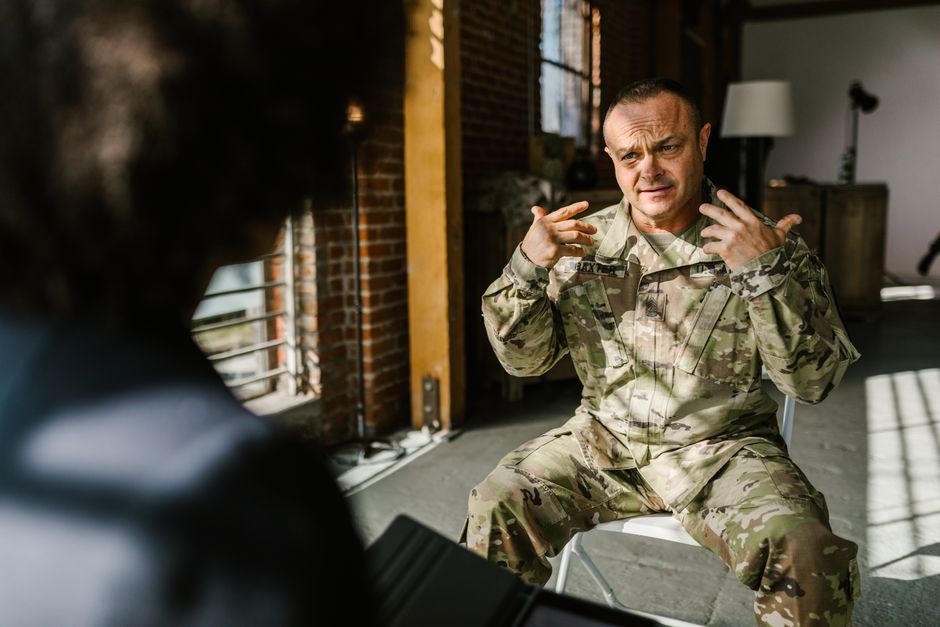
When someone is in a PTSD episode, your first instinct is to pull them out of it. The safest approach is actually to guide them back to the present moment without forcing them. You do this by staying calm, using simple grounding techniques, and letting them set the pace. Never grab them, never shout, and never try to reason them out of the fear. Your job is to be a safe anchor, not a rescuer.
What Is Happening In The Brain During A PTSD Episode?
A PTSD episode is not a tantrum or a panic attack in the usual sense. It is a survival response that has gone into overdrive. The brain’s alarm system, the amygdala, detects a threat that is not actually present in the current moment. It reacts as if the past trauma is happening right now.
During this state, the prefrontal cortex — the part of the brain responsible for logic and reasoning — goes offline. This is why telling someone to “calm down” or “think rationally” does not work. They cannot access that part of their brain until the alarm system settles down.
Physiologically, the body is flooded with stress hormones like adrenaline and cortisol. Heart rate increases, breathing becomes shallow, and muscles tense. The person may feel detached from their body or from reality. This is called dissociation, and it is a protective mechanism that the brain uses to cope with overwhelming distress.
Understanding this mechanism changes your approach. You are not dealing with a behavioral problem. You are dealing with a nervous system that is temporarily stuck in a threat response. Your calm presence signals safety to their nervous system, which is the first step toward helping them regulate.
What Should You Do First When An Episode Starts?
The first moments matter, but they are not about doing something dramatic. They are about doing less. Slow down your own movements and your own speech. If you appear rushed or alarmed, their brain reads that as confirmation that the danger is real.
Start by using their name in a soft, steady voice. Say something simple like, “You are safe. I am here with you.” Repeat this calmly. You may need to say it several times before they register it.
Do not ask complex questions. Do not ask them to explain what they are feeling. That requires the logical brain, which is currently offline. Instead, give simple instructions that require minimal thought.
One effective technique is to ask them to notice something in the room. This is called grounding. You might say, “Can you look at the floor and tell me what color the rug is?” or “Can you feel your feet on the ground?” These tasks are simple enough that the brain can process them even during high distress.
If they are willing to be touched, a firm but gentle hand on their shoulder or back can help. Always ask first or hold your hand out and let them decide. Never reach out and grab them without warning. A sudden touch can make the episode worse.
What Grounding Techniques Actually Work?
Grounding techniques work by shifting attention away from internal fear and toward external, present-moment reality. The most commonly recommended method is the 5-4-3-2-1 technique. This asks the person to name five things they can see, four things they can touch, three things they can hear, two things they can smell, and one thing they can taste.
This technique is widely used in clinical settings, but it may be too long for someone in the middle of a severe episode. If they cannot complete it, simplify. Ask them to name just one thing they can see. Then one thing they can hear. That is enough to start bringing them back.
Physical grounding can also help. Ask them to press their feet firmly into the floor. If they are sitting, have them push their palms flat against their thighs or a table. The physical pressure gives the nervous system something concrete to focus on.
Temperature can be a powerful anchor. Holding something cold, like a bottle of water or an ice cube, forces the brain to register a new physical sensation. Some people find this more effective than verbal prompts because it bypasses the need for language.
Breathing exercises can help, but only if they are simple. Do not ask them to do complex breath counts. Instead, breathe with them. Take a slow breath in and let them hear it. Then breathe out slowly and audibly. Let them follow your rhythm without any instruction.





What Should You Never Do During A PTSD Episode?
There are several actions that can make an episode significantly worse. The most important is to never touch someone without permission. A person in a PTSD episode may not know where they are or who is near them. An unexpected touch can trigger a defensive reaction that puts both of you at risk.
Do not tell them to “snap out of it” or “get over it.” These phrases invalidate their experience and add shame to an already overwhelming state. They are not choosing to be in this state, and they cannot simply choose to leave it.
Do not block their exit. If they need to move, pace, or leave the room, let them. Feeling trapped can intensify the fear response. Keep doorways clear and give them space to move if they need to.
Do not raise your voice. A loud voice is processed as a threat by an already alarmed brain. Speak at a lower volume and a slower pace than you normally would.
Do not try to reason with them or explain that the threat is not real. This requires logical processing that is currently unavailable to them. Even if you are correct, your words will not land. Save the explanations for after the episode has passed.
How Long Does A PTSD Episode Last And When Does It End?
There is no fixed timeline for a PTSD episode. Some episodes resolve in minutes. Others can last for hours. The duration depends on the individual, the severity of the trigger, and how quickly they feel safe again.
The episode ends when the nervous system begins to regulate. This is often marked by a visible shift. The person’s breathing slows, their shoulders drop, and they become more aware of their surroundings. They may start to cry, which is a normal release of tension. They may also feel exhausted, confused, or embarrassed.
After the episode, they may not remember everything that happened. This is common and is not a sign that something went wrong. Memory disruption during high-stress states is a well-documented phenomenon.
Do not immediately debrief or ask them to process what happened. Their brain needs time to recover. Offer water, a quiet space, and simple comfort. Let them speak first if they want to. If they do not want to talk, do not push.
If the episode lasts for several hours without any sign of easing, or if the person is a danger to themselves or others, medical help may be necessary. This is not common, but it is important to recognize when the situation exceeds what you can safely manage.
When Should You Seek Professional Help?
You do not need to call a professional for every PTSD episode. Many episodes can be managed with calm support and grounding. However, there are situations where outside help is warranted.
If the person is having thoughts of self-harm or suicide, call emergency services immediately. Do not leave them alone. If they are aggressive and you cannot safely stay near them, remove yourself from the situation and call for help.
If episodes are happening frequently or lasting longer than they used to, this is a sign that their current treatment plan may need adjustment. Encourage them to speak with a mental health professional. This is not a failure on your part or theirs. It is simply a sign that their current strategies are not sufficient.
For ongoing support, trauma-focused therapies such as EMDR (Eye Movement Desensitization and Reprocessing) and prolonged exposure therapy have the strongest evidence base. Some research also supports trauma-focused cognitive behavioral therapy. These treatments should be delivered by a licensed professional with specific training in trauma.
Medication may also be part of a treatment plan, but this is a decision for a psychiatrist or prescribing clinician. Never suggest starting, stopping, or changing medication on your own.
Frequently Asked Questions
How do you calm someone down from a PTSD episode?
Stay calm, speak in a low steady voice, and use simple grounding prompts like asking them to name one thing they can see or feel. Do not touch them without permission and do not try to reason with them.
What should you not say to someone having a PTSD episode?
Avoid phrases like “calm down,” “it’s not real,” or “get over it” because they require logical thinking the person cannot access. These statements also add shame and can make the episode worse.
Can you touch someone during a PTSD flashback?
Only touch them if they have given clear permission, and even then use a gentle firm touch on the shoulder or back. Sudden or unexpected touch can trigger a defensive reaction, so always ask first.
How long does a PTSD flashback episode last?
Episodes vary widely and can last from a few minutes to several hours. If an episode lasts for hours without easing or the person is a danger to themselves, seek emergency medical help.
