
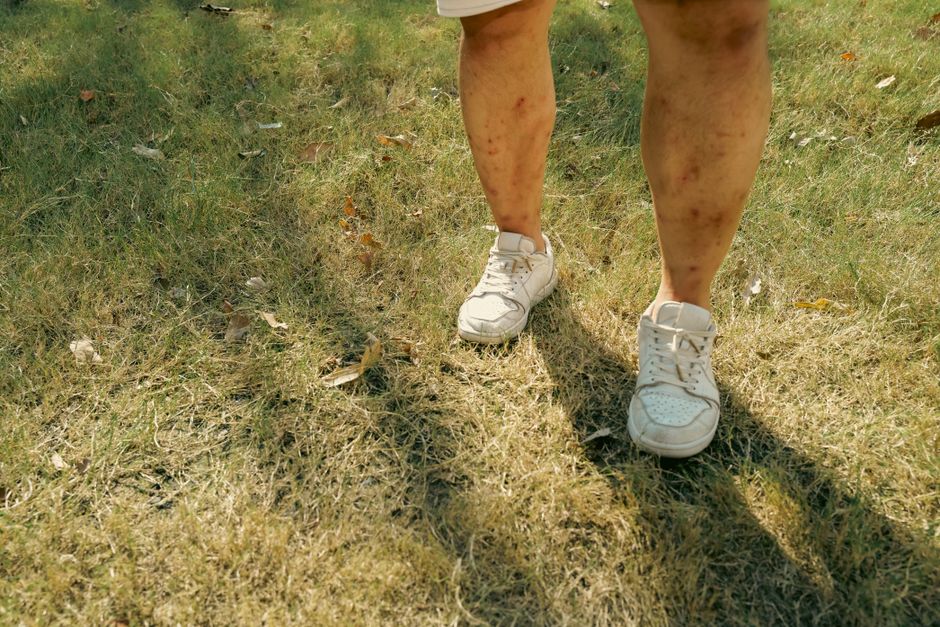
You cannot change the bone structure or the length of your calf muscles. What you can change is how much fat sits over them and how visible the muscle underneath becomes. “Skinny calves” usually means a leaner, longer-looking lower leg, and that comes from reducing overall body fat and choosing training that builds definition rather than bulk.
Genetics set the ceiling here. Some people store more fat in the lower legs, and some have calf muscles that attach lower down the leg, which makes them look shorter and thicker no matter what they do. Those two things are largely fixed. The parts you can influence are body fat, muscle size, and posture.
Why Are My Calves Big in the First Place?
Three things make calves look large: fat, muscle, and bone. Each responds differently to what you do.
Subcutaneous fat sits just under the skin and can accumulate on the lower legs, especially in women. This is the most changeable factor. Fat loss across the body tends to reduce it, though where you lose fat first is not something you control.
Muscle size is the second factor. The calf is made of two main muscles: the gastrocnemius, which is the visible bulge at the top, and the soleus, which sits underneath and lower down. Some people build these muscles easily. If you walk, run, cycle, or climb stairs regularly, you are already training them.
Bone is the third factor and the least changeable. The tibia and fibula set the width of your lower leg, and no exercise or diet changes that.
There is also a genetic variable that gets overlooked. The point where your calf muscle attaches to the Achilles tendon — called the muscle-tendon junction — varies between people. A higher attachment leaves a longer, thinner-looking lower leg. A lower attachment makes the muscle bulk sit closer to the ankle. This is determined by your anatomy and does not change with training.
How To Get Skinny Calves Through Fat Loss
If your calves look thick because of fat, the answer is reducing overall body fat. There is no way to spot-reduce fat from one area. The body draws on fat stores across the body, and the pattern of where it comes off is set by genetics and hormones, not by which muscle you exercise.
That means calf raises will not burn fat off your calves. They will build the muscle underneath. This is the single most common misunderstanding about this topic.
A calorie deficit is what drives fat loss. A deficit of roughly 500 calories per day tends to produce about one pound of fat loss per week, which is a widely used clinical guideline for sustainable weight loss. Larger deficits produce faster loss but are harder to sustain and can cost you muscle.
Protein intake matters during a deficit. It helps preserve muscle while fat comes off, which keeps the leg looking defined rather than soft. General guidance for adults suggests somewhere in the range of 0.7 to 1 gram of protein per pound of body weight during active weight loss, though individual needs vary with activity level and health status.
How fast you see a change in your calves depends on how much fat you carry overall and where your body prefers to store it. For some people the lower legs lean out early. For others they are among the last places to change. There is no reliable way to predict which pattern you will follow.
Does Cardio Make Calves Bigger or Smaller?
It depends entirely on the type and the resistance involved.
Walking on flat ground, swimming, and low-resistance cycling place relatively little load on the calf muscles and are unlikely to add size. Running, especially uphill or on hard surfaces, and high-resistance cycling load the calves heavily and can build them over time.
If your goal is leaner-looking calves, low-impact steady cardio is generally the safer choice. Activities that repeatedly push you onto your toes under load — sprinting, jumping, stair climbing, heavy incline walking — tend to develop the calf muscles.
This is not a hard rule. Some people do a great deal of running and never develop large calves, because their muscle-building response is modest. Others add size quickly from the same activity. Training response varies widely between individuals, and this is well documented.





Should You Avoid Calf Exercises Entirely?
Not necessarily. Avoiding all calf training is a common recommendation, and it is reasonable if your calves already look muscular. But complete avoidance is not required for most people.
The calves are involved in almost every form of walking and standing. You cannot fully rest them. What you can do is avoid adding direct, heavy resistance work on top of that.
If you want to keep training legs for overall strength, here is what tends to matter:
- Skip dedicated calf raise machines and weighted heel raises.
- Avoid high-volume jumping and plyometric work.
- Keep heavy compound lifts like squats and deadlifts, which train the calves only indirectly.
- Choose flat or low-incline walking over steep incline work.
- Watch high-resistance cycling classes, which load the calves repeatedly.
Stretching does not make a muscle smaller. It can improve flexibility and may change how the leg looks in certain positions, but it does not reduce muscle size or fat. Claims that stretching “lengthens” the calf muscle are not supported by how muscle tissue actually works.
Can Posture and Footwear Change How Calves Look?
Yes, and this gets far less attention than it deserves.
Chronic high-heel wear keeps the calf muscle in a shortened position. Over time this can contribute to tightness in the calf and a feeling of fullness in the lower leg. Some clinicians note that regularly wearing flat shoes and stretching the calf can help restore a more neutral position, though the evidence on how much this changes appearance is limited.
Footwear also changes how you stand. Shoes with a raised heel shift weight forward and can make the calf appear more prominent. Minimal or flat shoes change the angle of the ankle and can alter the visual line of the lower leg.
Posture plays a role too. Standing with locked knees and the pelvis tilted forward tends to push the calves into a more contracted position. A neutral stance with soft knees can make the lower leg look longer.
None of these changes affect muscle or fat directly. They change how the leg is positioned and how it looks in that position.
What Does Not Work for Slimmer Calves
A number of popular approaches do not hold up.
Spot reduction does not work. No exercise burns fat from the area being worked. This has been studied repeatedly and the finding is consistent.
Fat-burning creams and wraps do not reduce calf fat. Any temporary change in appearance comes from fluid loss or skin tightening, not fat loss.
Massage and foam rolling do not shrink muscle. They may reduce temporary swelling and tightness, which can make the leg feel and look slightly different for a short time. The effect is not permanent.
Lipotropic injections and unregulated “slimming” treatments marketed for the calves have no established evidence base and carry real risk. No clinical guidelines support their use for this purpose.
CoolSculpting and similar fat-freezing procedures are sometimes used on the lower legs. Results vary, the procedure is not approved for every body area, and outcomes depend on the practitioner and the amount of fat present. Anyone considering this should discuss it with a qualified medical professional rather than a spa.
When Calf Size Is a Medical Issue
Sometimes enlarged calves are not about fat or muscle at all.
Swelling in the lower legs can signal a circulation problem, kidney or liver issues, or heart failure. If one calf is suddenly larger, warm, or painful, that is a medical emergency and needs immediate attention — a blood clot in the leg is a serious and potentially life-threatening condition.
Certain medications, including some antidepressants and diabetes drugs, have been associated with peripheral edema, which is fluid buildup in the lower legs. If calf size changed after starting a new medication, that is worth raising with a doctor.
Compartment syndrome, thyroid disorders, and some neuromuscular conditions can also affect the lower legs. These are uncommon, but they are reasons to get a medical opinion rather than assume the cause is cosmetic.
If your calves have changed size suddenly, are painful, or are accompanied by other symptoms, see a doctor before pursuing any cosmetic goal.
Frequently Asked Questions
Can you spot-reduce fat on your calves?
No. The body does not burn fat from a specific area based on which muscle you exercise, and this has been shown consistently in research. Fat loss happens across the body in a pattern set by genetics and hormones.
Do calf raises make your calves bigger?
They can, because the movement directly loads the calf muscles and can build them over time. If your goal is smaller-looking calves, dedicated calf raises usually work against that goal.
How long does it take to see slimmer calves?
There is no reliable timeline, because it depends on how much fat you carry and where your body prefers to store it. Some people see the lower legs lean out early during fat loss, while others see change there last.
Can high heels make your calves bigger?
Regular high-heel wear keeps the calf muscle in a shortened position and can contribute to tightness and a fuller feeling in the lower leg. The evidence on how much this changes actual appearance is limited.
