
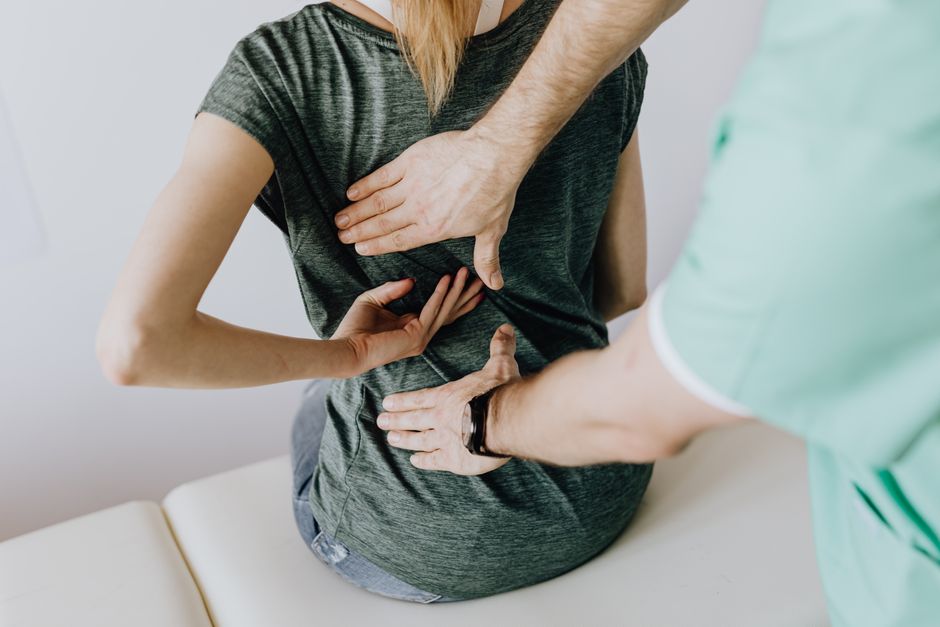
Lower back and hip pain is a common problem, and most people can find meaningful relief at home without seeing a doctor. The most effective approach combines short-term pain management with daily movement and specific strengthening exercises. Heat therapy, gentle stretching, and core-strengthening moves are the foundation of home treatment, and they work best when done consistently rather than only when pain flares up.
What Causes Lower Back and Hip Pain?
Most lower back and hip pain comes from muscle strain, joint irritation, or poor movement patterns. The lumbar spine and the hip joint work together with the muscles around them, so a problem in one area often affects the other. Tight hip flexors, weak glutes, and a stiff lower back are a common combination that leads to pain.
Sedentary habits play a big role. Sitting for long hours shortens the muscles at the front of the hip and weakens the muscles at the back. Over time, this imbalance puts extra stress on the lower back. Poor lifting technique, sudden increases in exercise, and sleeping in awkward positions can also trigger pain.
Most cases of lower back and hip pain are mechanical, meaning they come from how the body moves and holds itself. Serious causes like fractures, infections, or nerve compression are far less common, but they do happen. If pain follows a fall or injury, if it radiates down the leg with numbness or weakness, or if it comes with fever or bowel or bladder changes, medical evaluation is needed promptly.
How To Get Rid Of Lower Back And Hip Pain At Home
Start with heat therapy. A heating pad, warm shower, or hot water bottle applied to the painful area for 15 to 20 minutes relaxes tight muscles and increases blood flow. Heat works best for muscle tension and stiffness. If the area feels hot, swollen, or acutely inflamed, cold packs can help instead. Apply an ice pack wrapped in a towel for 15 minutes at a time during the first 48 hours of a flare-up.
Then move. Complete rest makes back pain worse and slows recovery. Gentle movement keeps the joints lubricated and prevents muscles from stiffening further. Walking, swimming, or simply moving around the house every hour helps. The goal is to keep moving without provoking sharp pain.
Over-the-counter anti-inflammatory medications like ibuprofen or naproxen can reduce pain and inflammation when taken as directed. Acetaminophen also helps with pain but does not reduce inflammation. Check with a pharmacist or doctor before taking these if you have kidney disease, stomach ulcers, or take blood thinners.
Stretches That Actually Help
Stretching is most useful when it targets the specific muscles pulling on the lower back and hip. The most common culprits are the hip flexors, hamstrings, and the piriformis muscle deep in the buttock.
Knee-to-chest stretch. Lie on your back with both knees bent. Bring one knee toward your chest and hold it with both hands for 30 seconds. Lower it slowly and switch sides. This stretch gently mobilizes the lower back and is safe for most people.
Piriformis stretch. Lie on your back with both knees bent. Cross one ankle over the opposite knee, then pull the bottom leg toward your chest. You should feel a stretch deep in the buttock. Hold for 30 seconds and switch sides. This targets the piriformis muscle, which can refer pain into the hip and down the leg when tight.
Child’s pose. Kneel on the floor, sit back on your heels, and reach your arms forward on the floor. This stretches the lower back and hips in a gentle, sustained way. Hold for 30 to 60 seconds and breathe normally.
Stretches should never cause sharp or shooting pain. A mild pulling sensation is normal. If a stretch makes the pain worse, stop doing it and try a different one.





Strengthening Exercises for Long-Term Relief
Stretching alone rarely fixes the problem. Strengthening the muscles that support the spine and hip is what prevents pain from returning. The most important muscles are the glutes, core, and the muscles along the spine.
Glute bridges. Lie on your back with knees bent and feet flat on the floor. Squeeze your glutes and lift your hips until your body forms a straight line from shoulders to knees. Hold for a few seconds, then lower. Do 10 to 15 repetitions. Weak glutes force the lower back to do work it should not be doing.
Bird dog. Start on your hands and knees. Extend your right arm forward and your left leg backward at the same time, keeping your back flat. Hold for a few seconds, then switch sides. This exercise trains the core and back muscles to stabilize the spine during movement.
Dead bug. Lie on your back with your arms pointing up and knees bent at 90 degrees. Slowly lower your right arm and left leg toward the floor while keeping your lower back pressed down. Return and switch sides. This is a safe core exercise that does not put pressure on the spine.
Start with one set of each exercise and gradually increase as strength improves. Pain during exercise is a sign to back off. Mild muscle fatigue is expected, but sharp pain is not.
Everyday Habits That Prevent Pain
How you sit, stand, and sleep matters as much as any exercise. Sitting for long periods is one of the strongest predictors of lower back pain. If you work at a desk, stand up and move for a minute or two every hour. A lumbar roll or a rolled towel behind your lower back helps maintain the natural curve of the spine while sitting.
Sleeping position affects back pain too. Side sleepers should place a pillow between the knees to keep the hips aligned. Back sleepers can place a pillow under the knees to reduce pressure on the lower back. Avoid sleeping on your stomach, which forces the neck and lower back into awkward positions.
Lifting technique matters. When picking something up from the floor, bend at the knees and keep the object close to your body. Do not bend at the waist with straight legs. This simple change reduces stress on the lower back dramatically.
When To See a Doctor
Most lower back and hip pain improves within a few weeks with home treatment. Some signs point to a need for medical evaluation. Seek care if pain persists beyond six weeks despite consistent home treatment, or if it interferes with sleep or daily activities.
Seek urgent care if pain follows a significant injury, if it radiates below the knee, or if you experience numbness, weakness, or tingling in the leg or foot. Fever, unexplained weight loss, or loss of bladder or bowel control require immediate medical attention. These symptoms can indicate nerve compression or other conditions that need professional treatment.
Some clinicians recommend physical therapy for persistent pain. A physical therapist can identify specific muscle imbalances and design a targeted program. This is particularly helpful when home exercises have not produced improvement after several weeks.
What Does Not Work?
Certain popular treatments have little evidence behind them. Back braces and supportive belts may feel helpful in the moment but do not strengthen the underlying muscles and can lead to dependence. Firm mattresses are often recommended for back pain, but research does not consistently show they are better than medium-firm options. The best mattress is one that keeps your spine aligned and feels comfortable.
Some supplement companies market products for joint and back pain. No supplement has been proven to cure or reverse mechanical lower back pain. Some, like turmeric or omega-3 fatty acids, have anti-inflammatory properties in laboratory studies, but clinical evidence for their effect on back pain specifically is limited. The evidence is not strong enough to recommend them as treatment.
Chiropractic manipulation and massage can provide temporary relief for some people. These treatments are generally safe when performed by licensed practitioners, but their long-term effectiveness compared to exercise is not well established. Exercise remains the intervention with the strongest evidence for both treating and preventing lower back pain.
How Long Does Recovery Take?
Most acute episodes of lower back pain improve within two to four weeks. Chronic pain, defined as pain lasting longer than three months, takes longer to resolve and often requires a more structured approach. Consistency matters more than intensity. Doing a small amount of exercise daily is more effective than a vigorous workout once a week.
Pain relief and functional improvement do not always happen at the same pace. You may feel less pain within a week, but full strength and mobility can take several weeks longer. Do not stop exercises as soon as pain disappears. Continuing the routine for at least a month after symptoms resolve reduces the chance of recurrence.
Frequently Asked Questions
What is the fastest way to relieve lower back and hip pain at home?
Heat therapy for 15 to 20 minutes is the fastest way to relax tight muscles and reduce pain. Follow it with gentle movement like walking to keep the area from stiffening up.
Is it better to rest or stay active with lower back pain?
Gentle activity is better than complete rest. Research consistently shows that staying active speeds recovery, while prolonged bed rest prolongs pain and weakens muscles.
How long does lower back and hip pain last without treatment?
Most acute episodes improve within two to four weeks even without treatment. Pain lasting longer than three months is considered chronic and usually requires a structured exercise program.
Can poor posture cause hip and lower back pain?
Yes, prolonged sitting and poor posture are major contributors to both conditions. Sitting shortens hip flexor muscles and weakens glutes, which puts extra strain on the lower back.
