
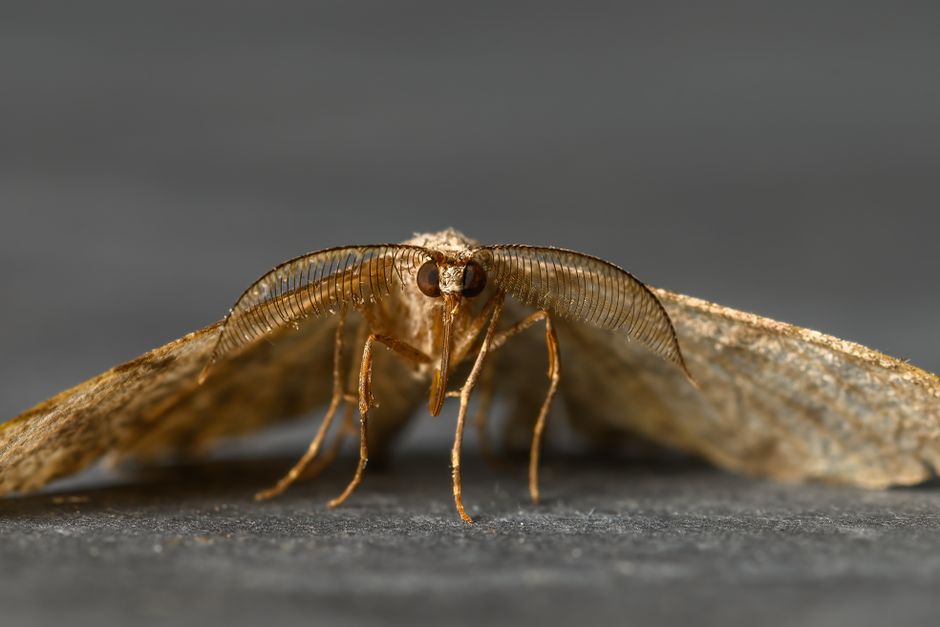
Clothes moths are small, destructive pests that feed on natural fibers like wool, silk, cashmere, and fur. Getting rid of them requires a two-step approach: killing the active larvae and eggs, then making your home inhospitable to prevent a return. The process involves thorough cleaning, targeted washing or freezing, and long-term storage solutions. This guide walks you through each step with methods that are supported by pest control evidence and clinical entomology.
What Do Clothes Moths Look Like and How Do You Know You Have Them?
Adult clothes moths are small, about a quarter-inch long, and pale gold or buff-colored. They are not the same as pantry moths, which are larger and often have a bronze or gray pattern. The adults themselves do not eat fabric. They do not bite and they are not harmful to humans. The damage comes from the larvae, which are tiny white caterpillars with brown heads.
You may not see the moths at all. The first sign of an infestation is often damage: small holes in sweaters, thinning patches on rugs, or a fuzzy, eaten appearance on wool blankets. Look closely at the edges of carpets near baseboards, inside closets, and in seldom-used drawers. You might also find silken webbing, fecal pellets that look like fine sand, or shed larval skins.
There are two common species. The webbing clothes moth is the most common in the United States. The casemaking clothes moth is less common but behaves similarly. Both require the same treatment.
Why Do Clothes Moths Appear in Clean Homes?
Moths do not care if your home is clean. They care about food sources. The larvae feed on keratin, a protein found in animal fibers. This means wool, mohair, cashmere, fur, feathers, and even leather or felt can be targets. They will also eat blends that contain a significant percentage of natural fiber.
Stains and body oils attract them. Perspiration, food spills, and urine residue on fabric provide nutrients that larvae need beyond the fiber itself. This is why a wool sweater worn once and put back in the closet is more vulnerable than one that was freshly laundered. Moths can enter your home on secondhand clothing, rugs, or furniture. They can also fly in through open windows, though this is less common.
They thrive in dark, undisturbed spaces. Closets, attics, storage boxes, and the space under a bed all qualify. The adults avoid light and prefer still air. A room that is frequently used and well-ventilated is naturally less attractive to them.
How To Get Rid of Clothes Moths: Step-by-Step Treatment
Start by identifying every item that could be affected. Pull everything out of the closet, drawers, and storage boxes. Do this in a well-lit area so you can inspect each piece. Sort items into three piles: visibly damaged, possibly exposed, and clean.
For all washable items, machine wash in hot water. Water at or above 120°F will kill larvae, eggs, and adult moths. If the fabric cannot withstand hot water, dry cleaning is a reliable alternative. The dry cleaning process uses solvents that kill all life stages of the moth.
For items that cannot be washed or dry cleaned, freezing is an effective option. Place the item in a sealed plastic bag. Squeeze out as much air as possible. Put the bag in a freezer set to 0°F or below. Leave it for at least 72 hours. Remove it and let it come to room temperature for 24 hours, then freeze it again for another 72 hours. The second freeze kills any eggs that survived the first cycle. This double-freeze method is recommended because eggs are more resistant to cold than larvae or adults.
Vacuuming is critical. Use a vacuum with a crevice tool and go over every surface in the closet: shelves, corners, floorboards, and the backs of drawers. Pay special attention to carpet edges and the space under furniture. After vacuuming, seal the vacuum bag or empty the canister into a trash bag and dispose of it outside immediately. Vacuuming alone will not eliminate an infestation, but it removes a large number of eggs and larvae along with the lint and hair that attract moths.





Do Mothballs and Cedar Work?
Mothballs work, but they come with serious caveats. The active ingredient in traditional mothballs is naphthalene or paradichlorobenzene. These chemicals vaporize into a gas that kills moths and larvae in a sealed space. They are effective only when the container is airtight. If you can smell them, you are breathing the chemical. The fumes are toxic to humans and pets with prolonged exposure. Use them only in sealed storage containers, never in open closets or living spaces. Follow the label instructions exactly. Keep them away from children and animals.
Cedar is less reliable. Cedar wood contains natural oils that are repellent to moths, but the effect fades as the oil evaporates. The wood loses its potency over time, often within a few years. Sanding the surface can refresh the oil, but even fresh cedar does not kill larvae. It may deter adult moths from laying eggs, but it will not stop an active infestation. Treat cedar as a preventive measure, not a treatment.
Lavender sachets and other herbal repellents are popular, but there is no strong evidence that they work. Some studies suggest certain plant oils have repellent properties in laboratory settings. No clinical or field evidence confirms they protect clothing in a real closet. Do not rely on them.
How To Prevent Clothes Moths From Coming Back
Cleaning before storage is the single most effective prevention step. Wash or dry clean every item before putting it away for the season. A single wool sweater with a small stain can seed a new infestation. Store clean items in airtight containers. Plastic bins with tight-fitting lids are better than cardboard boxes, which moths can chew through and which can also absorb moisture.
Use garment bags made of tightly woven cotton or plastic for hanging items. Avoid dry-cleaning plastic bags, which trap moisture and do not seal out insects. Add cedar blocks or mothball sachets to storage containers only if you can tolerate the smell and follow safety instructions.
Inspect your closet regularly. Check for damage and for adult moths at least once a month during warm seasons. Adult moths are weak fliers, so a moth fluttering near a light or on a wall is a sign you should investigate. Shake out stored items periodically to disrupt any larvae that may be present. Larvae prefer undisturbed fabric, so simply moving things around reduces risk.
Keep humidity low. Moths prefer humid environments. A dehumidifier in a basement or a well-ventilated closet makes the space less inviting. Air circulation also helps. Leave closet doors open occasionally and let air move through.
When Should You Call a Professional?
Most infestations can be handled with the cleaning and freezing methods above. If you have a severe infestation that has spread to carpets, upholstered furniture, or multiple rooms, professional pest control may be necessary. Professionals have access to insect growth regulators and residual sprays that are not available to consumers. These products are applied to cracks and crevices and can break the moth life cycle over several weeks.
If you rent, your landlord may be responsible for pest control depending on your lease and local laws. Check your lease agreement and contact your landlord before paying for professional treatment yourself.
If you have a large collection of wool garments, vintage textiles, or taxidermy, consider consulting a textile conservator. They can advise on safe treatment methods for delicate or irreplaceable items. Museums and historical societies use specialized freezing and anoxic treatment protocols that are gentler on fragile fabrics.
Are Clothes Moths Dangerous to Humans?
No. Clothes moths do not bite, sting, or transmit disease. They are not known to cause allergic reactions in most people, though some individuals may be sensitive to the hairs shed by larvae. The only harm they cause is economic: damage to clothing, rugs, upholstery, and other natural fiber goods. They are a nuisance pest, not a health hazard. This means you can take your time with treatment and do not need to panic about exposure.
Frequently Asked Questions
How long does it take to get rid of clothes moths?
With thorough cleaning and washing, you can kill all active moths and larvae within a few days. Complete elimination requires about four to six weeks to ensure any eggs that hatched after the initial treatment are caught.
Can clothes moths survive in a washing machine?
No. Hot water at or above 120°F kills all life stages of clothes moths, including eggs. A normal machine wash cycle at this temperature is sufficient.
Do clothes moths only eat wool?
No. They eat any natural animal fiber, including silk, cashmere, mohair, fur, and feathers. They will also damage blends with a high percentage of natural fiber, and they are attracted to stains and body oils.
Will freezing kill clothes moth eggs?
Yes, but only if done correctly. Freeze items at 0°F or below for 72 hours, then thaw for 24 hours and freeze again for another 72 hours. The second freeze is necessary because eggs are more cold-resistant than larvae.
