
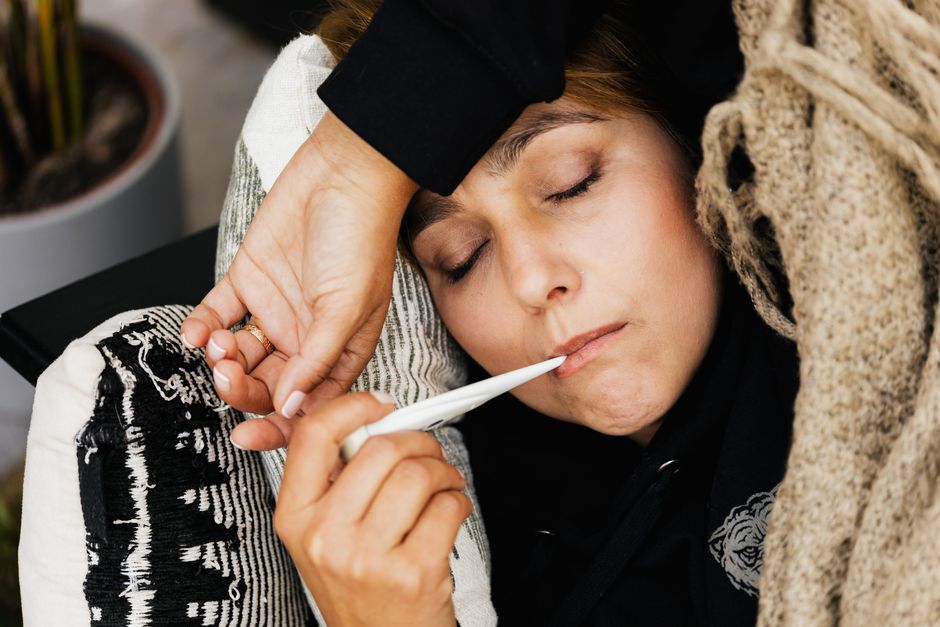
Chills are your body’s way of trying to warm up. When you feel cold and start shivering, your muscles contract rapidly to generate heat. This happens most often when you have a fever, but you can get chills without one. The fastest way to stop chills is to raise your core body temperature with warm layers and blankets, while also addressing the underlying cause. If a fever is present, treating the fever itself will usually stop the chills. If chills occur without a fever, the approach shifts to warming up safely and checking for other triggers like cold environments, anxiety, or low blood sugar.
Why Do Chills Happen In The First Place?
Chills are a physiological response controlled by your brain’s hypothalamus, which acts as your body’s thermostat. When your immune system detects an infection, it releases chemicals called pyrogens. These chemicals tell your hypothalamus to raise your body’s set point temperature. Your body then believes it is colder than it should be, even if your actual temperature is normal or already elevated.
To reach this new, higher target temperature, your body initiates shivering. Shivering produces heat through rapid muscle contractions. This is why you can feel freezing cold and shake violently even when you are wrapped in blankets. The chills stop once your core temperature reaches the new set point, or when the infection resolves and the set point returns to normal.
Chills without a fever happen when the same mechanism is triggered for other reasons. Exposure to cold air, a sudden drop in blood sugar, intense anxiety, or a strong emotional reaction can all cause temporary chills. These are not signs of infection and usually resolve once the trigger is removed.
How To Get Rid Of Chills Fast With Or Without Fever?
When you have chills with a fever, the goal is to make yourself comfortable without interfering with your body’s immune response. A mild fever is part of your body’s defense mechanism, and suppressing it too aggressively is not always necessary. However, you do not need to suffer through severe chills or a dangerously high temperature.
Start by adding a light blanket or wearing a warm layer. Do not pile on heavy blankets that cause you to sweat excessively, as this can lead to dehydration and make you feel worse. A comfortable, warm environment is sufficient. If you are shivering hard, a warm bath or a hot water bottle on your feet can help stop the shaking faster.
For chills without a fever, warm fluids like herbal tea or broth can help raise your core temperature from the inside. Move to a warmer room and add a layer of clothing. If you have been fasting or skipped a meal, eating a small snack with complex carbohydrates can stabilize blood sugar and stop the chills. If chills are related to anxiety, slow breathing exercises can help calm the nervous system and reduce the shaking.
When To Treat A Fever And When To Let It Run
Fever itself is not an illness. It is a symptom of an underlying condition, most commonly an infection. In otherwise healthy adults, a fever below 103°F (39.4°C) does not usually require medication unless it is causing significant discomfort. The chills that accompany the fever are often more distressing than the fever itself.
Over-the-counter medications like acetaminophen or ibuprofen can reduce fever and relieve chills. These work by resetting the hypothalamus to a lower set point. When the set point drops, your body starts to cool down, and the chills stop. Follow the dosing instructions on the package carefully. Do not take these medications more frequently than directed.
There is no benefit to “starving a fever” or avoiding treatment. If you are miserable with chills and body aches, taking a fever reducer is a reasonable choice. The evidence does not show that letting a mild fever run its course shortens an illness. It also does not show that treating a fever prolongs one. Treat the symptoms that are bothering you.




Home Remedies That Actually Work For Chills
Simple measures are often the most effective. Here is what works for most people:
- Warm fluids: Drinking warm liquids like broth, tea, or warm water helps raise your core temperature and prevents dehydration.
- Layered clothing: Wearing multiple thin layers traps heat more effectively than one heavy layer. Add or remove layers as your temperature changes.
- Warm foot soak: Your feet are a major area for heat loss. Soaking them in warm water can quickly stop shivering.
- Rest: Physical activity generates heat but also uses energy your immune system needs. Resting helps your body regulate temperature more efficiently.
- Room temperature: Keep your room comfortably warm, around 70-72°F (21-22°C). Avoid extreme heat, which can cause sweating and then chills again.
One thing to avoid is an alcohol rub or a very cold bath. These can cause your blood vessels to constrict, trapping heat in your core and making chills worse. They also do not safely lower a fever. Stick to gentle warming methods.
Chills Without Fever: What Else Could It Be?
If you have chills but your thermometer reads normal, consider other causes. A cold environment is the most obvious. But chills can also be a sign of low blood sugar, especially if you have not eaten for several hours. The shaking and cold feeling are similar to what you feel with a fever, but there is no infection involved.
Anxiety and panic attacks can cause chills as part of the body’s stress response. When you are anxious, your body releases adrenaline, which can cause shivering and a sensation of cold. This is temporary and usually resolves when you calm down. Some people experience chills when they are very tired or after intense exercise, as the body’s temperature regulation temporarily goes off balance.
If chills without fever persist for more than a day or two, or if they are accompanied by unexplained weight loss, fatigue, or pain, it is worth discussing with a doctor. Chronic chills can occasionally be related to thyroid issues, anemia, or other conditions that affect metabolism and circulation.
How To Tell If Chills Are A Sign Of Something Serious
Most chills are harmless and resolve on their own. But there are situations where chills warrant medical attention. Chills that occur with a fever above 103°F (39.4°C) in an adult, or any fever in an infant under three months old, should be evaluated by a healthcare provider. Chills accompanied by a stiff neck, confusion, difficulty breathing, or a rash that does not blanch under pressure are also reasons to seek care promptly.
Recurrent chills, especially with night sweats, can be a sign of a chronic infection or other underlying condition. If your chills come back frequently without an obvious cause, a medical evaluation is appropriate. The same applies if you have a chronic illness, are pregnant, or have a weakened immune system. In these populations, even a mild fever with chills should be taken seriously.
Pay attention to how long the chills last. A single episode that resolves with warming up is not concerning. Chills that last for hours, or that come and go over several days alongside other symptoms, deserve a closer look.
What Not To Do When You Have Chills
Some common advice for chills and fever is outdated or simply wrong. Do not wrap yourself in many heavy blankets if you are sweating. Sweating causes fluid loss and can make dehydration worse. Do not take a cold shower or apply ice packs, as this can cause your body to shiver more aggressively to generate heat.
Do not combine multiple fever-reducing medications unless a doctor tells you to. Acetaminophen and ibuprofen work differently, but taking them together without guidance increases the risk of side effects. Stick to one medication and follow the label. Do not give aspirin to children or teenagers due to the risk of Reye’s syndrome, a rare but serious condition.
Alcohol is not a remedy for chills. It can cause blood vessels to dilate, which may make you feel warmer briefly but actually increases heat loss. It also dehydrates you, which is the opposite of what your body needs when fighting an infection.
Frequently Asked Questions
How long do chills usually last?
Chills typically last 15 to 30 minutes until your body reaches its new temperature set point. If the underlying fever or trigger resolves, the chills stop quickly.
Is it safe to take a warm bath for chills?
Yes, a warm bath can help stop shivering, but keep the water comfortably warm, not hot. Very hot water can cause a rapid temperature spike and make you feel dizzy.
Can chills be a sign of something other than an infection?
Yes, chills can also result from cold exposure, low blood sugar, anxiety, or hormonal changes. If they occur without a fever and resolve quickly, they are usually not a cause for concern.
Should I take fever medication for chills if I don’t have a fever?
No, fever-reducing medication will not help chills if your temperature is normal. These medications work by lowering your body’s set point, which is only elevated during a fever.
