
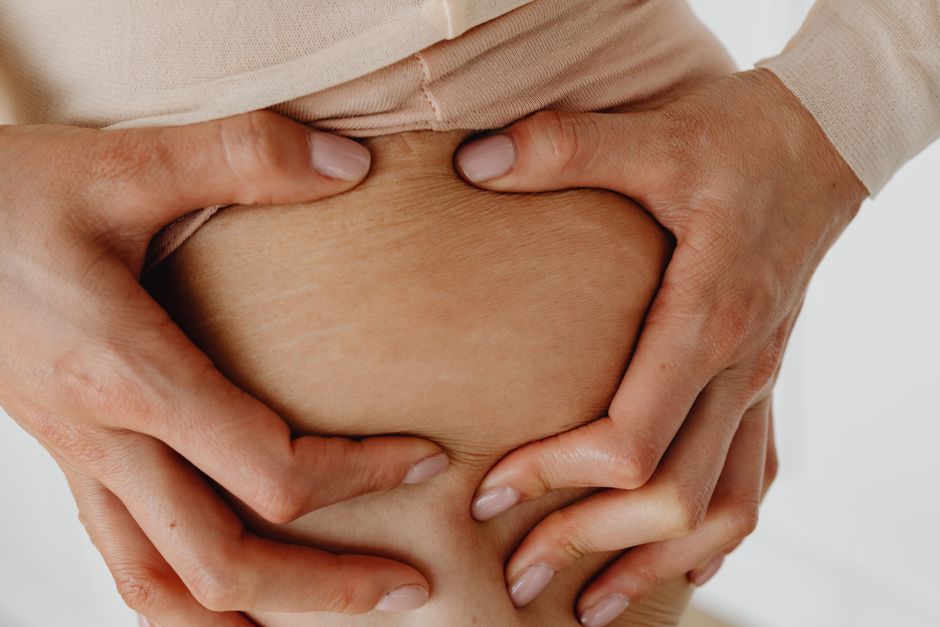
Cellulite behind the legs is common, and no cream, lotion, or device will permanently remove it. The honest answer is that you cannot completely get rid of cellulite, but you can visibly reduce its appearance through a combination of strength training, body fat reduction, and consistent skin care. The most effective approach targets the muscle and fat beneath the skin rather than the skin itself.
Why Cellulite Forms Behind The Legs
Cellulite forms when fat pushes up against connective tissue bands called septae that pull the skin down. This creates the dimpled, cottage-cheese look. Behind the legs, the skin is thinner and the fat layer sits closer to the surface, which makes dimpling more visible there than in other areas.
Hormones play a role. Estrogen influences fat storage, blood flow, and collagen production. As estrogen levels change with age, collagen production slows and the connective tissue weakens. This allows fat to push through more easily. Genetics also matter. If your mother or grandmother had cellulite, you are more likely to develop it regardless of what you do.
Cellulite is not a sign of poor health. People of all body weights have it. Even lean athletes can have visible dimpling behind their thighs. It is a normal structural feature of how fat and connective tissue interact under the skin.
Does Exercise Actually Reduce Cellulite?
Exercise cannot eliminate cellulite, but it can make it less noticeable. The reason is mechanical. When you strengthen the muscles behind your legs — the hamstrings and glutes — those muscles become firmer and take up more space. This reduces the visual contrast between the fat layer and the muscle underneath, which softens the dimpled appearance.
Resistance training is the most effective exercise approach. Squats, lunges, deadlifts, leg curls, and hip thrusts all target the posterior chain. This does not mean you need heavy weights. Bodyweight exercises performed consistently can produce visible changes over several months.
Cardiovascular exercise helps indirectly. If you carry excess body fat, reducing overall body fat can reduce the amount of fat pushing against the connective tissue. But spot reduction is a myth. You cannot choose to lose fat specifically from the back of your legs. Fat loss happens across the whole body, and genetics determine where it comes off first and last.
One important clarification: exercise alone will not fix severe cellulite. If the connective tissue bands are tight and the fat layer is thick, no amount of squats will completely smooth the skin. Exercise is one tool, not a cure.
Do Cellulite Creams And Massage Work?
Most cellulite creams contain caffeine, retinol, or herbal extracts. Caffeine is a temporary vasoconstrictor. It can tighten blood vessels and reduce fluid retention in the skin, which may make cellulite look slightly smoother for a few hours. This effect is cosmetic and temporary. It does not change the structure of the fat or connective tissue.
Retinol creams may have a more lasting effect because retinol stimulates collagen production. Thicker skin can mask underlying dimpling. However, results take months of daily application, and the improvement is modest. No cream has been shown to permanently remove cellulite.
Massage and dry brushing increase blood flow and temporarily reduce fluid buildup. Some people see a short-term improvement in skin texture after massage, but the effect fades within hours to days. There is no evidence that massage breaks down fat or permanently alters connective tissue.
Be cautious with products that promise dramatic results. If a cream claims to eliminate cellulite, it is not supported by clinical evidence. The marketing is ahead of the science.





What Medical Treatments Have Real Evidence?
Several in-office procedures have clinical evidence for reducing cellulite appearance. None are permanent, and none work for everyone.
Laser and radiofrequency treatments deliver heat to the skin and underlying tissue. The heat can break down some fat cells and stimulate collagen production. Some studies show visible improvement lasting up to a year. Multiple sessions are typically needed, and results vary widely between individuals.
Subcision is a procedure where a needle is inserted under the skin to cut the connective tissue bands that pull down and create dimples. This directly addresses the structural cause of cellulite. It is one of the few treatments that targets the septae themselves. Results can last several years, but the procedure is invasive and requires recovery time.
Acoustic wave therapy uses sound waves to break up fibrous tissue and improve blood flow. Some clinical studies report moderate improvement, but the evidence is less robust than for laser or subcision.
These treatments are expensive, and insurance does not cover them because cellulite is considered cosmetic. A dermatologist or plastic surgeon can assess whether you are a good candidate. Results are not guaranteed, and maintenance treatments are often needed.
Does Weight Loss Help Or Make It Worse?
Weight loss can either help or worsen cellulite, depending on how much weight you lose and how quickly. Losing excess body fat reduces the fat volume pressing against the connective tissue, which can smooth the skin. But losing weight too quickly can reduce skin elasticity and make cellulite more visible.
For people who are overweight, losing 5-10 percent of body weight through a combination of diet and exercise may visibly reduce cellulite. But if you are already at a healthy weight, losing more weight will not help. In some cases, losing weight can make cellulite look worse because the skin has less fat to fill it out, making the connective tissue bands more prominent.
This is a key point that many people do not expect: thinner people can have more visible cellulite than heavier people. The dimpling depends on the ratio of fat to connective tissue, not the total amount of fat.
How To Get Rid Of Cellulite Behind The Legs What Works?
The most realistic approach combines three elements: strength training to build the hamstring and glute muscles, gradual fat loss if you carry excess body fat, and consistent skin care with collagen-stimulating ingredients. This combination will not eliminate cellulite, but it can reduce its appearance by 20-30 percent over several months for many people.
Here is what does not work: crash diets, dehydration, scrubs, and creams that promise instant results. These provide temporary cosmetic effects at best.
Here is what works best based on current evidence:
- Strength training targeting the hamstrings and glutes, 2-3 times per week
- Gradual weight loss if needed, no more than 1-2 pounds per week
- Consistent hydration to maintain skin elasticity
- In-office procedures like laser or subcision for more significant results
Set realistic expectations. Cellulite is a normal feature of human skin structure. It is not a flaw to be cured. The goal is to reduce its visibility if it bothers you, not to achieve perfectly smooth skin that may not be possible.
Are There Any Lifestyle Factors That Make Cellulite Worse?
Smoking damages collagen and reduces blood flow to the skin. Over time, this weakens the connective tissue and can make cellulite more visible. Smoking cessation is one of the few lifestyle changes with a direct effect on skin structure.
Chronic dehydration reduces skin elasticity. When skin is less elastic, the dimples appear deeper. Drinking enough water will not remove cellulite, but it can improve skin quality overall.
A diet high in processed foods and refined sugars may contribute to inflammation and fluid retention, which can temporarily make cellulite look worse. No specific diet has been proven to reduce cellulite, but an anti-inflammatory eating pattern supports skin health.
Sedentary behavior reduces blood flow and muscle tone. Even if you exercise regularly, long periods of sitting can contribute to fluid pooling in the legs. Taking breaks to walk and stretch during the day may help.
Is There Any Way To Prevent Cellulite From Forming?
Prevention is not guaranteed. Because genetics and hormones are primary drivers, some people will develop cellulite regardless of lifestyle choices. However, maintaining muscle tone and a stable weight may delay or reduce its severity.
Rapid weight fluctuations are particularly hard on skin structure. Yo-yo dieting stretches and relaxes the connective tissue repeatedly, which can worsen cellulite over time. Maintaining a stable weight is more protective than losing and regaining the same pounds repeatedly.
Strength training before cellulite becomes prominent may be more effective than trying to reverse it later. Building muscle mass in the hamstrings and glutes creates a firmer base under the skin, which can prevent severe dimpling from developing in the first place.
Frequently Asked Questions
Can cellulite behind the legs go away completely?
No, cellulite cannot be completely removed because it is a structural feature of fat and connective tissue under the skin. You can reduce its appearance, but it will not disappear entirely.
What exercise is best for cellulite on the back of legs?
Strength exercises that target the hamstrings and glutes, such as squats, lunges, leg curls, and hip thrusts, are most effective. These build muscle that reduces the visual contrast of the dimpled fat layer.
Do cellulite creams work on thighs and back of legs?
Caffeine-based creams can temporarily tighten skin for a few hours, but they do not change the underlying structure. Retinol creams may modestly improve skin thickness over months of daily use.
Is laser treatment worth it for leg cellulite?
Laser and radiofrequency treatments have clinical evidence for visible improvement lasting up to a year in some people. They are expensive, require multiple sessions, and results vary widely between individuals.
