
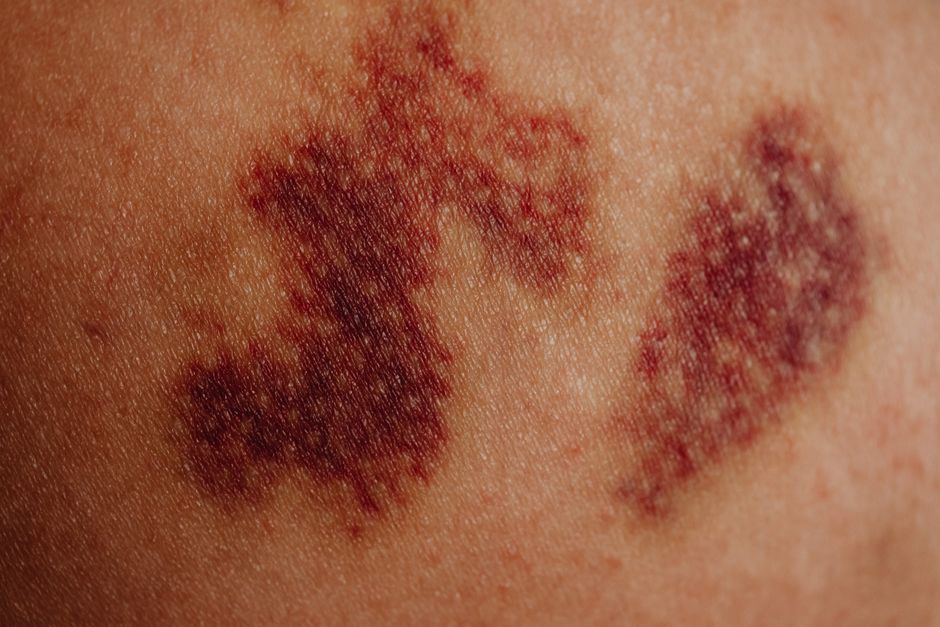
Can you get rid of a bruise overnight? The honest answer is no. A bruise is broken blood under your skin, and your body needs time to clear it. No cream, ice pack, or home remedy will erase it in a few hours. However, you can speed up the healing process. The right steps taken in the first 48 hours can make a bruise smaller, less painful, and fade faster than it would on its own.
Why Do Bruises Form?
A bruise happens when small blood vessels called capillaries break. This usually follows a bump, a fall, or some other impact. Blood leaks out of those broken vessels and pools under the skin. That pooled blood is what creates the familiar black-and-blue mark.
Your body responds by sending white blood cells to the area. These cells break down the leaked blood. Over time, the body reabsorbs the fluid. This process takes days, not hours. The color changes you see — from red to purple to green to yellow — are the chemical breakdown of that blood happening in stages.
The speed of healing depends on several factors. Your age matters. Older skin is thinner and blood vessels are more fragile. Your overall health matters too. Certain medications, like blood thinners, can make bruising worse and slower to heal. Nutritional status plays a role as well.
What Actually Works to Speed Up Healing?
Some methods have real evidence behind them. Others are popular but lack scientific support. Here is what the research and clinical practice actually show.
Cold therapy is the most effective early step. Applying ice within the first 24 to 48 hours constricts the blood vessels. This limits the amount of blood that leaks into the tissue. Less leaked blood means a smaller bruise. Wrap an ice pack or a bag of frozen vegetables in a thin cloth. Apply it for 15 to 20 minutes at a time, several times a day. Never put ice directly on the skin — it can cause frostbite.
Elevation helps when the bruise is on an arm or leg. Raising the injured limb above heart level reduces blood flow to the area. This also limits the amount of blood that pools. Gravity works against you when the limb hangs down.
Heat therapy is useful after the first 48 hours. Once the bleeding has stopped, heat helps increase blood flow to the area. This can speed up the reabsorption of the pooled blood. Use a warm compress for 15 to 20 minutes a few times a day. Do not use heat in the first 48 hours — it can make the bruise worse by increasing blood flow while bleeding is still possible.
Do Arnica and Other Topical Treatments Work?
Arnica is one of the most common remedies people try. The evidence is mixed but leans toward a modest benefit. Some studies suggest that arnica gel applied topically may reduce bruising when used shortly after injury. The effect is small. It will not erase a bruise overnight or even in a few days.
Arnica is available as a gel, cream, or ointment. The topical forms are generally considered safe for most people. Oral arnica supplements exist but are less studied and carry more risk. Do not take oral arnica without talking to a doctor first.
Other topical products claim to reduce bruising. Many contain vitamin K, which plays a role in blood clotting. Some small studies have looked at vitamin K cream for bruising, particularly after cosmetic procedures. Results are limited. No large trials have confirmed that vitamin K cream meaningfully speeds up bruise healing in everyday injuries.
Bromelain, an enzyme found in pineapple, is another popular remedy. Some research suggests it may have anti-inflammatory properties. The evidence for bromelain specifically reducing bruising is thin. Some clinicians recommend it, but this is not backed by strong clinical trials.





What About Vitamin C and Other Nutrients?
Vitamin C is essential for collagen production. Collagen is a key structural protein in skin and blood vessels. Stronger blood vessels may be less likely to break. But taking vitamin C after a bruise forms will not make it disappear faster.
Vitamin K plays a direct role in blood clotting. A deficiency in vitamin K can make you bruise more easily. But for a person with normal vitamin K levels, taking extra will not speed up healing of an existing bruise.
Some people take vitamin C and bioflavonoids together, believing this combination strengthens capillaries. The evidence for this is weak. No major clinical guidelines recommend this approach for bruise treatment.
The honest position is this: if you are generally well-nourished, no supplement will noticeably speed up bruise healing. If you bruise very easily, it is worth talking to a doctor. Frequent bruising can sometimes signal an underlying nutritional deficiency or a blood disorder.
How Long Should a Bruise Take to Heal?
A typical bruise follows a predictable timeline. The first two days, it looks red or purple. The blood is fresh and visible under the skin. Around day two to four, the bruise may turn darker purple or blue. This is the peak of the pooled blood.
From day five to seven, the bruise often shifts to green. This color comes from biliverdin, a breakdown product of hemoglobin. Around day seven to ten, the bruise turns yellow-brown. This comes from bilirubin, another breakdown product. The yellow stage is the body finishing its cleanup work.
Most minor bruises fade within one to two weeks. Larger bruises or those from significant trauma can take three to four weeks to fully clear. Bruises on the legs often take longer than bruises on the arms or face. Gravity keeps more blood pooling in the lower legs, and circulation there is slower.
How To Get Rid Of Bruises Overnight What Works — The Real Answer
Nothing eliminates a bruise overnight. The blood is already under your skin, and your body cannot reabsorb it that quickly. Anyone promising overnight bruise removal is selling something that does not exist.
What works is limiting the bruise’s size from the start. The moment you get injured, apply cold therapy. This is the single most effective step you can take. It constricts blood vessels and reduces the amount of blood that escapes into the tissue. A smaller amount of leaked blood means a smaller bruise and a faster recovery.
Compression can also help. An elastic bandage wrapped snugly around the area limits swelling and may reduce blood pooling. Do not wrap it so tight that it cuts off circulation. If the area tingles or turns numb, loosen the bandage.
After 48 hours, switch to heat. Warm compresses increase circulation and help your body clear the broken-down blood faster. Gentle movement and massage around the area — not directly on it — can also support circulation.
The realistic expectation is this: a bruise that would take two weeks to heal might heal in ten days with good early care. That is the actual benefit of these methods. It is meaningful, but it is not a miracle.
When Should You See a Doctor About a Bruise?
Most bruises are harmless and resolve on their own. But some situations need medical attention. A bruise that keeps growing after 48 hours may indicate ongoing bleeding. This is not normal and should be evaluated.
A bruise that does not start fading after two weeks is worth a check. So is a bruise that becomes increasingly painful, hot to the touch, or swollen. These can be signs of a deeper injury, such as a muscle tear or a fracture, or an infection.
Bruising that happens easily and without any known injury is another reason to see a doctor. This can be a sign of a bleeding disorder, a platelet problem, or a nutritional deficiency. If you are on blood thinners and develop a bruise after a fall, especially a fall involving your head, seek medical care promptly.
Bruises around the eye, sometimes called black eyes, also deserve caution. If you have double vision, pain with eye movement, or blood visible in the white of the eye, see a doctor right away. These can indicate a more serious injury to the eye socket or the eye itself.
What Makes Bruising Worse?
Several factors can slow healing or make bruises larger. Alcohol thins the blood and can increase bleeding. Drinking soon after an injury may make the bruise worse. Smoking impairs circulation, which slows the body’s cleanup process.
Certain medications increase bruising. Blood thinners like warfarin, apixaban, and aspirin are the most common. Even over-the-counter pain relievers like ibuprofen and naproxen can increase bruising because they affect blood clotting. If you take any of these regularly, you may notice that you bruise more easily and that bruises last longer.
Sun-damaged skin bruises more easily. Years of UV exposure weaken the skin and the blood vessels beneath it. Protecting your skin from the sun is one of the best long-term ways to reduce bruising as you age.
Frequently Asked Questions
Can ice really make a bruise go away faster?
Yes, but only if applied within the first 48 hours. Ice constricts blood vessels and limits how much blood leaks into the tissue, which makes the bruise smaller and faster to heal.
Does arnica cream actually work for bruises?
Some studies suggest arnica gel may slightly reduce bruising, but the effect is modest. It will not remove a bruise overnight or even in a few days.
Why is my bruise turning yellow and green?
This is a normal part of healing. The color changes come from your body breaking down the leaked blood — green comes from biliverdin and yellow from bilirubin.
When should I worry about a bruise?
See a doctor if a bruise keeps growing after 48 hours, does not start fading after two weeks, becomes very painful or hot, or appears without any known injury.
