
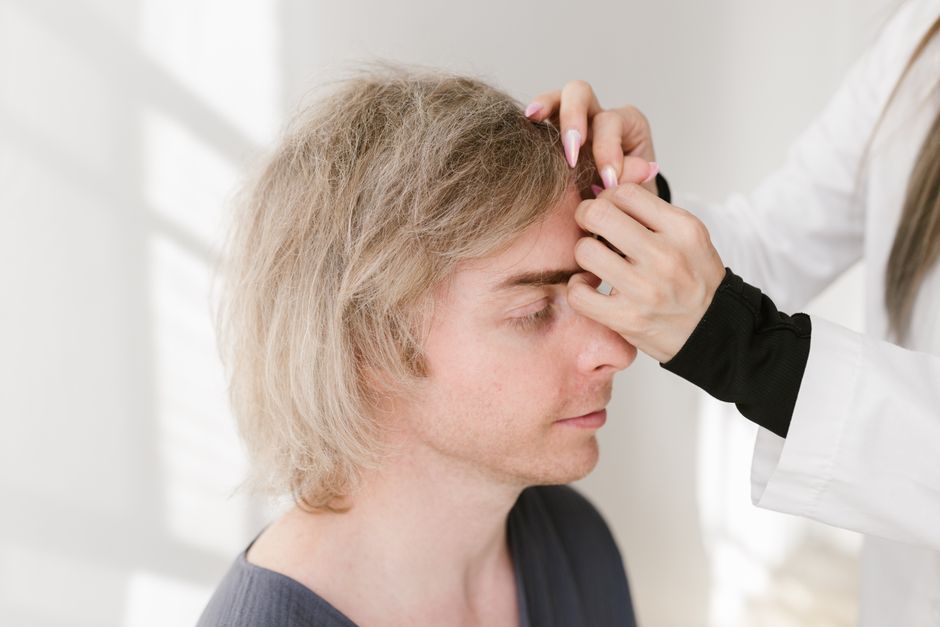
Forehead breakouts usually come from one of four things: oil and dead skin clogging pores, hair products or hats rubbing against the skin, sweat trapped under helmets or bands, or hormonal and stress-related oil changes. The fix is not one product but a short, consistent routine — a gentle salicylic acid cleanser, a non-comedogenic moisturizer, keeping hair off your face, and hands off. Most forehead acne improves with this approach over several weeks, and stubborn or painful cases may need a dermatologist.
What Actually Causes Forehead Breakouts?
Acne starts in the pore. Each pore contains a hair follicle and a sebaceous gland that makes oil. When dead skin cells shed normally, they leave the pore. When they stick together and mix with excess oil, they plug the opening. That plug is a comedo — a blackhead or whitehead. If bacteria that normally live on the skin multiply inside the blocked pore, the immune system responds with redness and pus. That is an inflamed pimple.
Several things push this process along on the forehead specifically. The forehead is part of the T-zone, an area with a high density of oil glands. It is also the part of your face most exposed to hair, hats, and sweat.
- Hair products: Pomades, gels, oils, and leave-in conditioners can migrate onto the forehead and block pores. Dermatologists have long described “pomade acne” along the hairline.
- Friction and occlusion: Tight hats, headbands, and helmet straps trap sweat and oil against the skin.
- Hormones: Androgens increase oil production. This is why acne often flares in the teen years and around the menstrual cycle.
- Stress: Psychological stress is associated with acne flares, though the mechanism is not fully understood.
- Certain medications and cosmetics: Some drugs and comedogenic products can trigger or worsen acne.
One clarification worth knowing: chocolate and greasy food are not established causes of acne. The evidence on diet is mixed and mostly points to high-glycemic diets as a possible contributor in some people, not a proven trigger for everyone.
How To Get Rid Of Breakouts On Forehead With A Simple Routine
A consistent, gentle routine works better than harsh scrubbing or piling on products. Irritation itself can worsen acne, so the goal is calm, clear skin — not stripped skin.
Step 1: Cleanse gently, twice a day
Use a mild cleanser morning and night. For forehead breakouts, a cleanser with salicylic acid can help because it works inside the pore to loosen the plug. Benzoyl peroxide cleansers are another option that targets acne bacteria. Wash with fingertips, not a scrub brush, and rinse with lukewarm water. Hot water and aggressive scrubbing irritate skin without clearing pores faster.
Step 2: Treat the breakout
Over-the-counter acne treatments fall into a few categories. Each works differently, and combining them sensibly is more effective than using one at maximum strength.
- Salicylic acid: Helps unclog pores. Good for blackheads and whiteheads.
- Benzoyl peroxide: Kills acne bacteria and reduces inflammation. Can bleach fabric, so use white towels and pillowcases.
- Adapalene gel: A topical retinoid available without a prescription. It helps prevent new plugs from forming. It can cause dryness and irritation at first, so start slowly.
Apply a thin layer to the whole forehead, not just the visible spots. Acne treatment works by preventing new pimples, and spot-treating alone tends to fall short.
Step 3: Moisturize
Acne treatments dry the skin. A light, non-comedogenic moisturizer — one labeled oil-free and unlikely to clog pores — keeps the skin barrier intact. Dry, irritated skin does not clear faster, and irritation can make redness worse.
Step 4: Protect from sun
Some acne treatments make skin more sensitive to sunlight. A non-comedogenic sunscreen helps prevent dark marks left behind by healed pimples, which are more common in darker skin tones.
Why Do Hair Products and Hats Make Forehead Acne Worse?
Anything that sits against the forehead and holds oil or sweat there can worsen breakouts. This is why the hairline is such a common spot for pimples.
If you use gel, pomade, oil, or heavy leave-in conditioner, check whether it reaches your forehead. Wipe the hairline after applying products, and consider switching to lighter, water-based styling products. Wash your face after workouts and after removing a hat or helmet. Change pillowcases regularly — they collect oil, sweat, and hair product overnight.
For people who wear hats or helmets daily, a clean, breathable headband or liner can reduce direct contact between the gear and your skin. It will not eliminate acne on its own, but it removes one source of friction and trapped sweat.





What Makes Forehead Breakouts Different From Acne Elsewhere?
Forehead acne is not a separate condition — it is ordinary acne in a high-oil area. But its location changes what to look for. Because the forehead is so exposed to hair and headgear, the external triggers matter more than they do on the cheeks.
There is also a look-alike worth knowing about. Small, uniform bumps across the forehead that do not respond to acne treatment may be fungal acne, more accurately called pityrosporum folliculitis. It is caused by an overgrowth of a yeast that normally lives on skin, and it can look similar to regular acne. A dermatologist can usually tell them apart, and the treatments differ. If standard acne products are not helping after several weeks, that is a reason to get it checked rather than keep switching products.
Another possibility is acne cosmetica — breakouts caused by comedogenic makeup, sunscreen, or skincare. If breakouts started after you began a new product, that product is worth suspecting.
What Should You Not Do to Forehead Breakouts?
Some common habits make acne worse. Avoiding them is as important as adding the right products.
- Do not pick or pop. Squeezing pushes bacteria and inflammation deeper and raises the risk of scarring and dark spots.
- Do not over-wash. Washing more than twice a day strips the skin and can trigger more oil production.
- Do not scrub hard. Abrasive scrubs irritate skin and can spread inflammation.
- Do not pile on treatments. Using several strong actives at once causes irritation, which can look like — and worsen — acne.
- Do not expect overnight results. Acne treatments typically take several weeks to show clear improvement. Give a routine time before judging it.
When Should You See a Dermatologist?
See a dermatologist if breakouts are painful, deep, or leaving scars, or if over-the-counter treatment has not helped after about two to three months of consistent use. Deep, painful nodules can scar, and early treatment reduces that risk.
A dermatologist can prescribe stronger topical treatments, oral antibiotics for a limited course, hormonal treatments for some women, or isotretinoin for severe cases. They can also confirm whether the bumps are truly acne or something that looks similar. If you are pregnant or breastfeeding, check with a clinician before starting any acne treatment, because some ingredients are not recommended during pregnancy.
Frequently Asked Questions
How long does it take to clear forehead breakouts?
Most people see improvement over several weeks of consistent treatment, though full clearing can take longer. Give a routine at least six to eight weeks before deciding whether it is working.
Does washing my face more often help forehead acne?
No, washing more than twice a day can strip the skin and trigger more oil production. Twice daily with a gentle cleanser is enough.
Can dandruff cause forehead breakouts?
Yes, dandruff and the yeast that drives it can contribute to small uniform bumps along the hairline that resemble acne. A dermatologist can tell the difference and recommend the right treatment.
Is toothpaste a good spot treatment for pimples?
No, toothpaste is not an acne treatment and can irritate or burn the skin. Use an actual acne product such as benzoyl peroxide or salicylic acid instead.
