
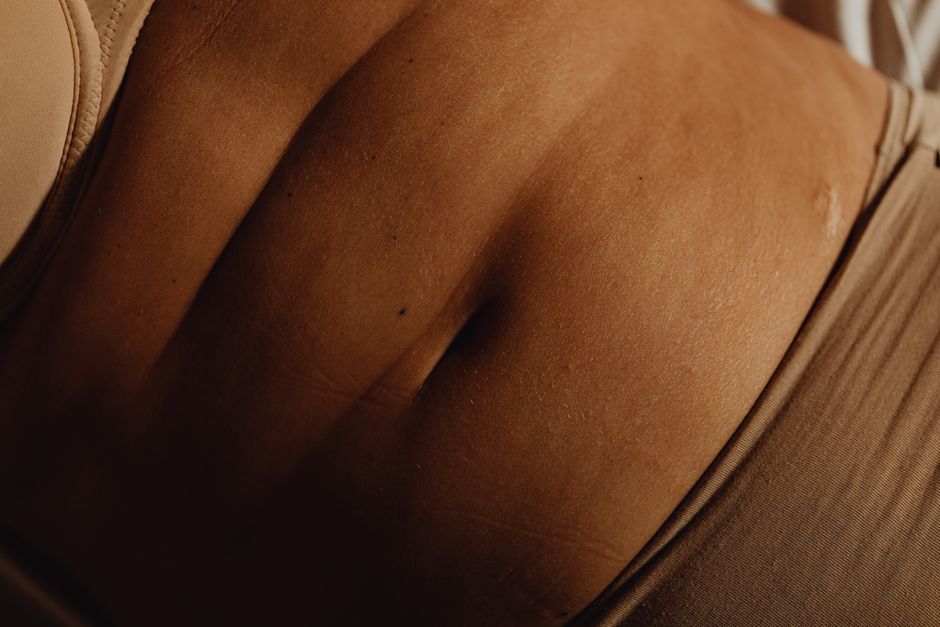
Belly crease lines are indentations in the skin that form where the abdomen folds — usually at the waistband line or the fold beneath the stomach. They happen when skin is compressed or bent in the same place repeatedly, and they become more visible when skin loses some of its elastic recoil. You cannot erase a deep structural crease completely with home care, but you can soften its appearance, reduce irritation along the fold, and support your skin’s natural repair process. The most effective natural steps are keeping the area clean and dry, avoiding tight pressure at the same spot, and supporting skin hydration and collagen health through diet and daily habits.
What Actually Causes Belly Crease Lines?
A crease is a mechanical event before it is a skin event. When your abdomen folds at the same line day after day, the skin there is repeatedly bent, and over time the dermis — the thick middle layer that gives skin its bounce — can develop a persistent indentation.
Several things decide how deep that indentation gets:
- Repeated pressure. Waistbands, belts, and tight clothing press into the same line for hours. This is why the mark often sits exactly where your pants sit.
- Body weight and fat distribution. A fold forms where there is enough tissue to overlap. More overlap means more compression at the crease.
- Skin elasticity. Collagen and elastin fibers let skin stretch and spring back. When these decline — with age, sun exposure, or rapid weight change — creases hold their shape longer.
- Posture. Slouching shortens the abdomen and increases folding at the waist, especially when you sit for long stretches.
- Dryness and friction. Dry skin creases more sharply, and friction along the fold can irritate it.
One clarification worth knowing: a crease is not the same as a stretch mark. Stretch marks (striae) are a different change in the dermis, often reddish or silvery, and they form when skin stretches faster than it can adapt. The two can appear together, but they behave differently and do not respond to the same care.
Can You Get Rid Of Belly Crease Lines Naturally?
You can reduce how noticeable a belly crease looks, and you can often soften a shallow one. You should not expect a deep, long-standing crease to disappear entirely from natural methods alone.
The reason is structural. Once the dermis has lost collagen and elastin in a specific line, the skin there is thinner and less able to spring back flat. Topical creams and home habits work mostly on the surface and on the surrounding skin, not on rebuilding a deep line of lost tissue.
What natural approaches can realistically do:
- Improve skin hydration so the crease looks softer and less shadowed.
- Reduce friction and moisture buildup that make the fold irritated and more visible.
- Support collagen production through nutrition and by not smoking.
- Remove the daily pressure that keeps re-forming the line.
What they generally cannot do is rebuild a deep structural indentation. That is an honest limit, not a failure of effort. Procedures like laser resurfacing or microneedling are sometimes used for creases, but they are not “natural” methods and their results vary. The evidence for how well they work on abdominal creases specifically is limited.
Which Daily Habits Soften A Belly Crease The Most?
The single most useful change is to stop pressing the same line into your skin every day. If your crease sits at your waistband, that is your first clue.
Practical habits that help:
- Loosen the waistband. Choose clothing that does not dig into the fold. A softer, higher waistband moves the pressure point off the crease line.
- Change position often. If you sit for long periods, stand and move regularly so the abdomen is not folded in the same place for hours.
- Keep the fold clean and dry. Gently wash and pat the area dry. Moisture trapped in a fold can cause irritation and, in some people, a rash or fungal overgrowth in the skin fold.
- Moisturize. A plain, fragrance-free moisturizer keeps skin supple. Well-hydrated skin creases less sharply than dry skin.
- Support your posture. Standing and sitting taller reduces how much the abdomen folds at the waist.
These steps will not rebuild collagen, but they reduce the repeated mechanical insult that keeps the crease defined. For many people, that alone makes the line less obvious over time.



Does Diet And Hydration Affect Skin Creases?
Skin is built from what you eat, so nutrition matters for the skin’s ability to repair itself. It does not target one crease, but it supports the tissue quality of your skin as a whole.
Nutrients with a clear role in skin structure:
- Protein. Collagen is a protein. Adequate protein intake gives your body the building blocks for skin repair. Most adults need protein daily; needs vary by body size and activity.
- Vitamin C. The body needs vitamin C to make collagen. Citrus, peppers, strawberries, and broccoli are common sources.
- Water. There is no fixed amount that “erases” creases, but staying hydrated supports normal skin function. The general guidance is to drink when thirsty and to keep urine pale.
- Healthy fats. Fats help maintain the skin’s barrier, which keeps moisture in.
Two honest cautions. First, no food or supplement has been shown to remove an existing belly crease. Second, collagen supplements are widely marketed for skin, and the evidence is mixed — some small studies suggest a possible modest effect on skin elasticity, but results vary and the research is not strong enough to promise a visible change in a specific crease.
Smoking is the one habit with a well-established negative effect on skin. It damages collagen and elastin and speeds skin aging. Not smoking, or quitting, is one of the most reliable things you can do for your skin’s long-term quality.
Do Creams, Oils, And Home Remedies Really Work?
Moisturizers and oils can make a crease look better, mainly by improving hydration and surface texture. They do not rebuild the dermis, so the effect is on appearance, not structure.
What is reasonable:
- A basic moisturizer with humectants like glycerin, or occlusives like petrolatum, to hold water in the skin.
- Fragrance-free products if the fold is sensitive or irritated.
- Consistent use, since hydration is a maintenance effect, not a one-time fix.
What to be skeptical about:
- Products claiming to “erase” or “remove” creases. No topical product has been shown to remove a deep structural crease.
- Retinol and similar ingredients. Retinoids have evidence for improving fine lines and skin texture on the face, but the evidence for abdominal creases specifically is limited, and they can irritate sensitive skin in a fold.
- Home remedies like lemon juice, baking soda, or harsh scrubs. These can irritate or damage the skin barrier and are not supported for crease removal.
If a fold is red, itchy, or has a rash, that is a skin-fold irritation, not a cosmetic crease, and it may need a clinician’s care. Do not treat a rash with anti-aging products.
When Should You See A Doctor About A Belly Crease?
A cosmetic crease does not need medical care. But a fold that changes, hurts, or comes with a rash does.
See a clinician if you notice:
- A rash, redness, itching, or a bad smell in the fold.
- Skin that is raw, weeping, or painful.
- A crease that appears suddenly with rapid weight change, swelling, or other new symptoms.
- Any skin change you are unsure about, including new darkening or a sore that does not heal.
Skin folds are a common place for irritation and, in some people, for fungal or bacterial overgrowth because moisture and warmth collect there. That is a treatable medical issue, and it is different from a cosmetic crease. If you are unsure which one you have, a clinician can tell the difference quickly.
What Results Can You Realistically Expect?
Shallow creases often soften with consistent care. Deep, long-standing ones usually fade somewhat but do not vanish.
Think in terms of improvement, not elimination. The habits that help most — less pressure at the fold, good hydration, not smoking, and steady skin care — are also good for your skin overall. There is no natural method with strong evidence for fully removing a deep belly crease, and anyone promising that is overstating what is known.
Frequently Asked Questions
Can belly crease lines go away on their own?
Shallow creases can fade if the repeated pressure that forms them stops, such as switching to a looser waistband. Deep creases that have lost skin elasticity usually do not go away on their own.
Does drinking more water get rid of belly creases?
No, hydration supports normal skin function but does not remove an existing crease. It can help skin look softer, but it does not rebuild the collagen in a deep line.
Do collagen supplements help with belly crease lines?
The evidence is mixed — some small studies suggest a possible modest effect on skin elasticity, but none confirms removal of a specific crease. Results vary and the research is not strong enough to promise a visible change.
Are belly creases the same as stretch marks?
No, they are different. A crease is an indentation from repeated folding and pressure, while a stretch mark is a change in the dermis from skin stretching faster than it can adapt.
