
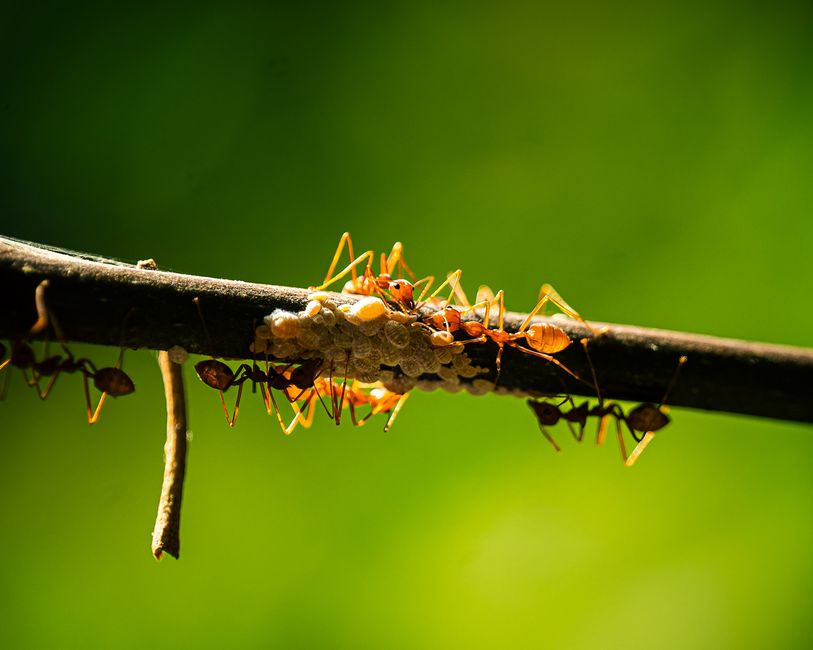
Getting rid of ants in the kitchen comes down to three things: remove the food and water they are after, block the routes they use to get inside, and kill the colony rather than just the ants you can see. Baits work better than sprays for most indoor infestations because foraging ants carry the poison back to the nest. Cleaning alone rarely solves an established problem, but it is the step that keeps ants from coming back.
Why Are Ants Coming Into My Kitchen?
Ants enter kitchens for the same reasons they enter any building: food, water, and shelter. A kitchen supplies all three in abundance.
Most household ants are sugar ants, odorous house ants, or pavement ants. These species send out scout ants to search for resources. When a scout finds something worth eating, it lays a pheromone trail back to the colony. Other workers follow that trail directly to the source. This is why you can go from seeing one ant to seeing a line of them within hours.
The trail is the key detail. Killing the ants you see does nothing to the pheromone trail they left behind. New ants will follow the same path. Until you remove the trail or the colony, the line keeps coming back.
What actually attracts them:
- Crumbs and food residue on counters, floors, and inside appliances
- Open food containers, pet food bowls, and garbage
- Sugary spills, honey, syrup, and fruit left out
- Moisture from leaky pipes, damp sponges, or standing water
- Grease buildup behind the stove and under appliances
Ants can also nest indoors. Some species build colonies inside wall voids, under floors, or behind baseboards. If you keep seeing ants in the same spot no matter how much you clean, there may be a nest inside the structure. That changes the approach.
How Do I Find Where Ants Are Getting In?
Watch the ants instead of guessing. Ants follow predictable paths, and those paths lead back to an entry point or a nest.
Pick a time when ant activity is high — usually early morning or evening. Follow the trail in both directions. One direction leads to food. The other leads to where they are coming from. That second direction is what matters.
Common entry points in a kitchen:
- Gaps around windows and doors
- Cracks in walls, baseboards, and flooring
- Areas where utility pipes and wires enter the wall
- Under sinks, especially around plumbing
- Behind and beneath appliances like the refrigerator and dishwasher
Seal what you find with caulk or weatherstripping. This blocks the route but does not address ants already inside. Sealing works best alongside baiting, not instead of it.
If you cannot find an entry point and ants keep appearing, the colony may already be inside the walls. In that case, professional pest control is worth considering.
Do Ant Baits Work Better Than Sprays?
Yes, for most indoor ant problems. This is one of the few areas where the evidence and pest control practice line up clearly.
Sprays kill ants on contact. That sounds effective, but it works against you. When ants are killed at the trail, the colony loses foragers but survives. Some species respond to a disturbed trail by splitting the colony into multiple new nests. You can end up with more ants than you started with.
Baits work differently. Foraging ants eat the bait and carry it back to the nest, where it is shared with other colony members through a process called trophallaxis. The poison spreads through the colony over days. This is why baits take longer to show results but tend to solve the problem more completely.
How to use ant bait correctly:
- Place bait stations near the trail but not directly on it
- Do not spray or wipe the area around the bait — this disrupts the trail and the ants may not find it
- Leave the bait undisturbed for several days
- Resist the urge to kill ants feeding at the bait
- Replace bait if it dries out or is fully consumed
Bait products differ. Some target sugar-feeding ants, others target protein-feeding or grease-feeding species. If one bait does not work after about a week, try a different type. You do not always know which species you have, so switching bait types is a reasonable next step.
One caution worth stating plainly: bait products are pesticides. Keep them away from children and pets, and follow the label exactly. Do not place bait where food is prepared.




What Natural Remedies Actually Work?
Some home remedies help, and some do nothing. It is worth separating the two.
What has some support:
- Soapy water — kills ants on contact and removes pheromone trails when used to wipe surfaces
- Vinegar and water solution — can disrupt scent trails, though it does not kill the colony
- Diatomaceous earth — a powder that damages the outer coating of insects that crawl through it; works only when dry and does not spread back to the nest
- Sealing cracks and entry points — mechanically blocks access
What does not work well:
- Cinnamon, coffee grounds, and cayenne pepper — often repeated online, but they do not eliminate colonies and their effect on established trails is limited
- Bay leaves and cucumber peels — no reliable evidence they repel or kill ants
- Vaseline barriers — messy and easily bypassed
No natural remedy eliminates a colony the way a bait does. Natural methods are best used for prevention, trail cleanup, and blocking entry — not as a standalone fix for an established infestation.
There is also a common mistake worth naming: pouring boiling water on an outdoor nest. It can kill ants near the surface, but it rarely reaches the whole colony and it can damage plants and grass.
How Do I Keep Ants From Coming Back?
Prevention is where the long-term solution lives. Killing the current colony does not stop a new one from moving in.
Focus on three areas:
Food. Store food in sealed containers. Wipe counters and sweep floors after cooking. Clean under appliances and behind the stove where grease collects. Rinse recycling before it goes in the bin. Do not leave pet food out overnight.
Water. Fix dripping faucets and leaky pipes. Dry out sinks and sponges. Ants need water as much as food, and a damp kitchen supports them even when food is scarce.
Access. Seal cracks and gaps. Keep outdoor vegetation and mulch from touching the foundation. Trim branches away from the house. Check bags, boxes, and potted plants before bringing them inside — new colonies often arrive this way.
If you have tried baiting and sealing and ants keep returning, the colony is likely inside the walls or under the foundation. At that point, a licensed pest control professional can locate and treat the nest directly. This is not a failure of your efforts. Some infestations simply require professional tools and access.
When Should I Call A Professional?
Call a professional if ants keep returning after two to three weeks of consistent baiting and cleaning, if you see ants in multiple rooms, or if you suspect a nest inside a wall or under the floor.
Some species are harder to control than others. Carpenter ants, for example, nest in wood and can cause structural damage over time. Fire ants sting and are a genuine safety concern, especially for children and people with sting allergies. These are not do-it-yourself problems.
A pest control professional can identify the species, locate the nest, and choose a treatment that targets the colony rather than just the visible ants. Species identification matters because different ants respond to different baits and treatments.
Frequently Asked Questions
What is the fastest way to get rid of ants in the kitchen?
Bait stations placed near the trail are the most effective indoor method because ants carry the poison back to the colony. Sprays kill visible ants but often leave the nest intact, so the problem returns.
Does vinegar kill ants?
Vinegar does not kill ants, but wiping surfaces with a vinegar and water solution can remove the pheromone trails they follow. It helps with prevention, not with eliminating an existing colony.
Why do ants keep coming back after I clean?
Cleaning removes food and scent trails, but it does not kill the colony. If the nest is inside your walls or under the floor, ants will keep emerging until the colony itself is treated.
Are ant baits safe around pets and children?
Ant baits contain pesticides and should be placed out of reach of children and pets, following the product label exactly. If you suspect a pet has eaten bait, contact your veterinarian or a poison control center right away.
