
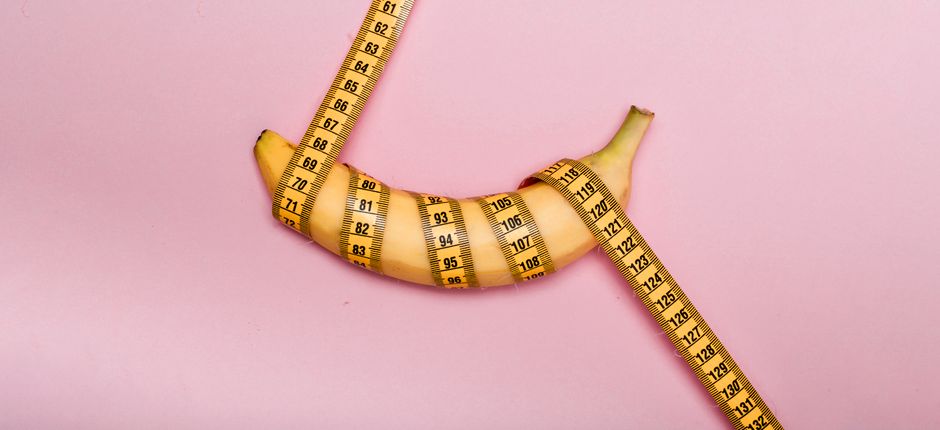
Many men wonder if it is possible to make their penis longer. The short answer is that no reliable, proven method can increase the length of a healthy adult penis. Surgical procedures exist, but they carry real risks and mixed results. Most products promising to add inches do not work. Understanding what is realistic can save you money and protect your health.
What Is the Average Penis Size?
Most men believe the average penis is larger than it actually is. This misconception drives a lot of anxiety. Research consistently shows that the average erect penis length is between 5.1 and 5.5 inches. The average flaccid length is about 3.5 to 3.7 inches.
These numbers come from large studies and systematic reviews. They are useful because they give a realistic baseline. If you measure yourself and fall within this range, you are statistically average. If you are below it, you may still be within a normal range that varies widely.
Penis size varies naturally. Factors like body weight, blood flow, and room temperature affect flaccid size. Erect size is more consistent but still varies. Comparing yourself to pornography or locker room talk is not a reliable measure. Those are not representative samples.
Can You Actually Make Your Penis Longer?
For a healthy adult, the penis does not grow naturally after puberty. The size is determined by genetics and hormonal development. No exercise, supplement, or device has been proven to create new erectile tissue or lengthen the penis permanently.
Some men lose weight and notice their penis appears longer. This is not actual growth. Fat at the base of the penis can hide part of its length. Losing belly fat can expose more of the shaft. This is a visual change, not a physical one.
Surgery is the only method that can change physical length. These procedures are invasive and carry significant risks. They are not recommended for most men. The results are often modest and complications are common.
Why Do Most Penis Pills and Devices Fail?
The market is full of pills, pumps, extenders, and topical creams that promise length gains. None of these have strong clinical evidence behind them. Most rely on temporary effects like increased blood flow, which can improve erection quality but not length.
Penis pumps create a vacuum that draws blood into the penis. This causes a temporary erection that may look larger. Once the pressure is released, the effect fades. Repeated use does not create permanent growth. In some cases, overuse can damage blood vessels or cause bruising.
Extenders use traction to stretch the penis over many hours. Some small studies report modest gains of about 1 to 2 centimeters. The evidence is weak and the studies are low quality. The risk of injury, including nerve damage and tissue damage, is real. Most urologists do not recommend them.
Herbal supplements have no proven effect on penis size. The FDA does not regulate them as strictly as medications. Some contain hidden ingredients that can be dangerous. No supplement has been shown to grow new tissue.




What About Jelqing and Other Manual Exercises?
Jelqing is a manual technique where a man repeatedly strokes the penis in a specific way to push blood toward the head. It is promoted in online forums as a natural way to gain length. There is no clinical evidence that it works.
The technique can cause serious injury. Repeated forceful manipulation can damage the corpus cavernosum, the sponge-like tissue that fills with blood during an erection. This can lead to pain, scarring, and erectile dysfunction. Some men have reported permanent curvature or loss of sensation.
Other manual exercises like stretching or pulling the flaccid penis are also unproven. The penis is not a muscle. Stretching it does not encourage growth the way stretching a muscle might. You can cause microtears in tissue that lead to scar formation, which may actually shorten the penis over time.
What Are the Surgical Options and Their Risks?
Penile lengthening surgery exists, but it is not a simple fix. The most common procedure is the suprapubic lipectomy, where a surgeon removes fat from the area above the penis. This can expose more of the shaft that was hidden by the fat pad. The visible length gain depends on how much fat is removed.
Another procedure involves cutting the suspensory ligament that holds the penis close to the body. This allows the penis to hang lower and appear longer. The gain is usually small, around 1 to 2 centimeters. The penis may also lose some stability during erection, making it wobble or point downward.
Serious complications are possible. These include infection, scarring, nerve damage, and loss of sensation. Some men report that the penis looks unnatural or that erections become less firm. Revision surgery is difficult and outcomes are not guaranteed.
Urologists generally advise against these procedures for cosmetic reasons. The American Urological Association has expressed concern about the safety and efficacy of these surgeries. If you are considering surgery, seek a second opinion from a board-certified urologist who does not perform the procedure.
How Does Body Weight Affect Perceived Length?
Excess belly fat can make the penis appear shorter than it is. This is because the fat pad at the base of the penis covers part of the shaft. When you lose weight, that fat shrinks and more of the penis becomes visible.
This is not a trick. It is a real visual change. For men who are overweight, losing weight may be the most effective way to improve the appearance of penis size. It also improves overall health, blood flow, and erectile function.
Men with a high body mass index, or BMI, often see the biggest difference. Even a modest weight loss of 5 to 10 percent of body weight can reduce the fat pad. This is a healthier approach than any surgery or device.
What Actually Matters for Sexual Satisfaction?
Research suggests that most partners are satisfied with their partner’s penis size. Studies consistently find that a large majority of women report being happy with their partner’s size. The focus on length is often driven by insecurity rather than partner preference.
Sexual satisfaction depends on communication, emotional connection, and technique. Girth may matter more than length for some partners because it affects physical sensation. But even this is not a universal preference.
If you are concerned about your size, talking to a healthcare provider can help. They can give you an honest assessment and address any underlying anxiety. In some cases, body dysmorphic disorder plays a role. This is a mental health condition where a person is preoccupied with a perceived flaw. Therapy can be very effective for this.
What Is Penile Dysmorphic Disorder?
Penile dysmorphic disorder is a condition where a man perceives his penis as abnormally small when it is actually within the normal range. This is a form of body dysmorphic disorder. It can cause significant distress and affect relationships and mental health.
Men with this condition often avoid sexual intimacy or experience performance anxiety. They may obsessively measure their penis or compare themselves to others. This obsession does not improve with reassurance because the perception is distorted.
Cognitive behavioral therapy, or CBT, is an effective treatment. It helps men challenge distorted thoughts and reduce anxiety. In some cases, medication for anxiety or depression is also helpful. This is a safer and more effective path than surgery for men who do not have an actual size problem.
Frequently Asked Questions
Can penis exercises actually make it longer?
No clinical evidence confirms that manual exercises like jelqing increase penis length. These techniques carry a risk of injury, including tissue damage and erectile dysfunction.
Do penis extenders work for length gain?
Some small, low-quality studies report modest gains of about 1 to 2 centimeters, but the evidence is weak. The risk of nerve damage and tissue injury is real, and most urologists do not recommend them.
Is penis lengthening surgery safe?
Surgery carries significant risks, including infection, scarring, nerve damage, and loss of erection stability. The visible gain is usually small, and most urologists advise against it for cosmetic reasons.
Will losing weight make my penis look longer?
Yes, losing belly fat can reduce the fat pad at the base of the penis, exposing more of the shaft. This is a visual change and a healthy approach for men who are overweight.
